
This article is a review and sample photographs of the Voigtlander Nokton 40mm F1.4 lens, released in 2004, used with a film rangefinder camera, the Rollei 35RF, and digital rangefinder cameras, the Leica M8 and the Epson R-D1.
- Please see the disclaimer regarding advertising here.
- Italicized links in the text are advertisement links that take you to other sites.
- If you find any images used on this site problematic, please contact us via the comments or inquiry form, either as the rights holder or their representative. We will review the matter and take appropriate action.
Table of contents

Gallery
The following cameras were used to take the example photos.
- Rollei 35RF +KONICA SINBI200 / KODAK PKR-64 / KODAK ULTRA COLOR100
- LEICA M8
- EPSON R-D1
Review
1.Overview
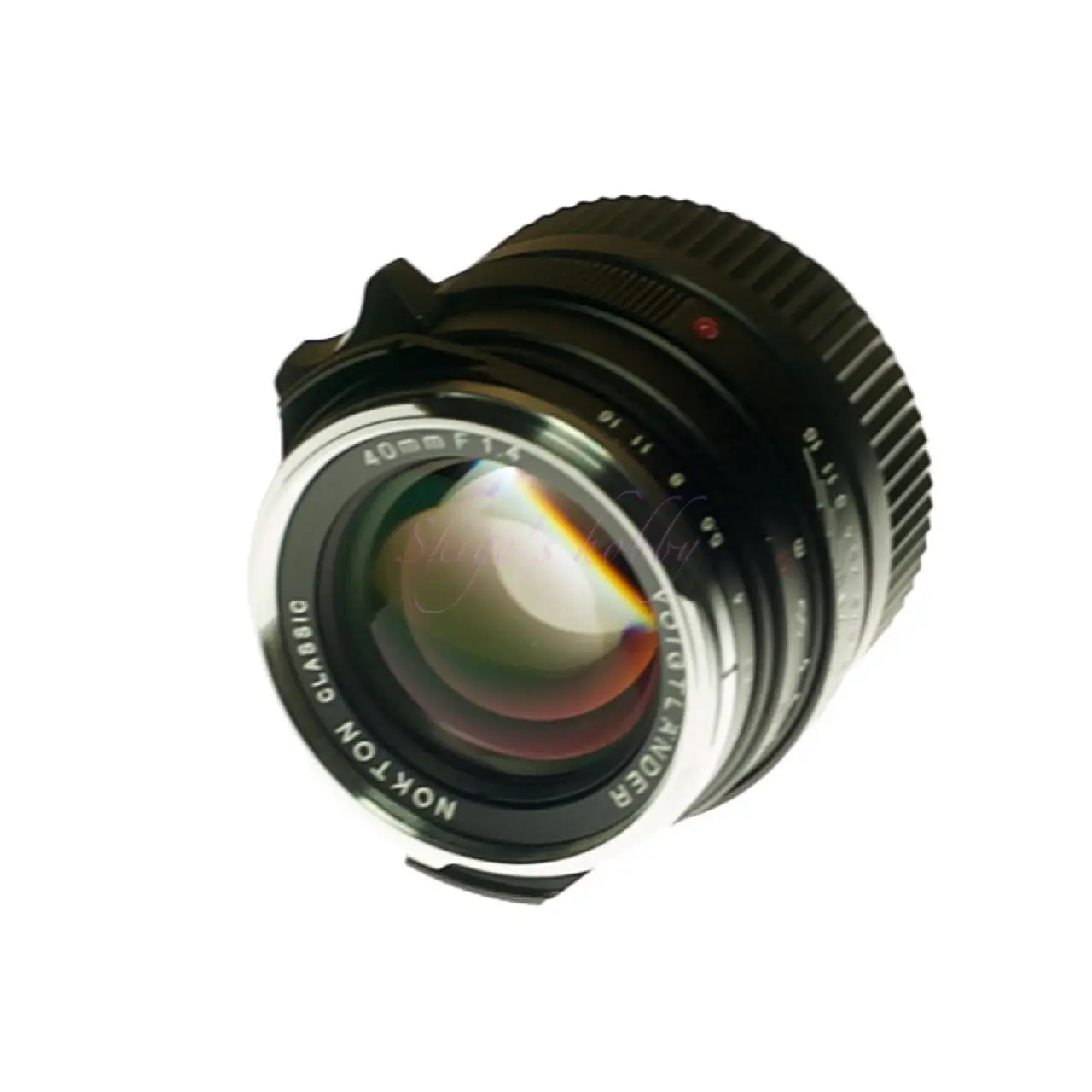
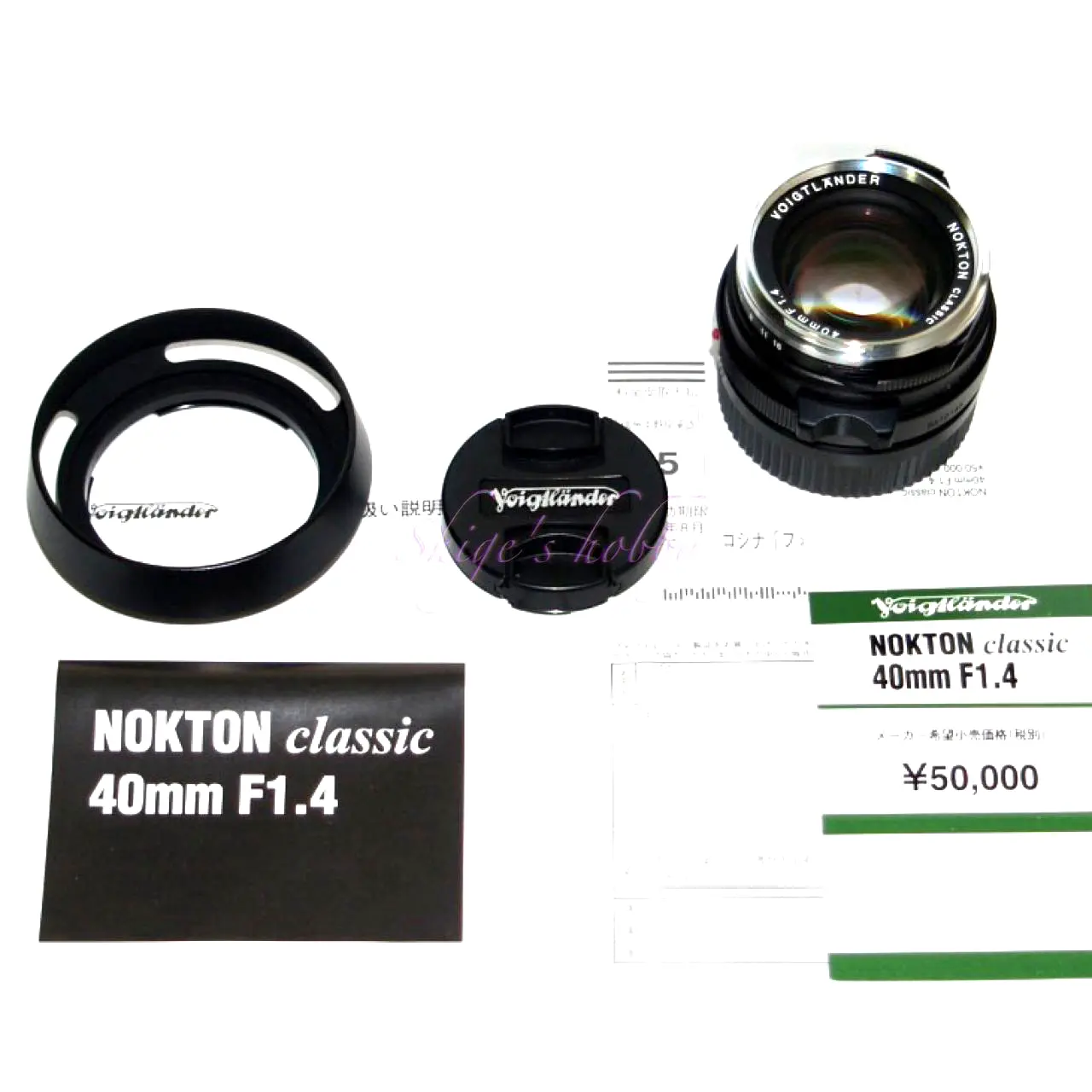
The Voigtlander NOKTON 40mm F1.4 is a Leica M-mount compatible VM mount semi-standard lens released by Cosina Voigtlander in 2004.
The main specifications are as follows, with detailed specifications listed in the table.
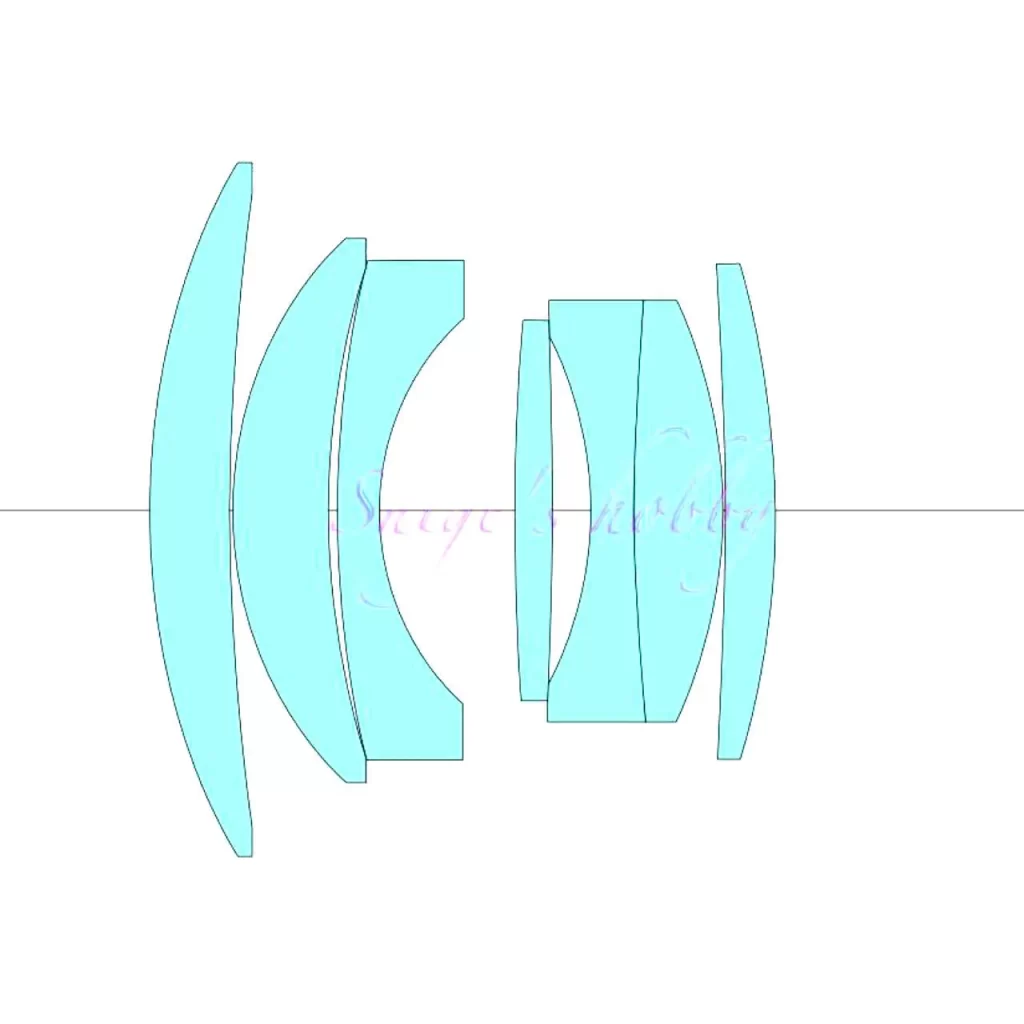
- It features a lens construction of 7 elements in 6 groups.
- The lens mount is compatible with the Leica M VM mount.
- The minimum focusing distance is 0.7m.
- It is compatible with rangefinders on rangefinder cameras up to 0.7m.
- The filter diameter is 43mm and screws onto the front of the lens.
- Two types are available: single-coated SC and multi-coated MC.
The lens construction is a modified double Gauss type, with a large front element for maximum brightness and two cemented elements in the rear group. No aspherical lenses are used.
2.Usability
The Voigtlander NOKTON 40mm F1.4 lens was released during the time when people were transitioning from film to digital cameras.
Looking through my photo archive, I see that I used both reversal and negative film with my film camera and also used it with my digital camera, which indicates that I liked it at the time.
While it can be a bit unruly at wide apertures, it becomes much sharper when stopped down, exhibiting a dual nature. Therefore, adjusting the aperture value based on the elements in front of and behind the subject yields good results.
I used both reversal and negative film for shooting. I shot with a slightly stopped-down aperture on the film camera. Even then, the image is soft and warm. I feel it pairs well with Kodak’s warm-toned films. It also produces clear images with Konica film, which tends to produce cooler images. This suggests that the lens has good inherent qualities.
I haven’t used it with a digital camera that has a 35mm full-frame sensor. Instead, I used it with a Leica M8, which has a smaller APS-H sensor, and an Epson R-D1, which has an APS-C sensor.
Since the sensor size is smaller than 35mm film, it’s possible to crop the edges of the image, where imperfections are more noticeable, resulting in a more consistent image. However, some may see this as spoiling the lens’s unique characteristics.
I haven’t used this lens with a full-frame digital camera. Instead, I’ve used it with the Leica M8, which has a smaller APS-H sensor, and the Epson R-D1, which has an APS-C sensor.
Since the sensor size is smaller than 35mm film, the image is cropped, which results in more consistent image quality. However, some may see this as spoiling the lens’s unique characteristics.
When used with the Leica M8, applying a sensor size conversion factor of 40 mm x 1.33 (53.2 mm) gives an angle of view close to that of a standard lens. However, since the Leica M8 doesn’t have a 40mm viewfinder frame, you need to either attach an external 50mm viewfinder or aim slightly outside the frame with a 50mm viewfinder and slightly inside with a 35mm viewfinder. This generally allows you to achieve the desired image.
With the Epson R-D1, applying a sensor size conversion factor results in a 40 mm x 1.5 = 60 mm equivalent focal length. This gives a field of view similar to that of a medium telephoto lens. Since the Epson R-D1 also lacks a 40 mm viewfinder frame, aim slightly outside with a 50 mm frame and slightly inside with a 35 mm frame. This will generally allow you to achieve your desired image.
External viewfinders for 60mm focal lengths are rarely sold. While there is one for the Konica Hexanon 60mm f/1.2, it would be difficult to obtain it separately.
Unlike rangefinder cameras, mirrorless cameras allow you to check the bokeh effect through the electronic viewfinder. Rangefinder cameras require repeated shooting to understand the lens’s characteristics. Furthermore, the double-image alignment method for setting the focus position on rangefinder cameras is sensitive; even slight misalignment will cause the focus to shift from the desired point. Again, repeated shooting is necessary to understand its characteristics.
This lens is available in two versions, single-coated (SC) and multi-coated (MC), which differ in their lens coatings. I tried both versions with a digital camera and didn’t notice a significant difference. I used the multi-coated version with a film camera.
3.Summary
In summary, the Voigtlander NOKTON 40mm F1.4 is a lens designed for older rangefinder cameras.
When used with a rangefinder camera, it works better with film cameras. When used with a digital camera, considering focusing accuracy, it performs more reliably with mirrorless cameras than with rangefinder cameras.
Specifications, considerations, etc.
The 40mm focal length is somewhat ambiguous. It is slightly wider than a standard lens but narrower than a 35mm lens. It is often used in cameras with fixed lenses, such as compact cameras, but not commonly seen in interchangeable-lens cameras.
This is likely because determining the appropriate focal length is challenging for fixed-lens prime cameras. Therefore, 40mm, which is somewhere between 35mm and 50mm, is likely chosen as a compromise that offers a degree of versatility.
For Cosina Voigtländer, this was one of their earliest VM lenses, released in two versions: a multi-coated “MC” and a single-coated “SC.” The “SC” was a limited edition, but production resumed in 2005, so it’s still relatively common on the used market. The “Nokton 40mm F1.2” was introduced in November 2017 with the same focal length. However, the F1.4 version has not been discontinued and remains available as of 2024.
The Nokton 40mm F1.2 features a modern lens configuration with aspherical lenses and no apparent connection to the older Nokton 40mm F1.4.
The name “Nokton” comes from the original Voigtländer Prominent 50mm F1.5 lens. Cosina holds the rights to the Voigtländer brand and uses the “Nokton” name for large-aperture lenses with an aperture of f/1.4 or less.
| Items | NOKTON F1.4 | NOKTON F1.2 |
| Focal length(mm) | 40 | 40 |
| Max aperture | 1.4 | 1.2 |
| Min aperture | 16 | 22 |
| Leaf blade | 10 | 10 |
| Lens Construction | 7elements in 6groups | 8elements in 6groups |
| Aspherical lens | Not adopted | Adopted |
| Min distance(m) | 0.7 | 0.5 |
| Lens length(mm) | 29.7 | 43.3 |
| Max diameter(mm) | 55 | 60.8 |
| Filter Size(mm) | 43 | 52 |
| Weight(g) | 175 | 315 |
| Lens mount | VM | ← |
| Release date | 2004.4.10 | 2017.11.22 |
| Price(Yen/No-tax) | SC/MC 50,000- | 120,000 |
Reference links
- NOKTON 40mm F1.4(VM) Official Web-site
- NOKTON 40mm F1.2(VM) Official Web-site
- Leica Lenses of the World Part4 There is an introductory article on p. 74 in the Japanese book.
寄付のお願い・Request for donations
Affiliate link
- NOKTON 40mm・Ads by ebay
- Voigtlander VM・Ads by ebay

Update history
- 2026.5.31
- 2025.8.5
- 2024.04.22
- 2023.10.11
Be First to Comment