
Last updated on 2026-05-26
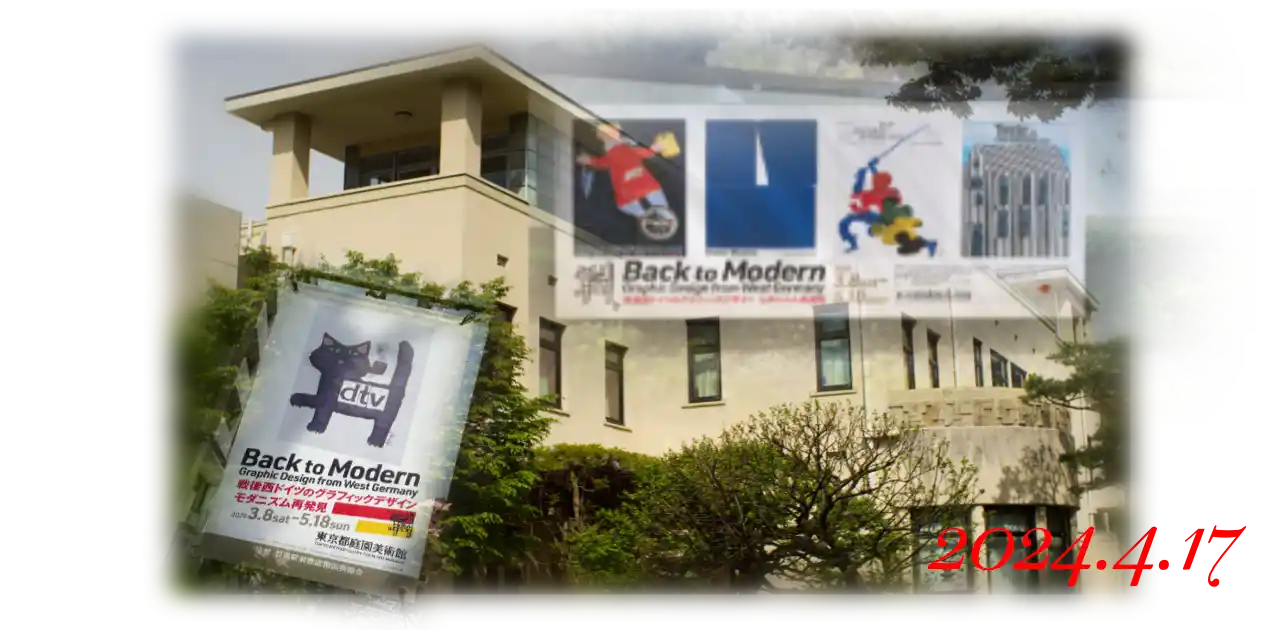
My impressions of the exhibition “Post-War West German Graphic Design: Rediscovering Modernism,” held at the Tokyo Metropolitan Teien Art Museum in Minato Ward, Tokyo, in April 2025.
- Please see the disclaimer regarding advertising here.
- Italicized links in the text are advertisement links that take you to other sites.
- If you find any images used on this site problematic, please contact us via the comments or inquiry form, either as the rights holder or their representative. We will review the matter and take appropriate action.
Table of contents
Exhibition Overview
- Exhibition Title: Post-War West German Graphic Design: Rediscovering Modernism
- Dates: March 8 (Sat) – May 18 (Sun), 2025
- Location: Tokyo Metropolitan Teien Art Museum
- Admission Fee: General Admission ¥1,400 (Other discounts available)
- This exhibition is free of charge with a valid 2025 Gurutto Pass.
- Date of Visit: April 17, 2025
The exhibition consists of works from the “A5 Collection Düsseldorf,” collected by Jens Müller and Katharina Zuseck.
The exhibition is divided into five chapters, including an introduction, and according to the distributed list, there are 364 exhibits (excluding duplicates).
- Introduction – Main Building, 1st Floor (Partial photography permitted)
- Typography – Main Building, 2nd Floor (Photography prohibited)
- Geometric Abstraction – Main Building, 2nd Floor (Photography prohibited)
- Photography – New Building, Gallery 1 (Photography permitted)
- Illustration – New Building, Gallery 1 (Photography permitted)
The exhibition floors extend from the first to the second floor and into the new building.
The shop selling catalogs and other merchandise, as well as the café for relaxation, are located in the new building.
My impression: “I was drawn to the cat on dTV.”
dTV, officially known as dTV Verlagsgesellschaft, is a German publishing house.
One of the most symbolic visuals in this exhibition is a cat painted by Celestino Piatti. Piatti’s works are on display in the new building, and he left behind many other pieces besides cat paintings.


This exhibition showcases the pioneers of modern design through posters and illustrations. It demonstrates how modern commercial design relied heavily on typography and images to convey powerful messages.
I recall seeing posters and leaflets from leading German companies, such as BMW and Lufthansa, before. There are also exhibits related to Documenta, a major international contemporary art exhibition held every five years in Kassel, Germany. There are also exhibits on the Bauhaus.
Besides Celestino Piatti’s cats, I was particularly drawn to the typography works on the second floor. The elements that make up these works clearly form a continuum of “repetition and inversion,” and it’s fascinating how they encapsulate the evolution of design history through the repetition and inversion of trends.
After examining the designs of this era, I’ve noticed many similar-looking illustrations in recent commercial design. The individuality of the work is often maintained by the unique style of the artist creating the main visual. The arrangement of illustrations and typography in this era reminded me of the difficulty of differentiation.
Design is a medium meant to be seen by many people. In today’s world of incredibly fast information dissemination, designers face the dilemma of imitators quickly appearing, even when they propose innovative designs. They also face various other issues related to the rapid pace of consumption. Frequent imitation in themed designs for exhibitions and other events demonstrates the limitations of two-dimensional design. While looking at wonderful designs from the past, I pondered the current problems vaguely.
For this exhibition, the anteroom next to the perfume tower in the main building and Gallery 2 in the new building were closed.
Summary
This exhibition offers an overview of the development of commercial design in Germany and is sure to delight anyone interested in design. Many of the movie posters showcase the influence of Surrealism, making this exhibition an excellent choice for those who appreciate that style.
The former Asaka Palace, with its early summer flowers in bloom, is an Art Deco space where any exhibit would look natural. However, the combination with the more serious German works is particularly striking.
Gallery
Reference links
- 「“Post-War West German Graphic Design: Rediscovering Modernism” – Official Page
- dtv Verlagsgesellschaft mbH & Co. KG
寄付のお願い・Request for donations
Affiliate links
- Tokyo Metropolitan Teien Art Museum・Ads by Amazon
- Tokyo Metropolitan Teien Art Museum・Ads by Rakuten
- Celestino Piatti・Ads by Amazon
- Documenta・Ads by Amazon

Photo Equipment
- HASSELBLAD X2D +XCD28P
- SONY NEX-7 +SUMMILUX R 50-E55 +BAVEYE
Update history
- 2025.4.18
Be First to Comment