
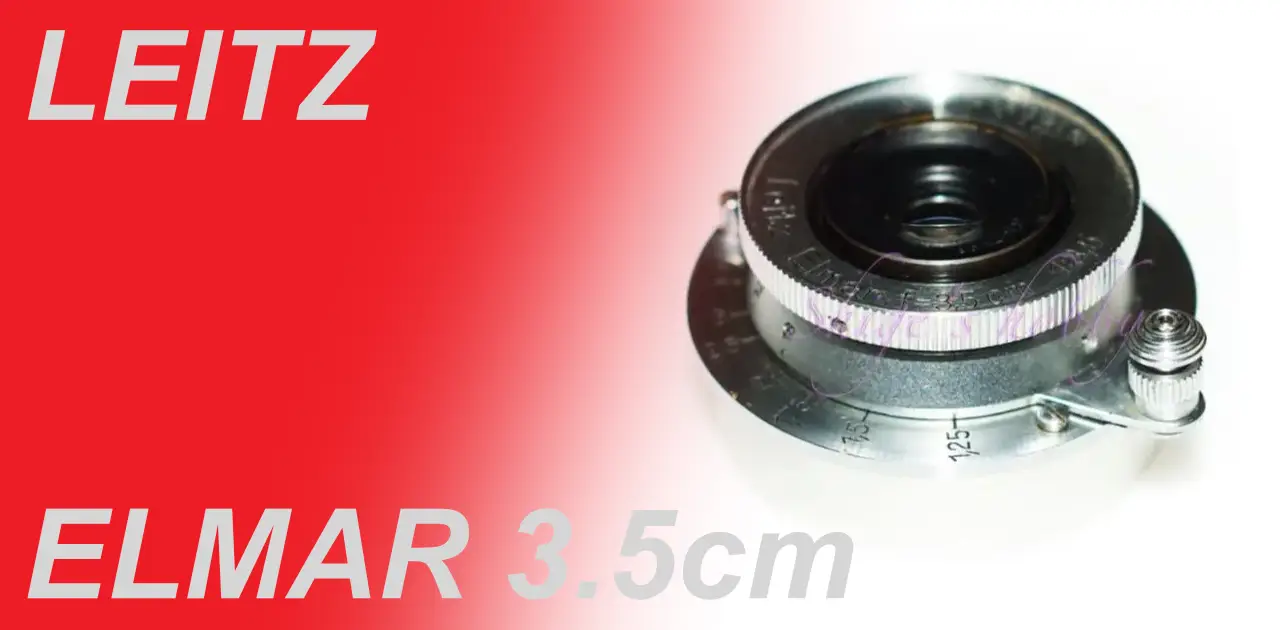
A review and sample photos of the LEITZ ELMAR L39 3.5cm used with the LEICA M6 TTL film camera, LEICA M9, and RICOH GXR digital camera.
- Please see the disclaimer regarding advertising here.
- Italicized links in the text are advertisement links that take you to other sites.
- If you find any images used on this site problematic, please contact us via the comments or inquiry form, either as the rights holder or their representative. We will review the matter and take appropriate action.
Table of contents

Gallery
The following cameras were used to take the example photographs:
- LEICA M6 TTL +KODAK E100G
- LEICA M9
- RICOH GXR +A12-M-mount
Review
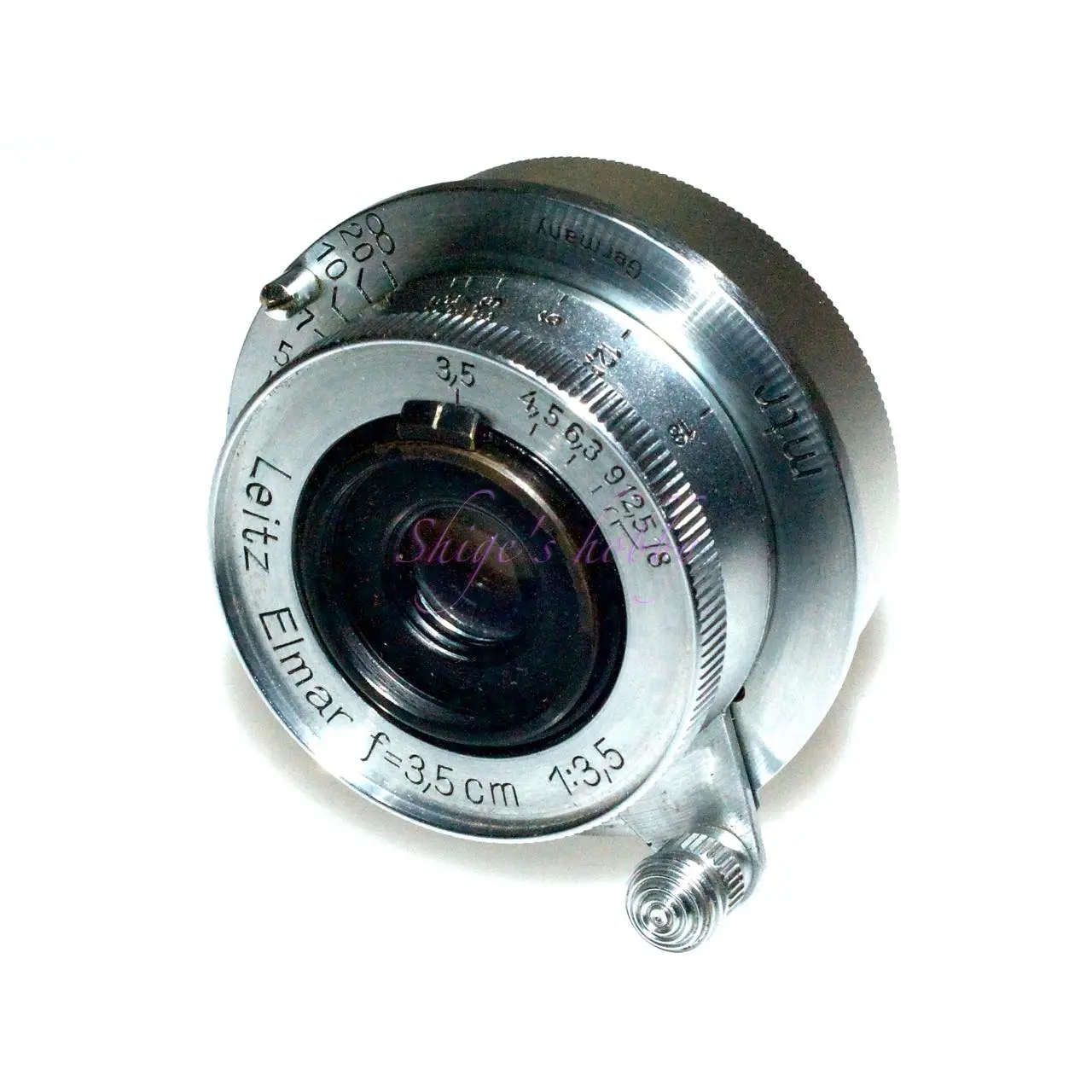
1.Overview
The LEITZ LEMAR 3.5cm F3.5 was Leica’s first lens with a focal length of 35mm, and was released in 1930, the same year as the Hektor 50mm.
Its main specifications include a lens configuration of four elements in three groups, with the third and fourth elements being a Tessar type cemented together, a minimum focusing distance of 1m, modeled after the Barnack Leica, six aperture blades, and a compact barrel measuring 14mm in length from the mount face to the front of the lens.
2.Usability
The LEITZ LEMAR 3.5cm f/3.5 is a compact lens, measuring just 14mm thick. While it doesn’t have the legendary imagery of the original Summicron 8-element lens, it’s still a good lens despite its age.
The lens I owned had a chrome exterior, a feet display, a 180-degree rotating focus ring, and an infinity stop, making it a fairly common feature.
The minimum focusing distance is 1m, which is common with older lenses, so you can’t get close to the subject as is. With a mirrorless camera, this drawback can be overcome by using a mount adapter with an extension mechanism.
The lens I owned was a little cloudy, and in certain lighting conditions, a drop in contrast was observed. A proper triplet lens produces sharper images, so I suspect the problem was with the lens itself.
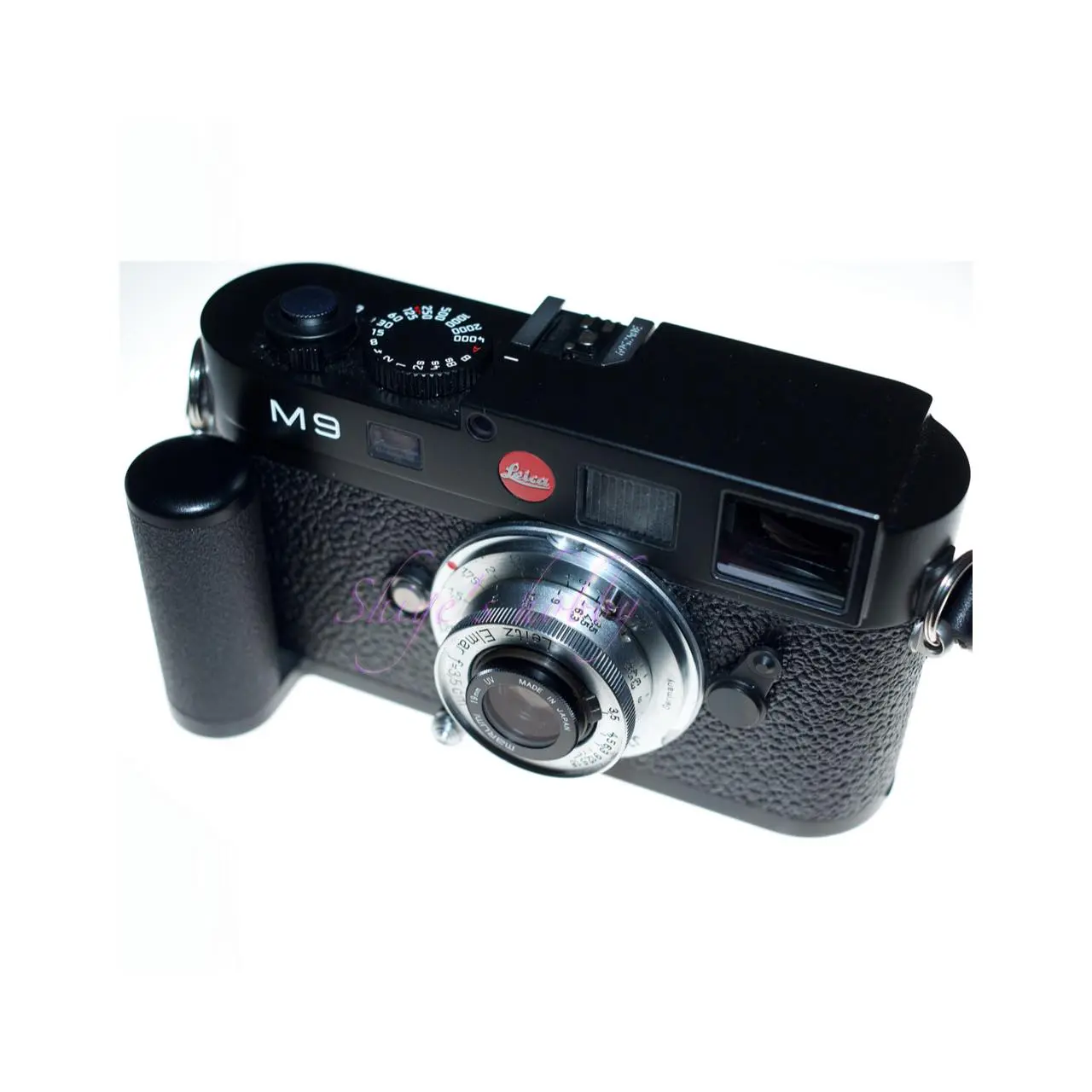
When using this lens with an M-mount camera, an M/L conversion ring is required. For cameras that use the mount adapter tabs to set the viewfinder frame, a 35/135mm ring is required.
I attached this lens to a LEICA M6 TTL x0.85 film camera, loaded it with KODAK E100G reversal film, and got to work. Looking through the high-magnification 0.85x viewfinder and operating the focus lever until the double image overlapped, I took a photo and developed the image. The focus was exactly where I wanted it, and when I looked at the slide through a magnifying glass, I was pleased with the blue of the sky and the resolution.
The LEICA M9 digital rangefinder camera has an 18-megapixel sensor and a 0.68x viewfinder. While the viewfinder magnification is inferior to that of the M6TTL, there were no issues with the focus position in the resulting image.
The image quality matches the film-like quality of the LEICA M9, and the delicate depiction of the power lines in the photo of Noge and the three-dimensionality of the walking person in focus are clear and crisp, typical of an advanced triplet lens. The cat’s rough fur is also well-represented, though the gravel in the lower right corner shows some artifacts, keeping in mind that this can vary depending on the shooting location.
The GXR A12 is a LEICA M-mount module for the RICOH GXR. It features an APS-C-size sensor (23.6mm x 15.6mm) with 12 megapixels, making the GXR the same as a mirrorless camera. As a result, there is no lens rangefinder coupling, and focusing is done using the 920,000-dot rear LCD or the optional 920,000-dot electronic viewfinder VF-2.
Because it is equipped with an APS-C-size sensor, the focal length in 35mm film format is equivalent to 53mm multiplied by the sensor size conversion factor of 1.5, resulting in an angle of view roughly the same as that of a standard lens.
This specification allows for accurate focusing by using the display’s partial magnification function. However, to discern subtle focus points from the unmagnified image, you will need to familiarize yourself with the displayed image and the focus position. Depending on the shooting scene, it’s often difficult to see without zooming in.
Since only the central part of the lens is used for imaging, the subtle peripheral areas are cropped, resulting in a neat image with consistent brightness throughout, and the texture of the cat’s fur is also depicted satisfactorily.
The 920,000-dot rear LCD and electronic viewfinder specifications are outdated in the 2020s, and mirrorless cameras with APS-C size sensors from the 2020s have higher-resolution electronic viewfinders and rear LCDs that are easier to use. There’s not much point in choosing the GXR, as used prices remain high.
3.Summary
To sum up the ELMAR 3.5cm, it is a compact wide-angle lens. In good condition, it can produce sharp, triplet-type images. As it is an old lens, many are in poor condition, so you should check its condition carefully before purchasing.
If you enjoy taking mysterious photos using flare and ghosting in extreme conditions such as backlit scenes with sunlight, the condition of the lens should not be a problem.
Specifications, considerations, etc.
Because this lens has been in production for a long time, there are many variations. In the 2010s, the rare nickel-cased Elmar could be purchased for a small premium over the standard version, but in the 2020s, due to the small number of nickel-cased lenses produced, lenses in good condition are sold at a significant premium.
The Elmar was the first Leica 35mm wide-angle lens to use a Tessar lens system. Its successor, the Summaron, adopted a Gauss lens system, and the aspherical Summicron 35mm was changed to a retrofocus lens system.
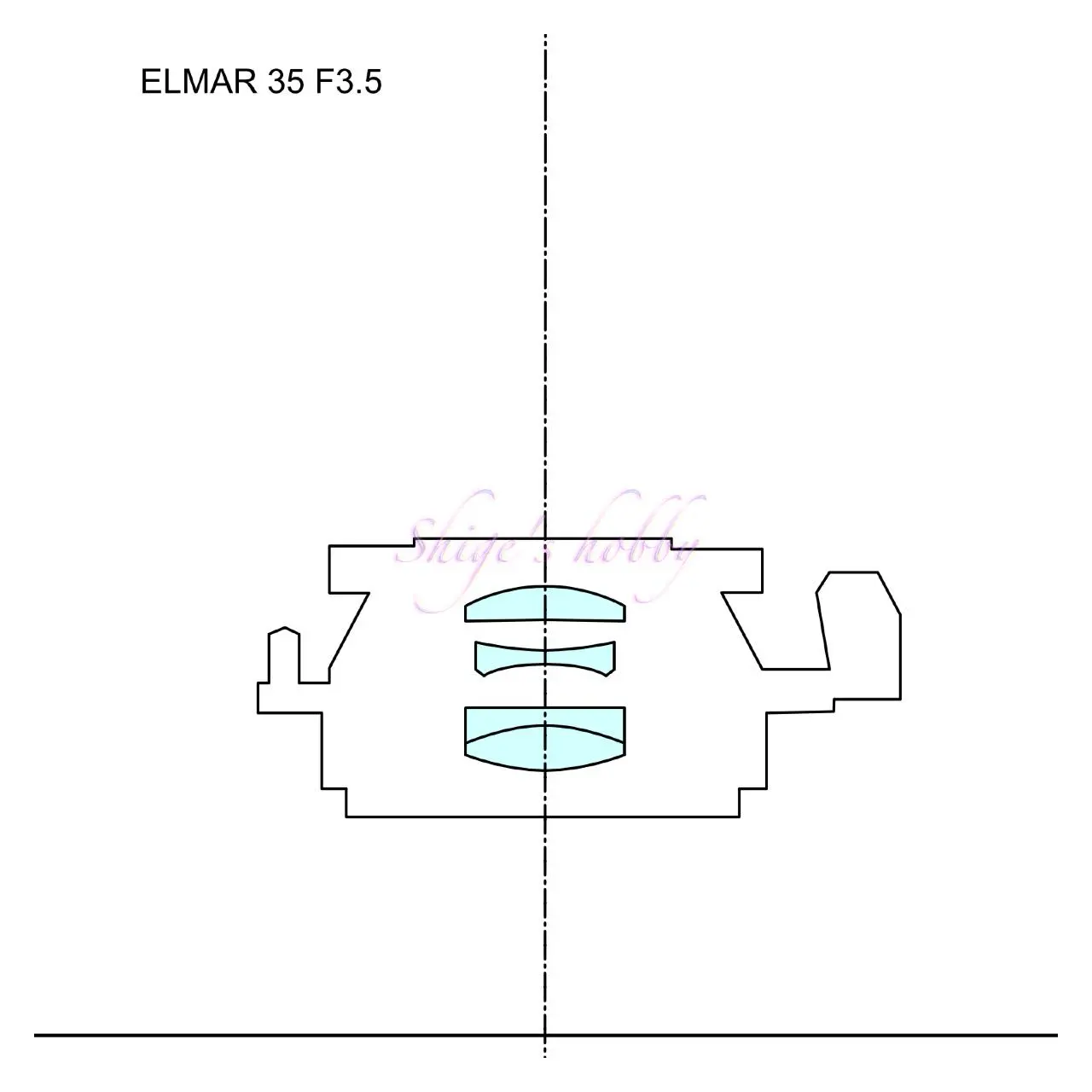
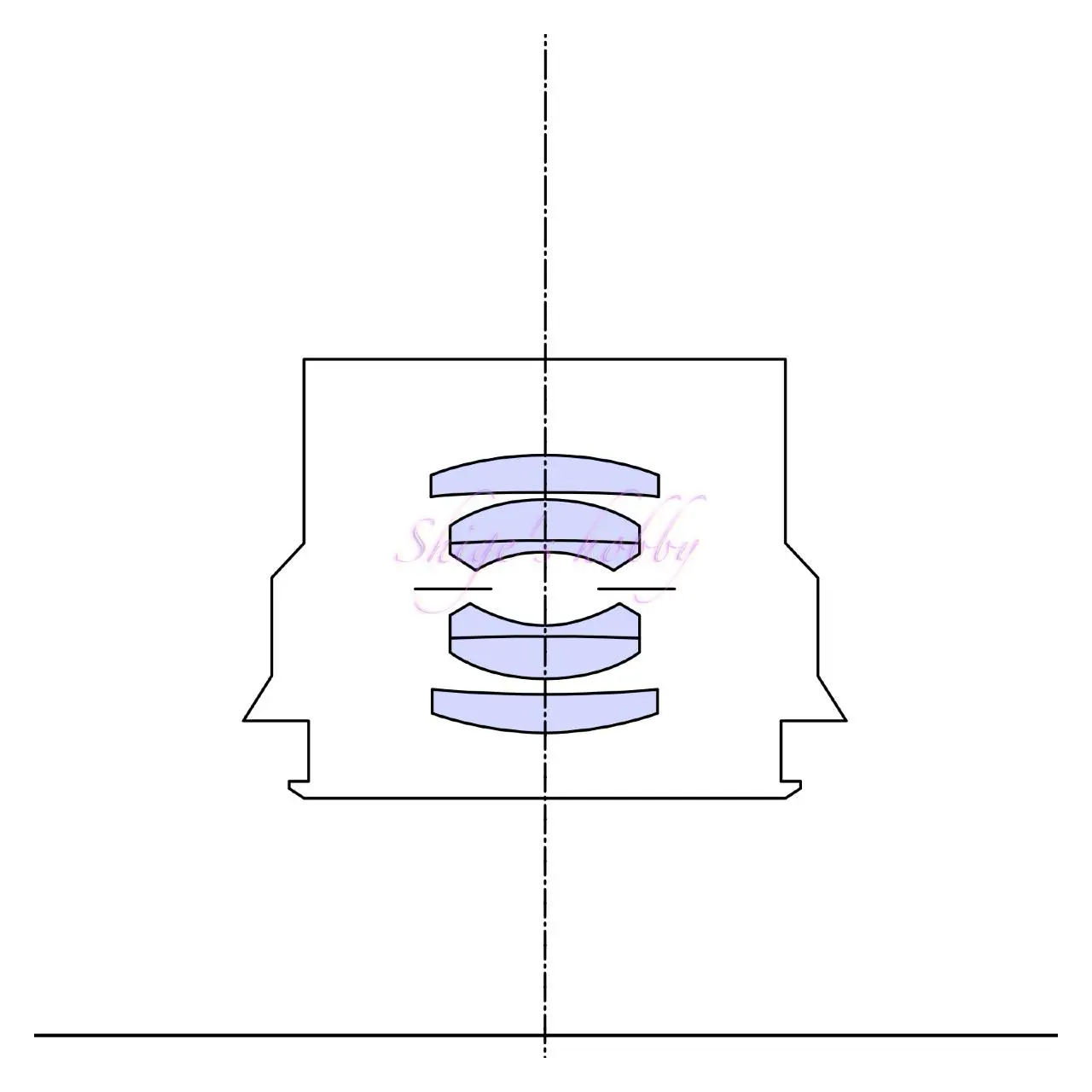
- The lens construction diagrams are quoted from each company’s materials, and the sizes have been adjusted by us, so they are not exact.
| Items | ELMAR | SUMMARON |
| Focal length(mm) | 35 | 35 |
| Max aperture | 3.5 | 2.8 |
| Min aperture | 18 | 22 |
| Leaf blade | 6 | – |
| Lens Construction | 4elements in 3groups | 6elements in 4groups |
| Min distance(m) | 1.0 | 1.0 |
| Lens length(mm) | 14 | 29.4 |
| Max diameter(mm) | 49 | 51 |
| Filter Size | 19mm A36 | E39 |
| Hood | FIKUS FLQOO | IROOA |
| Mount | L39 screw | L39 screw |
| Weight(g) | 130 | 135 |
| Release date | 1930 | 1938 |
Reference links
- Leica Wiki ELMAR 35mm F3.5
- Classic Camera Selection Book 19 How to Identify Leica Lenses (Asahi Sonorama)
- It describes the specifications and the differences between the specifications, and there is no mention of lens description.
- A lens configuration diagram is included in the appendix.
- Leica Lenses of the World Part 1 (Shashin Kogyosha)
- Elmar has a review by Tatsuya Kai on P52
寄付のお願い・Request for donations
Affiliate links
- Leica Lens・Ads by Amazon
- Leica Books・Ads by Amazon
- Classic Camera Specialty・Ads by Amazon

Update history
- 2026.3.5
- 2025.5.9
- 2024.04.27
Be First to Comment