
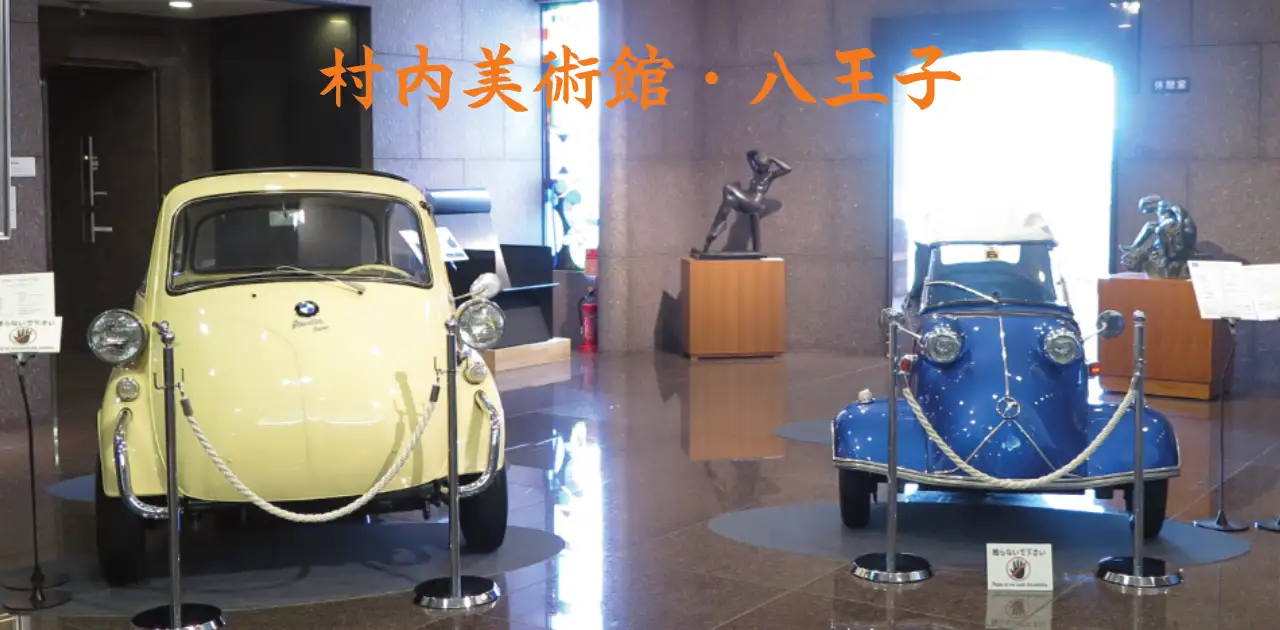
My impressions after viewing the permanent exhibition at the Muranai Art Museum in Hachioji, Tokyo, in April 2026.
- Please see the disclaimer regarding advertising here.
- Italicized links in the text are advertisement links that take you to other sites.
- If you find any images used on this site problematic, please contact us via the comments or inquiry form, either as the rights holder or their representative. We will review the matter and take appropriate action.
Table of contents
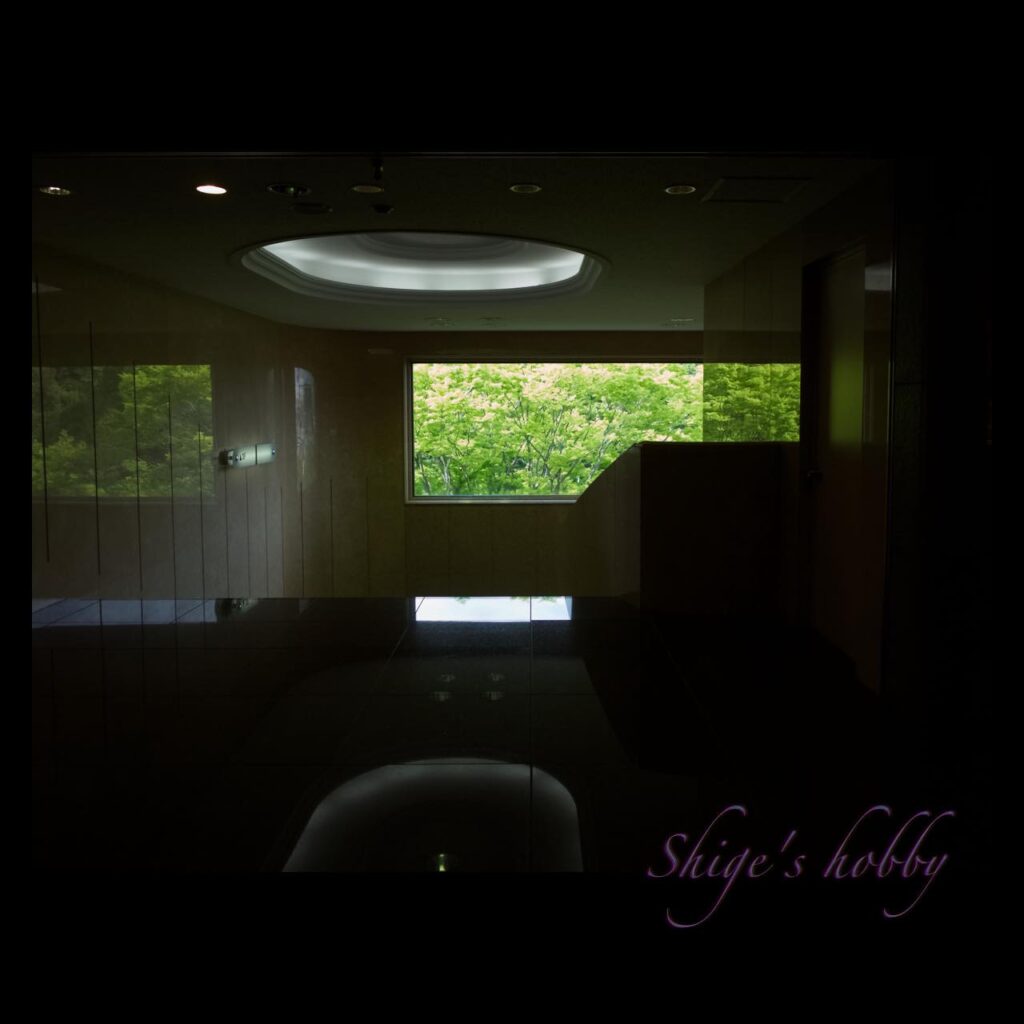
The view from the large windows on the museum’s staircase incorporates the surrounding forest, creating a magnificent borrowed landscape.
Museum Overview
- Murauchi Art Museum
- Murauchi Art Museum Public Interest Incorporated Foundation (established in 2015)
- Admission Fee: 600 yen (General Admission)
Past special exhibitions include “Masters of French Painting: From Millet to Braque” in 1989, the “Tadayoshi Sato Exhibition” in 1997, and the “Courbet Exhibition: The Painter as a Hunter” in 2002. However, no special exhibitions have been held since then, and the permanent exhibition continues. The rotation cycle of the exhibited works is unknown.
As of April 2026, the permanent exhibition features 114 paintings in chapters 1–7 and 57 pieces of furniture and automobiles in chapters 1–4. Chapters 1–4 are mixed displays of paintings and furniture, while chapters 5 and up feature only paintings. Each chapter has chairs where visitors can sit and enjoy the artwork.
As of April 2026, photography is permitted in most areas of the permanent exhibition. However, photography is prohibited in the following sections: all works in Chapter 4: The Nostalgic Barbizon School and the Impressionist section of Chapter 5: Impressionism, the School of Paris, and Up-and-Coming Japanese Painters, which features works by Alfred Sisley, Raoul Madrassi, Pierre-Auguste Renoir, Jules Pascin, Edouard Manet, and Tsuguharu Foujita.
Please read the notices provided upon entry and follow the rules when taking photographs.
Paintings, Objects, and Exhibition Overview
- Entrance
- Chapter 1: Forest of Chairs
- Chapter 2: Garden of Chairs
- Chapter 3: Flowers, Birds, Wind, and Moon: Japanese Elegance, Western Splendor
- Chapter 4: The Nostalgic Barbizon School (Photography of works prohibited)
- Chapter 5: Impressionism, the School of Paris, and Up-and-Coming Japanese Painters (Photography of some works prohibited)
- Chapter 6: Hymn to Venice, the City of Water
- Chapter 7: Contemporary France and Japan
Furniture, automobiles/exhibition overview
- Entrance
- Chapter 1: Forest of Chairs
- Chapter 2: Garden of Chairs
- Chapter 3: Flowers, Birds, Wind, and Moon – Japanese Elegance, Western Splendor
- Chapter 4: The Nostalgic Barbizon School
Museum history
- Opened in 1982 to exhibit the collection of Michimasa Murauchi (1930-2025).
- Relocated to its current location on the 3rd floor of Murauchi Furniture Access Hachioji Main Store in March 1995.
- Renovated in 2013, and began exhibiting collaborative displays of furniture and paintings.
Review: “A collection that showcases the founder’s discerning eye.”
The art museum is located on the third floor of the main store of Murauchi Furniture Access, a furniture retailer, in Hachioji. You can access the museum via the elevator or the stairs at the back of the store.
Upon entering, visitors are greeted by Dalí’s “Surreal Angel.” Other exhibits include vintage cars, such as a BMW Isetta 300 Export and a Messerschmitt KR201; Kyosuke Chinai’s “Snow Obon”; and Pissarro’s “Bal du Pompier” and “Street Corner” (artist unknown).
The works that left the strongest impression are as follows:
- Chapter 1 focused on the seven paintings on display and the chairs. Among them, Kaii Higashiyama’s Green Poem (lithograph) stood out.
- Chapter 2 featured eleven paintings, three of which—Reiji Hiramatsu’s “Moonlight with Cherry Blossoms” and Seiji Togo’s “Song in the Green Shade,” “Rest,” and “Roses”—matched the chairs on display beautifully, creating a striking impression.
- Chapter 3 featured fourteen paintings and five glass objects. The most impressive piece was the anonymous “Lady,” whose value would likely increase if the artist were identified.
- Chapter 4 showcased sixteen renowned paintings. Constant Troyon’s “Sheep Grazing” stood out in this chapter for its stunning three-dimensional rendering of the sheep’s wool. Works by Courbet, Millet, and Corot were also included, making this chapter a must-see.
- Chapter 5 features twenty-six paintings. Three works by Vlaminck—”Still Life,” “Flowers,” and “Snowy Village”—are particularly wonderful and are among my personal favorites. Tsuguharu Foujita and Utrillo each have three works on display, and they are equally impressive. Furthermore, seven works by Kisling are exhibited, which is a significant number for fans. It is also appealing that photography is permitted in this chapter, excluding the Impressionist works.
- Chapter 6 features 14 paintings. Two oil paintings by Buffet, “Mallotus and White Cloth” and “Still Life,” are particularly striking and are flanked by ten lithographs.
- Chapter 7 features 15 paintings. With Kros Weisbach’s Andante, works by Kyosuke Chinai, and four oil paintings by Cassignol, this chapter will appeal to contemporary art fans.
It feels incredibly luxurious to be able to see three works by Vlaminck on permanent display.
Starting in December 2025, the CondeHouse “Hatsune Miku Art Chair” will also be on display. Of course, you can’t sit on it.
Michimasa Murauchi, the museum’s founder, laid the foundation for this collection, and his discerning eye is evident in the works on display. Furthermore, Murauchi’s love for art is evident in his decision to immediately return Corot’s “Le Soir,” which he had unknowingly purchased as stolen, to the Louvre Museum, even after the Murauchi Museum was granted ownership.
The following is a quote from the history of the Murauchi Museum:
In October 1987 (Showa 62), “Le Soir,” a painting by Barbizon School artist Camille Corot held in the Murauchi Museum of Art’s collection, became the subject of an international incident.
Corot’s works were stolen by a gang of thieves during a traveling exhibition at the Musée Marmottan in Paris. Several of these works were brought to Japan, including “Le Soir,.” It was a piece from the Louvre Museum’s collection. During the investigation, the painting was returned to France. Subsequently, through negotiations, “Le Soir,” was returned to the Murauchi Museum of Art.In April 1989 (Heisei 1), in recognition of the donation of Camille Corot’s “Le Soir,” to the Louvre Museum, the museum awarded the title of Japan’s first Special Honorary Member to the Murauchi Museum of Art’s president, Michimasa Murauchi.
A plaque commemorating this honor is displayed next to “Le Soir,” in the Corot Room of the Louvre Museum in Paris.
参考情報
- Murauchi Art Museum・Murauchi Official Page
- History of Murauchi・Murauchi Official Page
- CondeHouse “Hatsune Miku Art Chair”
- Case of stolen masterpieces being smuggled solved・Tokyo National Research Institute for Cultural Properties
- Corot, Jean-Baptiste Camille《Le Soir》
- Chikauchi Kyosuke’s “Snowy Bon Festival”・Saijo’s Unusual Scenery: Saijo Festival, Saijo City, Ehime Prefecture (HTTPS not yet supported)
Information on how to visit the Murauchi Art Museum is available on the following website.
寄付のお願い・Request for donations
Affiliate links
- Murauchi Art Museum・Ads by Amazon
- Murauchi Art Museum・Ads by Rakuten

Photo Equipment
- CANON G1X Mark-II
- CANON EOS 1D Mk-IV +EF40mm F2.8
Update history
- 2026.4.27
Be First to Comment