
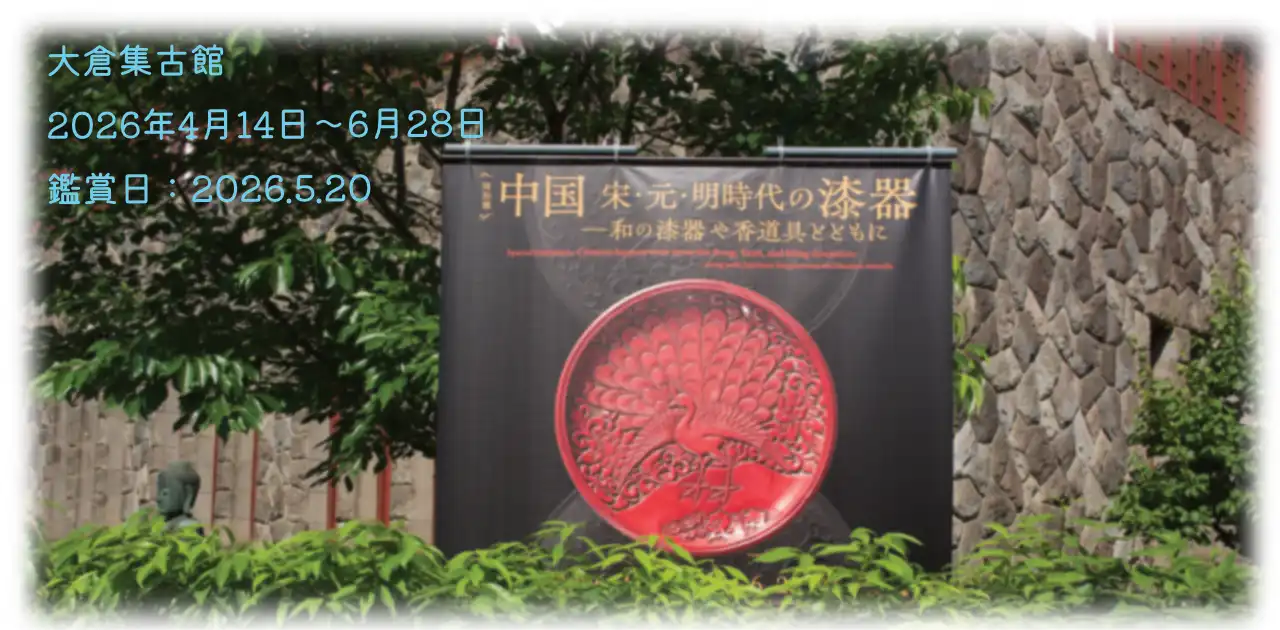
My impressions after viewing the exhibition “Chinese Lacquerware from the Song, Yuan, and Ming Dynasties – Along with Japanese Lacquerware and Incense Utensils” at the Okura Shukokan Museum in Toranomon, Minato-ku, Tokyo in May 2026.
Canadian Embassy in Aoyama, Tokyo, during the Tokyo Architecture Festival 2026 in May 2026.
- Please see the disclaimer regarding advertising here.
- Italicized links in the text are advertisement links that take you to other sites.
- If you find any images used on this site problematic, please contact us via the comments or inquiry form, either as the rights holder or their representative. We will review the matter and take appropriate action.
Table of contents
Exhibition Overview
- Exhibition Title: Chinese Lacquerware from the Song, Yuan, and Ming Dynasties – Alongside Japanese Lacquerware and Incense Utensils
- Period: April 14 (Tue) – June 28 (Sun), 2026
- Hours: 10:00 – 17:00 (Last entry at 16:30)
- Closed: Every Monday (except May 4), May 7 (Thu)
- Location: Okura Shukokan Museum
- Admission Fee: 1500 yen (One free entry with a valid Grutto Pass, including entry to the special exhibition)
- For information about the Gurutto Pass, please refer to the link provided.
- Inside the museum, all works on display on the first floor can be photographed, while on the second floor, only three designated items can be photographed.
This exhibition features two sections: Chapter 1 on the second floor, showcasing privately owned “Chinese lacquerware from the Song, Yuan, and Ming dynasties,” and Chapter 2 on the first floor, displaying museum-owned “Japanese lacquerware and incense utensils.”
My impression: “The vibrant world of lacquerware”
Chapter 1 of this exhibition, “Lacquerware from the Song, Yuan, and Ming Dynasties of China,” displays a total of 54 lacquerware pieces, each organized into chapters based on color.
- “Unpatterned Lacquerware / Soku-kyu / Suki-kyu” (7 pieces)
- “Rhinoceros Skin / Carved Rhinoceros Skin” (1 piece)
- “Tsui-Vermilion / Carved Vermilion Lacquer” (27 pieces)
- “Tsui-Black / Carved Black Lacquer” (5 pieces)
- “Tsui-Yellow / Carved Yellow Lacquer” (4 pieces; 2 available for photography)
- “Red Flowers and Green Leaves / Carved Polychrome Lacquer” (3 pieces)
- “Raden” (Mother-of-Pearl Inlay): 6 pieces (1 available for photography)
- “Zonsei” (Star-Patterned) / “Tenshitsu” (Filled Lacquer): 1 piece
I wasn’t interested in lacquerware before, but learning about its variations has sparked my interest. The pieces usually have color names and characteristics listed, which is helpful for beginners.
This private collection includes a piece of the legendary “Zonsei” lacquerware. It was featured in a special exhibition at the Gotoh Museum in 2014, for which a catalog was published.
I found it interesting that each chapter is color-coded, though some colors only feature one piece. While this likely reflects the collector’s preferences, it also suggests that acquiring certain pieces may be more difficult depending on the color. This indicates the depth of the lacquerware collecting world.
The Tokyo National Museum also has a lacquerware collection and sometimes features lacquerware in its permanent exhibitions. I anticipate that there will be more opportunities to enjoy lacquerware at the Tokyo National Museum in the future.
Chapter 2 of the collection displays the national treasure “Kokin Wakashu Preface” (by Fujiwara no Sadazane), which will be moved on May 12 and June 2.
Summary
Since my Gurutto Pass was still valid, I stopped at the Sen-oku Hakukokan Museum on my way to the Tokyo Museum of Art. I was captivated by the vibrant and rich variety of lacquerware. I saw wonderful pieces in the first-floor collection, as well as in the extensive lacquerware and fragrant wood collection.
Side note
Unfortunately, the “Statue of Fugen Bodhisattva Riding an Elephant,” which was on display at the museum before its renovation, hasn’t been exhibited recently. While it’s probably too large for the gift shop area on the first basement floor, displaying it permanently near the video corner would definitely motivate people to come down to the basement.
Reference links
- Okura Shukokan Museum・Official page
- Gotoh Museum・Official page
- Zonsei – The Colors of Lacquerware・The National Art Center, Tokyo
- Chinese lacquerware・Tokyo National Museum
寄付のお願い・Request for donations
Affiliate links
- Okura Shukokan Museum・Ads by Amazon
- Okura Shukokan Museum・Ads by Rakuten
- Okura Shukokan Museum・Ads by Yahoo Shopping

Update history
- 2026.5.21
Be First to Comment