

A review and sample photos of the Ricoh GR 21mm Leica L39 screw mount lens used with the LEICA M8 digital rangefinder camera, EPSON R-D1, HEXAR RF Limited rangefinder camera, SONY α NEX-5 mirrorless camera, and PANASONIC DMC-GF1.
- Please see the disclaimer regarding advertising here.
- Italicized links in the text are advertisement links that take you to other sites.
- If you find any images used on this site problematic, please contact us via the comments or inquiry form, either as the rights holder or their representative. We will review the matter and take appropriate action.
Table of contents

Gallery
The following cameras were used to take the example photos.
- HEXAR-RF-LIMITED +FUJIFILM PROVIA400F
- LEICA M8
- EPSON R-D1
- SONY α NEX-5
- PANASONIC DMC-GF1
Review

1.Overview
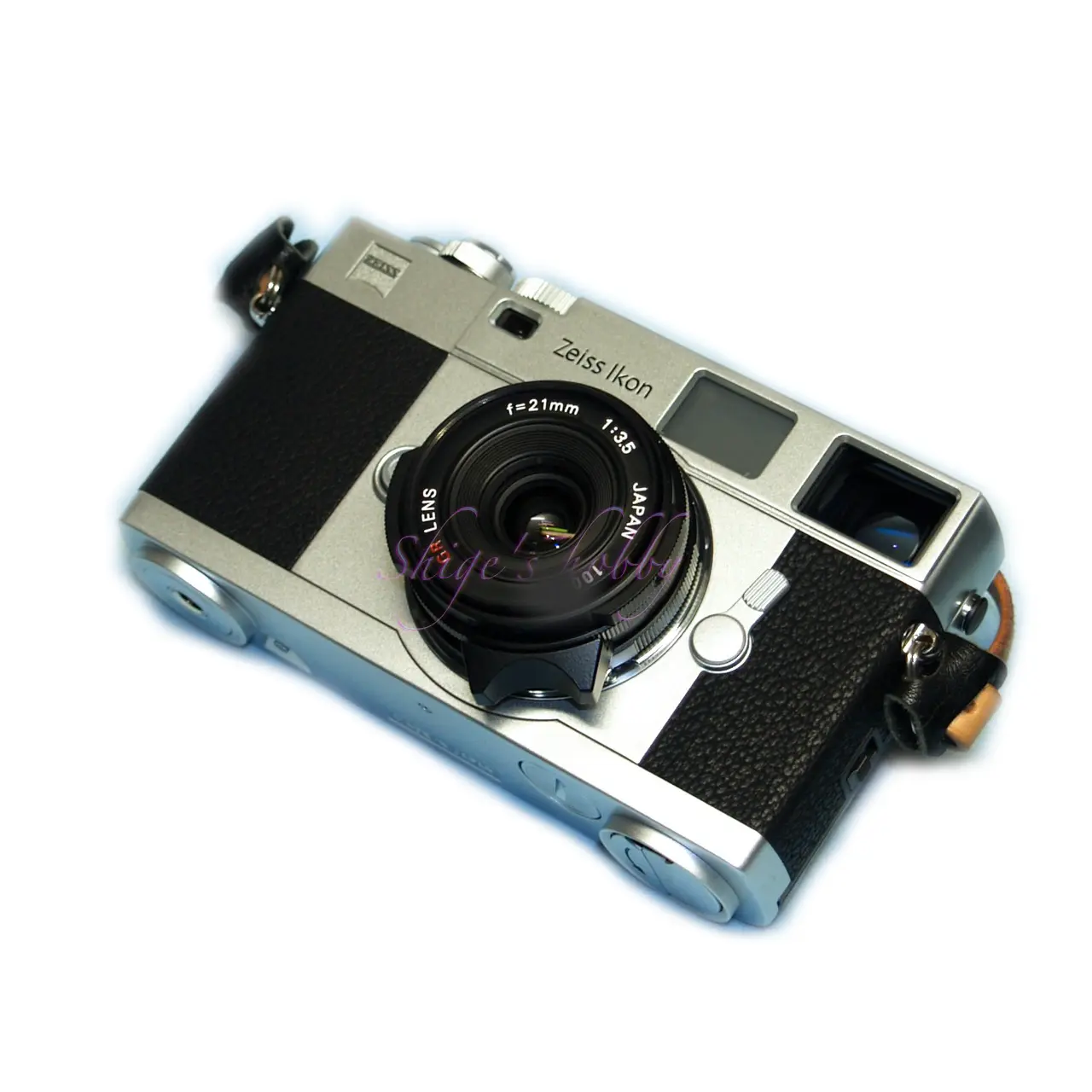
The RICOH GR LENS 21mm F3.5 is one of the lenses released by RICOH for the Leica L39 screw mount. It was a test lens sold with the L39 mount as a preliminary step before the release of the GR 21mm film camera.
The total number of units manufactured was approximately 1,700 (1,000 with silver barrels and 700 with black barrels).
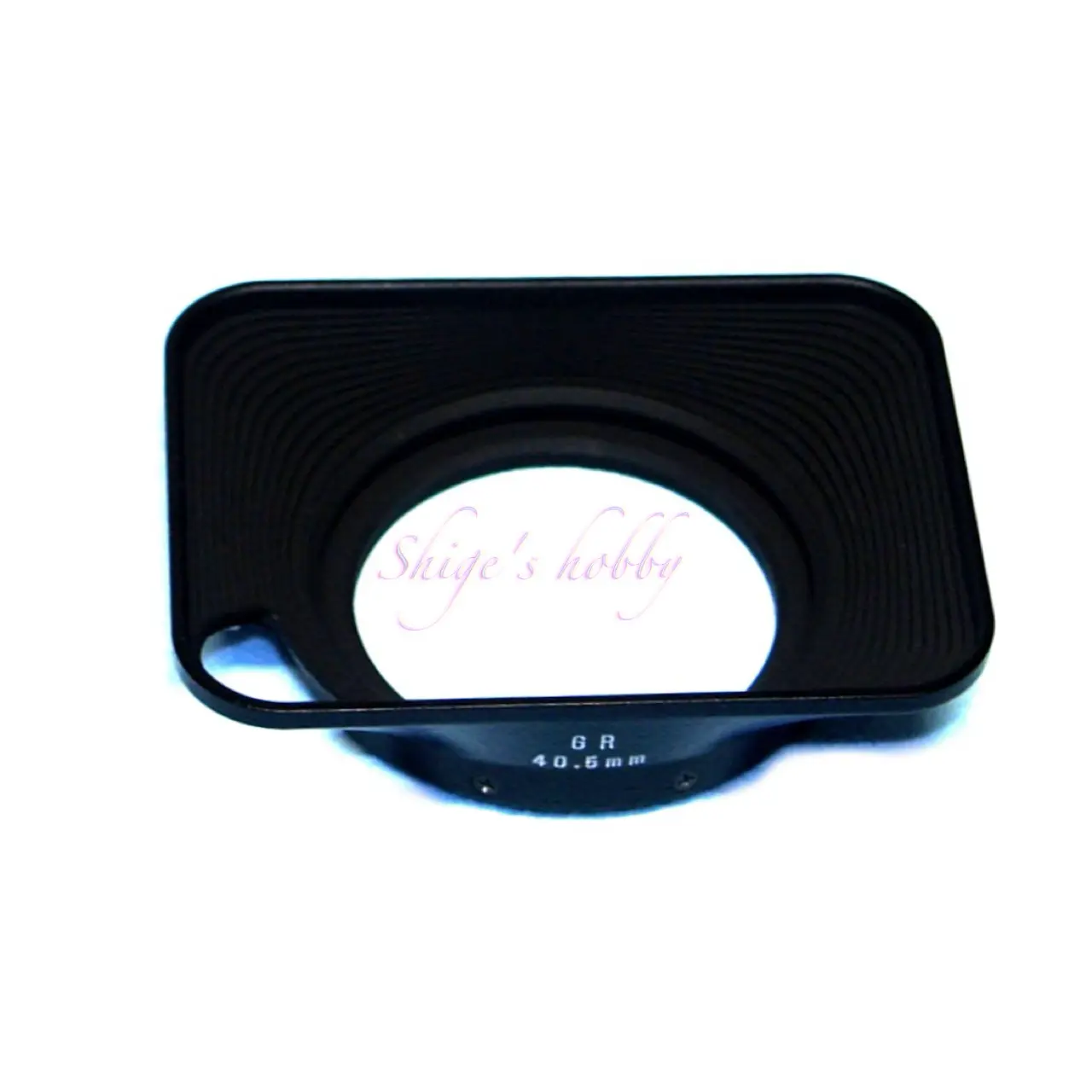
When the lens is complete, it comes with a square lens hood, a 21mm viewfinder, and a focusing lever. Because the lens has a large grip, the focusing lever hardly affects operability. Therefore, when the lens is sold separately, the focusing lever is often missing.
In the 2000s, dead stock items on the used market sometimes included the focusing lever inside the box, but such dead stock items are rarely seen in the 2020s.
2.Usability
The RICOH GR LENS 21mm F3.5, while having a substantial weight for a 21mm wide-angle rangefinder lens, boasts a compact barrel and a well-balanced design that looks good on any camera.
At the time of use, approximately five years after the lens’s release, the lens was still solid, the focusing ring was smooth, and the aperture ring clicked into place, resulting in excellent operability.
The image quality differs between film and digital cameras, so I will describe my impressions using each camera below.
First, with the film camera HEXAR-RF-LIMITED, I loaded Fujifilm PROVIA 400F reversal film for nighttime shooting. While the lens’s maximum aperture of F3.5 isn’t particularly bright, the ISO 400 film allowed for handheld shooting even in somewhat low light.
Because the scene had a large contrast between light and dark, I used the brightest area as the exposure reference, resulting in the edges being underexposed. This black crushing and highlight clipping are difficult to avoid in scenes with high contrast, requiring exposure settings tailored to the main subject, and accepting that other colors will be blown out.
The center of the image exhibits a high level of resolution with minimal film noise. Furthermore, the lens configuration is nearly symmetrical, resulting in minimal distortion and almost no vignetting.
The digital rangefinder cameras used were two cameras equipped with sensors smaller than 35mm full-frame sensors. The LEICA M8.2 features a 10-megapixel APS-H size sensor (27mm x 18mm), resulting in a 35mm equivalent focal length of 28mm (calculated using a sensor size conversion factor of 1.33). The EPSON R-D1 features a 6-megapixel APS-C size sensor (23.6mm x 15.6mm), resulting in a 35mm equivalent focal length of 32mm (calculated using a sensor size conversion factor of 1.5).
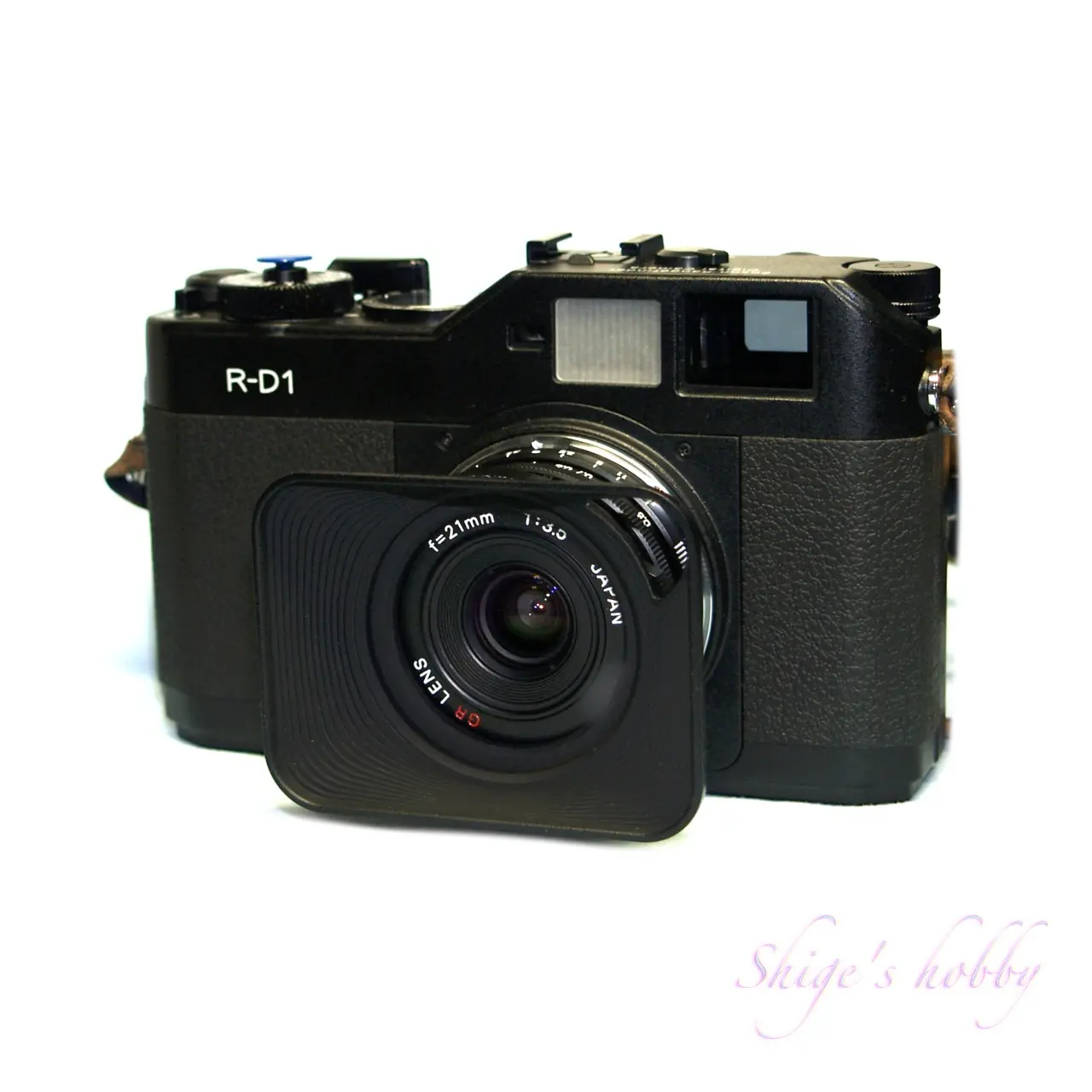
Neither camera has a viewfinder frame corresponding to a 21mm focal length, so an external viewfinder was used to determine composition. The LEICA M8 used a 28mm viewfinder, and the EPSON R-D1 used a 35mm viewfinder. The results showed that with 35mm full-frame sensor cameras, the noticeable vignetting at wide apertures was cropped (cut), resulting in better overall uniformity of the image.
Mirrorless cameras were used, specifically two cameras with sensors smaller than 35mm full-frame sensors. The SONY α NEX-5 has a 16-megapixel APS-C size sensor (23.6mm x 15.6mm), and its 35mm equivalent focal length is 28mm (using a sensor size conversion factor of 1.5). The PANASONIC DMC-GF1 has a 12-megapixel Four Thirds sensor (17.3mm x 13mm), and its 35mm equivalent focal length is 42mm (using a sensor size conversion factor of 2).
With mirrorless cameras, composition is done using the rear LCD or electronic viewfinder, so the original focal length of 21mm is rarely considered. However, with cameras equipped with a Four-frame sensor, the focal length becomes 42mm, close to 50mm, so the awareness of it being a wide-angle lens almost disappears, and it feels more like using a standard lens.
Even with digital cameras, black crushing and blown-out highlights can occur, so just like with film cameras, the photographer needs to consciously determine the exposure.
With cameras equipped with the latest sensors of the 2020s, the dynamic range can be expanded, which can sometimes mitigate black crushing and blown-out highlights. However, the joy of using this lens lies in expressing things that utilize the difference between light and dark, making it a good lens for practicing peaky expressions.
Also, since there are many options for 21mm lenses for rangefinder cameras, after using various lenses, I kept the G BIOGON 21mm which I had modified for M-mount, and disposed of the GR 21mm.
3.Summary
The RICOH GR LENS 21mm F3.5 is a lens with a distinctive rendering style within the L39 mount, making it a promising option for those seeking a compact 21mm focal length lens.
However, depending on the camera, color casting may occur at the edges, and some lenses may be cloudy due to balsam separation caused by aging. Therefore, when purchasing a used lens, it is advisable to check its condition and confirm whether these defects are acceptable before making a purchase.
Specification and Competitor
The GR 21mm lens, having been manufactured over 20 years ago in the 2020s, is now considered a vintage item, and some units exhibit fundamental problems such as lens haze, balsam separation, and barrel looseness. Reputable used camera shops should clearly state this. Caution is advised when buying through auctions or private transactions that list items as “junk” or “no claims.” While actual transaction prices are unknown, the listed prices in stores are often intimidatingly high.
However, the Voigtlander COLOR SKOPAR 21mm F4P, with the same 21mm focal length, has a lens length of 25mm, almost the same size as the GR LENS 21mm. But the COLOR SKOPAR weighs 136g, while the GR LENS 21mm weighs 200g—about 1.5 times heavier. Especially when first holding the lens, you’ll likely be surprised by its weight, which is unexpected given its compact barrel.
The RICOH LENS GR 21mm f2.8 has the same lens configuration as the 21mm lens mounted on the GR21 film camera. However, based on experience using both, the GR21’s lens barrel is very compact and doesn’t look like the same lens as the L39 screw-mount version of the GR 21mm.
This is likely because the L39 screw-mount version of the GR 21mm is larger because the GR21’s lens uses autofocus and an electronically controlled aperture, resulting in a compact barrel. The RICOH LENS GR 21mm f2.8, on the other hand, is larger due to the addition of a manual focus mechanism, aperture ring, and Leica L/M rangefinder coupling.
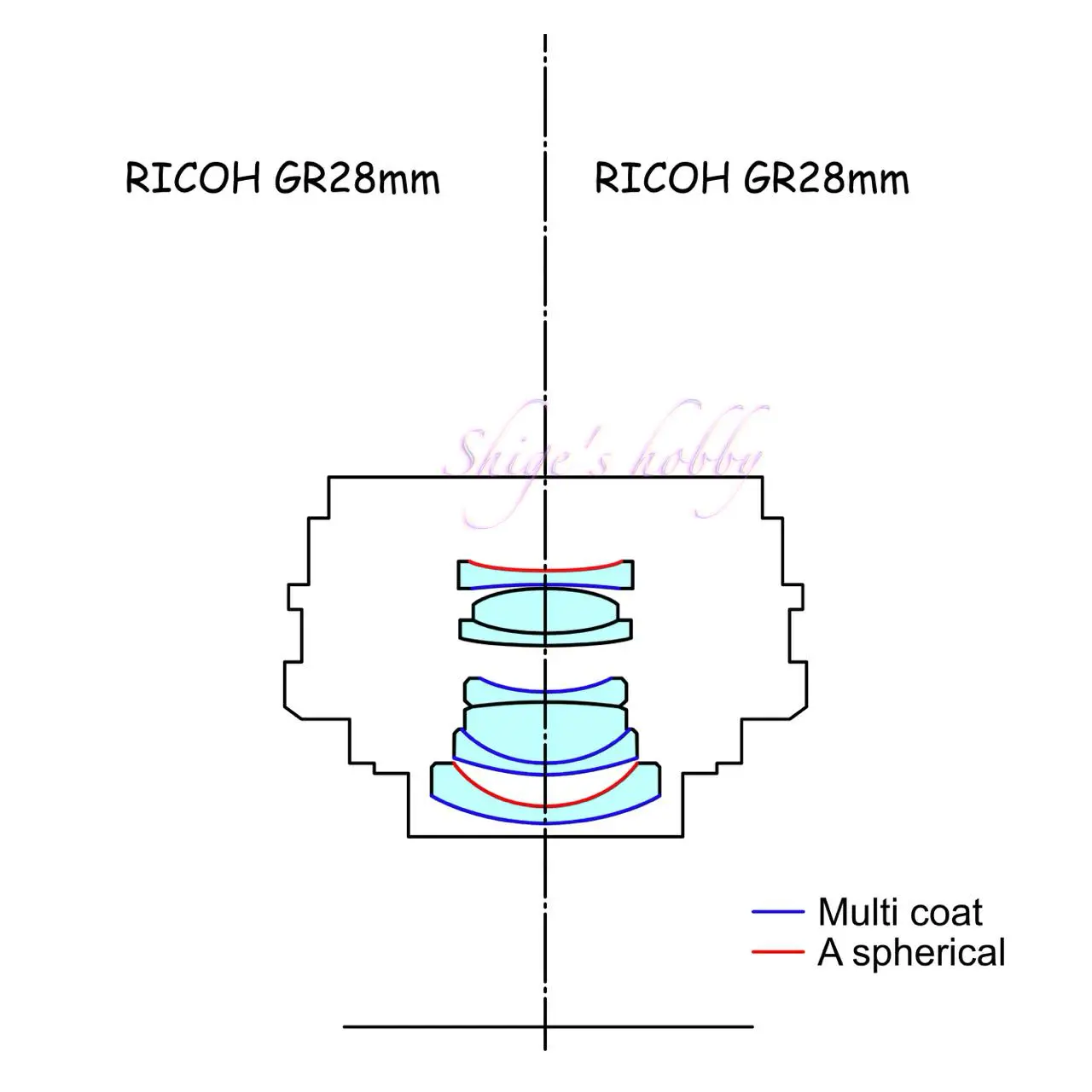
Furthermore, the GR LENS 21mm and GR LENS 28mm differ in their lens design. The GR LENS 28mm was initially sold as a standalone lens following the success of the GR1 film camera. In contrast, the GR LENS 21mm was sold primarily as a test lens for the development of the GR21 film camera.
This contrasting history is an intriguing story about the RICOH L39 screw-mount lens, of which only two were ever sold.
Furthermore, while a difference in lens barrel size is inevitable due to the different focal lengths, comparing the GR LENS 21mm and GR LENS 28mm reveals that the GR LENS 21mm is slightly larger and heavier. This difference is reflected in the design differences between the compact cameras GR1 and GR21.
The image below shows: Left: RICOH GR 28mm, Center: RICOH GR 21mm, Right: Voigtlander COLOR SKOPAR 21mm F4.
By moving the image, you can compare the lenses.

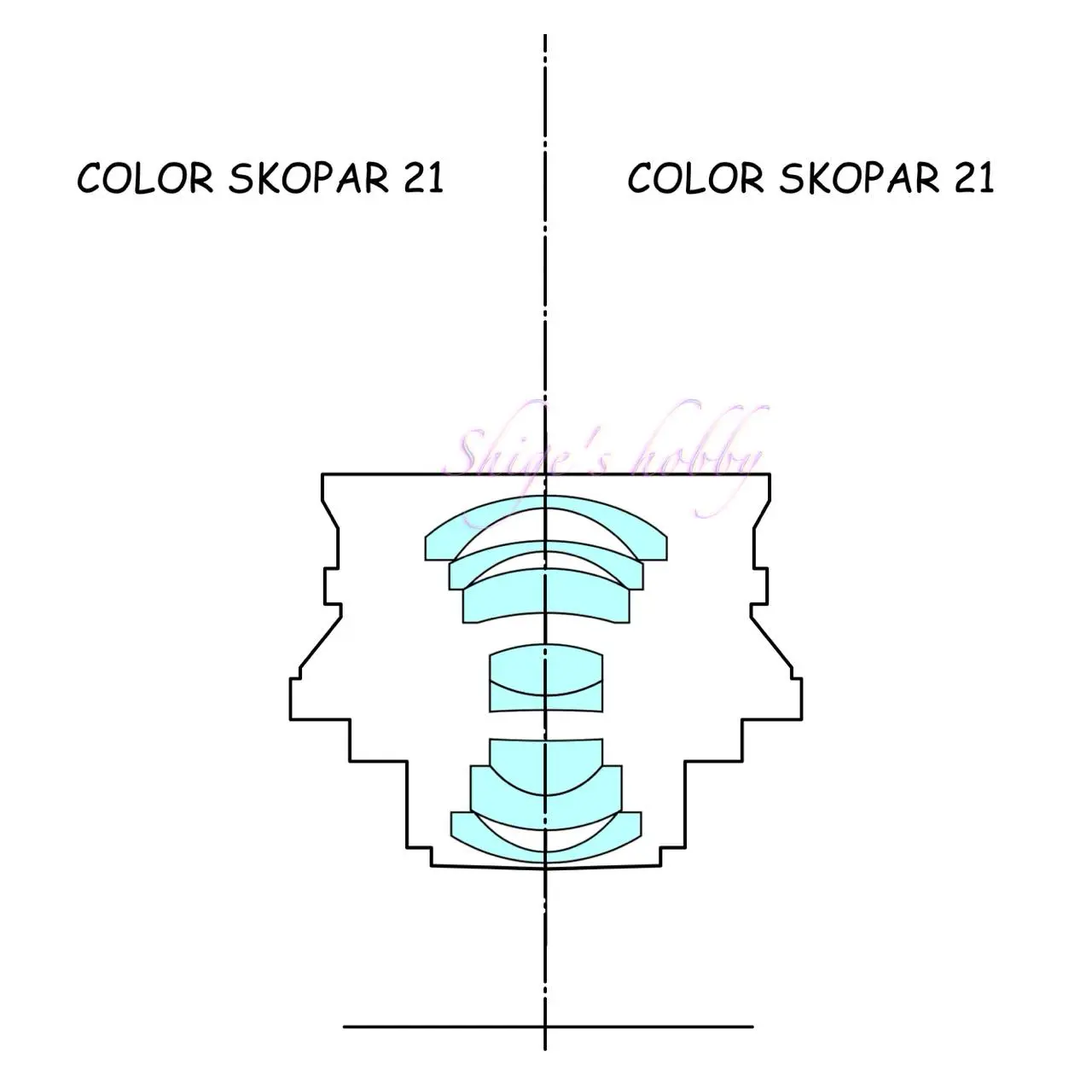
| Item | COLOR SKOPAR | GR21 | GR 28 |
| focal length(mm) | 21 | 21 | 28 |
| Maximum aperture | 4 | 3.5 | 2.8 |
| Minimum aperture | 22 | 22 | 16 |
| Aperture blade | 10 | 10 | 10 |
| Lens configuration | 8 elements in 6 groups | 9 elements in 6 groups | 7 elements in 4 groups |
| Minimum distance(m) | 0.5 ∞ to 0.7m is coupled to the camera’s rangefinder. | 0.5 ∞ to 0.7m is coupled to the camera’s rangefinder. | 0.7 |
| Lens length(mm) | 29.1 (including cylindrical hood) | 25.5 | 23 |
| Lens max diameter(mm) | 49.6 | 49.5 | 49.5 |
| Filter size | 39 | 40.5 | 40.5 |
| Weight(g) | 109 | 200 | 180 |
| Hood | Cylindrical screw-in type LH-1 | Rectangular, snap-in screw fastening | Trumpet type, screw-in |
| Lens mount | L39 Screw | L39 Screw | L39 Screw |
| Release date | 2001.4 | 1999 | 1997 |
| Price | ¥55,000 | ¥115,000 | 3000 |
Reference links
- Mapcamera Introduction article
- Leica Lenses of the World Part2 (P104,P106) Japanese Lens Introduction Book
- Cosina Voigtlander Color-SKOPAR 21mm F/4 MC LSM・LENS.DB
- COLOR-SKOPAR 21mm F4・COSINA Official Page
- All of the GR series ・Ads by Amazon
- RICOH GR1・Shige’s hobby
- RICOH GR21・Shige’s hobby
- RICOH GR 28mm・Shige’s hobby
- RICOH GR 21mm・Shige’s hobby
Affiliate links
- RICOH camera・Ads by Amazon
- RICOH Books・Ads by Amazon
- Ricoh film camera used・Ads by Rakuten
- Ricoh L-mount lens used・Ads by Rakuten
![[商品価格に関しましては、リンクが作成された時点と現時点で情報が変更されている場合がございます。]](https://hbb.afl.rakuten.co.jp/hgb/47da1a62.c15097c7.47da1a63.4a9d147a/?me_id=1429554&item_id=10000571&pc=https%3A%2F%2Fthumbnail.image.rakuten.co.jp%2F%400_mall%2Faltemoco-camera%2Fcabinet%2F96%2F1896_1.jpg%3F_ex%3D240x240&s=240x240&t=picttext "[商品価格に関しましては、リンクが作成された時点と現時点で情報が変更されている場合がございます。]")


Update history
- 2026.3.21
- 2025.5.10
- 2024.9.8
- 2024.02.23
- 2023.10.15
Be First to Comment