
Last updated on 2026-02-24
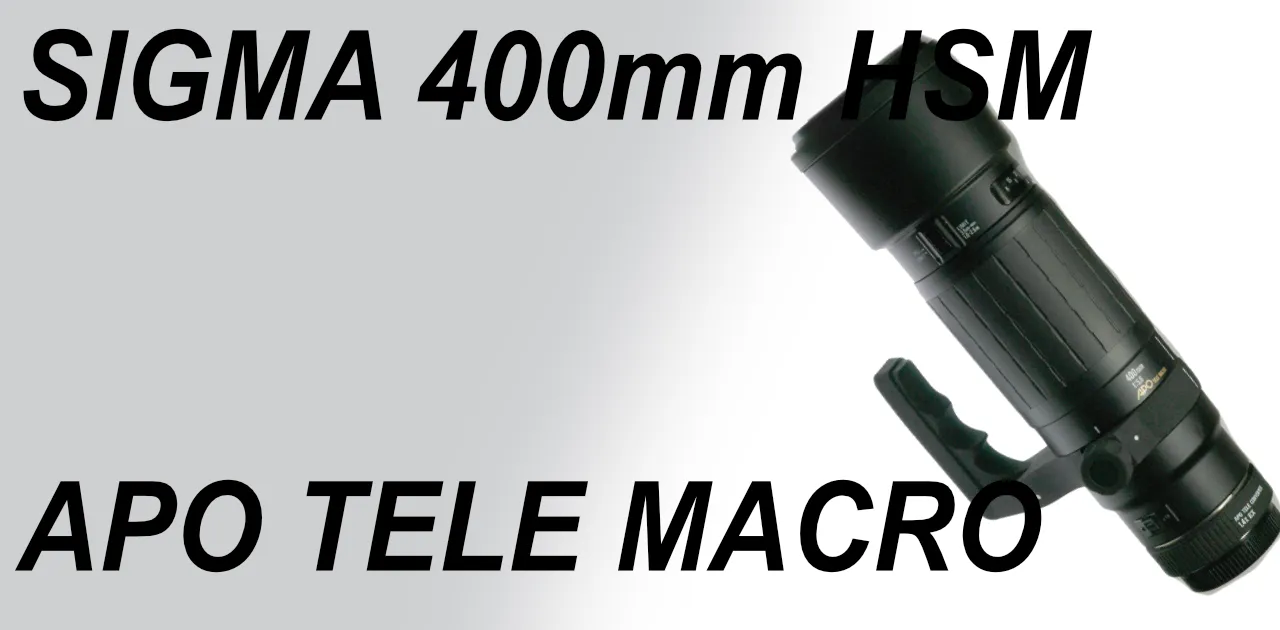
A review and sample images of the Sigma AF APO tele macro 400mm F5.6 HSM with the SIGMA SD1 Merrill,SIGMA SD10 and α NEX-7.
- Please see the disclaimer regarding advertising here.
- Italicized links in the text are advertisement links that take you to other sites.
- If you find any images used on this site problematic, please contact us via the comments or inquiry form, either as the rights holder or their representative. We will review the matter and take appropriate action.
Table of contents

Gallery
The following cameras were used to take the sample photos:
- SIGMA SD1 Merrill
- SIGMA SD10
- SONY α NEX-7
Review
1.Overview
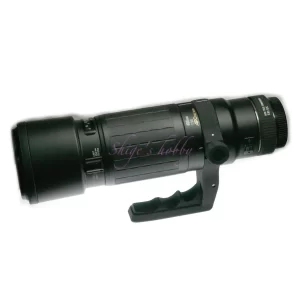
The SIGMA AF APO tele macro 400mm F5.6 HSM is a telephoto lens released by Sigma in 1995.
The lens name includes “APO TELE MACRO HSM,” where “APO” stands for “apochromatic correction” and reduces chromatic aberration, “TELE” stands for telephoto, “MACRO” stands for close-up photography, and “HSM” stands for ultrasonic motor.
The main specifications are as follows, with details listed in the table.
- Aperture: F5.6
- Lens Construction: 9 elements in 7 groups
- Aperture Blades: 10
- Minimum Focus Distance: 0.7m
- Hood: Included
Since it is a lens from 1995, there is no information about it even in the Web Archive. It may be listed in the 1990s edition of the old Japanese magazine CAPA, “Interchangeable Lenses” (by Nishihira Hideo).
2.Usability
The SIGMA AF APO tele macro 400mm F5.6 HSM , commonly known as the Yongoro (400mm F5.6), was popular and in demand in the 1990s as a lens that was relatively affordable for average photographers. While the original Canon 400mm F5.6 had a list price of ¥185,000, this lens could be purchased for about half that price, and in retail stores for about one-third to one-quarter of that.
Since this lens dates back to the film camera era, photographers who purchased it likely struggled to achieve the required shutter speed in dimly lit scenes, even when using ISO 400 film.
I’ve been using this lens since the Sigma SD10 days, and when cropped to the SD10’s sensor size, it multiplies by 1.7, giving a focal length of 680mm. The lens uses internal focus, so the lens length does not change during use.
Autofocus (AF) speed is largely dependent on the camera’s performance, so evaluations will vary depending on the camera, but as far as I’ve used it with the SD10 and SD14, the early HSM (High Speed Motor, known as USM by Canon) installed in this lens cannot be described as instantaneous or fast. However, the ultrasonic motor’s quiet and smooth lens drive is a nice feature to have as a tool. It’s said that this motor breaks down frequently, but perhaps due to frequent use, I haven’t had any problems with my lens, even after more than 20 years.
As a prime lens, it has a focus ring, a focusing distance limit switch (with three settings: no limit, infinity to 3m, and 3m to 1.6m), and an AF/MF selector switch.
The hood is built-in, but even when extended, it’s not very long and doesn’t provide much light blocking.
The image quality isn’t as sharp as that of modern lenses, but it does offer decent resolution and color depth, and with a pixel count of around SD10, you can get relatively satisfying images. The sample photos are still, but the shadows produce many blurry images.
With a minimum focusing distance of 1.6m, it’s a telephoto lens that can get close, allowing you to take close-ups of cats and dragonflies from a distance, making it a useful lens in the field.
However, the lens was a little short for photographing the migrating hawks at Shirakaba Pass, so I used a teleconverter. Normally, this lens wouldn’t be usable because the total F-number exceeds the AF drive limit, but the lens I have is compatible with a teleconverter for reasons I’ll explain later.
Since there is generally little demand for SA mount lenses, I still have it and didn’t sell it. When I use it occasionally, I can enjoy the rendering of an old telephoto lens, even though it doesn’t have the sharpness of modern lenses. In the 2000s, zoom lenses covered the focal length and brightness of 400mm F5.6, so the reason for this lens’ existence was almost nonexistent.
I also own this lens’s sibling, the AF APO TELE MACRO 300mm F4, and I’ll introduce it sometime.
Ultrasonic motors from this era are said to be fragile, and the number of units still functioning properly is decreasing. With the Canon EF version, caution is advised as cameras with lens authentication protection on the camera itself may experience issues such as autofocus not working.
3.Summary
In conclusion, to sum up the SIGMA AF APO tele macro 400mm F5.6 HSMis an affordable prime telephoto lens. The image quality is commensurate with the price, and although it has APO, there is some color bleeding.
In the 2020s, it is considered inferior to zoom lenses in terms of resolution, and it features an early ultrasonic motor, resulting in a slow focus speed. If it were selling for a few thousand yen, it would probably be a lens worth buying just to try out.
Specification
Converts CANON EF to SIGMA SA mount
I purchased this lens from Sigma and converted it to a Sigma SA mount. I previously posted a detailed article with photos, but since that’s probably not as popular now, I’ll just briefly document the process.
This modified lens allows for autofocus using the Sigma SA’s 1.4x and 2x teleconverters. While the AF accuracy is reduced, it’s still possible to capture the subject without a very fast lens. However, the already slightly lacking sharpness of the image is further reduced, making it somewhat impractical.
The process from this point onward is not recommended for modification.
Please proceed at your own risk, as we cannot be held responsible for any broken or junk lenses or other problems that may arise if you attempt the same procedure.
What you’ll need
- Sigma SA mount lenses: Since I’ll only be using these mounts, it’s best to find inexpensive lenses.
- Sigma EF mount lenses: Since these will be modified, the warranty will be void and I’m prepared to break them if I make a mistake.
- Soldering iron
- Solder
- Electrical wire (thin)
Work
- Remove the screws on the SA mount side of the Sigma SA-mount lens to remove the mount.
- Remove the soldered signal flex cable from the mount. (Be careful not to burn yourself, as you will need to melt the solder at the connection point with a soldering iron.)
- Remove the screws on the EF-mount side of the Sigma EF-mount lens to remove the mount.
- Remove the soldered signal flex cable from the mount. (This is also the same as step 2.)
- Connect the SA mount removed in steps 1 and 2 to the flex cable coming from the original EF-mount lens in the same order. Since it is difficult to attach the flex cable directly to the mount, it is easiest to connect the mount and flex cable with a thin electrical wire. If you attach it from the end, one extra terminal will be left over, but don’t worry about it; it’s probably a ground.
- Once you’re done, push the cable into the lens, attach the SA mount to the lens, and screw it in place. The screw holes even lined up perfectly, so it was a breeze.
- Now I can convert my Sigma EF-mount lens to a Sigma SA-mount lens.
- I could convert the remaining lens to an EF-mount lens, but there’s a high chance that the lens won’t be recognized by Canon cameras due to a lens ROM issue, so I think it’s a waste of effort.
- The lens ROM issue refers to the fact that in the past, some companies would reverse engineer lens firmware (ROM) for third-party lenses without official permission from the camera manufacturer. Camera manufacturers, unable to tolerate this kind of freeloading without paying license fees, would determine whether the firmware (ROM) installed on the lens was genuine, and third-party lenses with non-genuine firmware would malfunction.
As you can see, not only do Sigma EF-mount lenses and Sigma SA-mount lenses have the same flange focal length, but the electrical signals that control the lenses are almost identical. Of course, differences in operating voltage and control specifications could cause the motor to burn out or problems with lens operation. Fortunately, so far it has been working without any issues, but I cannot guarantee the results.
| Items | 300mm HSM | SIGMA AF APO tele macro 400mm F5.6 HSM | EF400mm F5.6L USM | MINOLTA 400mm F4.5 HS |
| Sensor size | 35mm full size | ← | ← | ← |
| Focal length(mm) | 300 | 400 | ← | ← |
| Max aperture | 4 | 5.6 | ← | 4.5 |
| Min aperture | 32 | ← | ← | ← |
| Leaf blade | 9 | ← | 8 | 9 |
| Lens Construction | 10 elements in 7 groups | ← | 7 elements in 6 groups | 9 elements in 7groups |
| Min distance (m) | 1.2 | 1.6 | 3.5 | 3.0 |
| Lens length (mm) | 195(SA) | 251(SA) | 256.5(EF) | 275(A) |
| Max diameter (mm) | 87 | ← | 90 | 95+α |
| Filter size (mm) | 77 | ← | ← | 95(Front) 42(Rear) |
| Weight(g) | 1298(SA) Without tripod mount | 1408(SA) Without tripod mount | 1,250(EF) | 1920(A) |
| accessories | Front cap Rear cap Case | ← | ← | Front cap Rear cap Hood Strap aluminum Case Filter |
| Release date | 1995 | 1995 | 1993.5 | ← |
| Lens mount | CANON EF SIGMA-SA NIKON-F(non HSM) PENTAX-K(non HSM) SONY-A(non HSM) | ← | CANON EF | SONY-A |
| Price(Yen/No-tax) | ¥185,000 |
Reference links
寄付のお願い・Request for donations
Affiliate links
- SIGMA APO tele macro 400mm F5.6 HSM・Ads by ebay

Update
- 2025.8.13
- 2024.07.01
Be First to Comment