
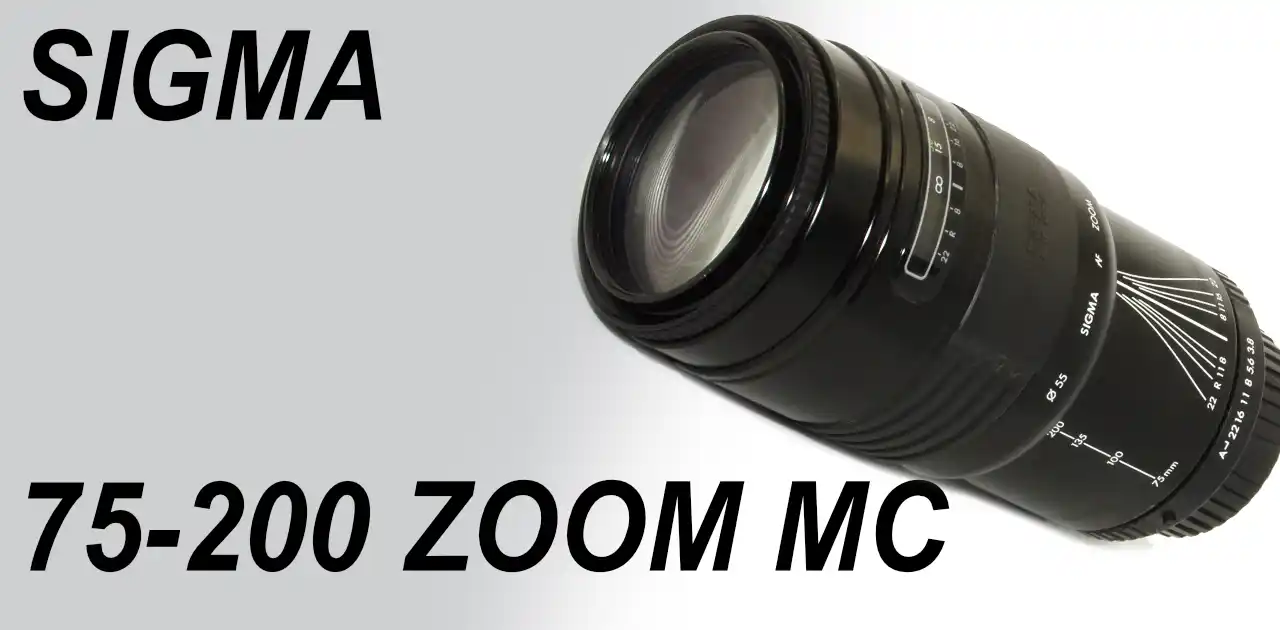
A review and sample images using the SIGMA ZOOM 75-200mm F3.8 MC with the PENTAX K20D.
- Please see the disclaimer regarding advertising here.
- Italicized links in the text are advertisement links that take you to other sites.
- If you find any images used on this site problematic, please contact us via the comments or inquiry form, either as the rights holder or their representative. We will review the matter and take appropriate action.
Table of contents

Gallery
The following cameras were used to take the sample photos:
- PENTAX K20D
Review
1.Overview
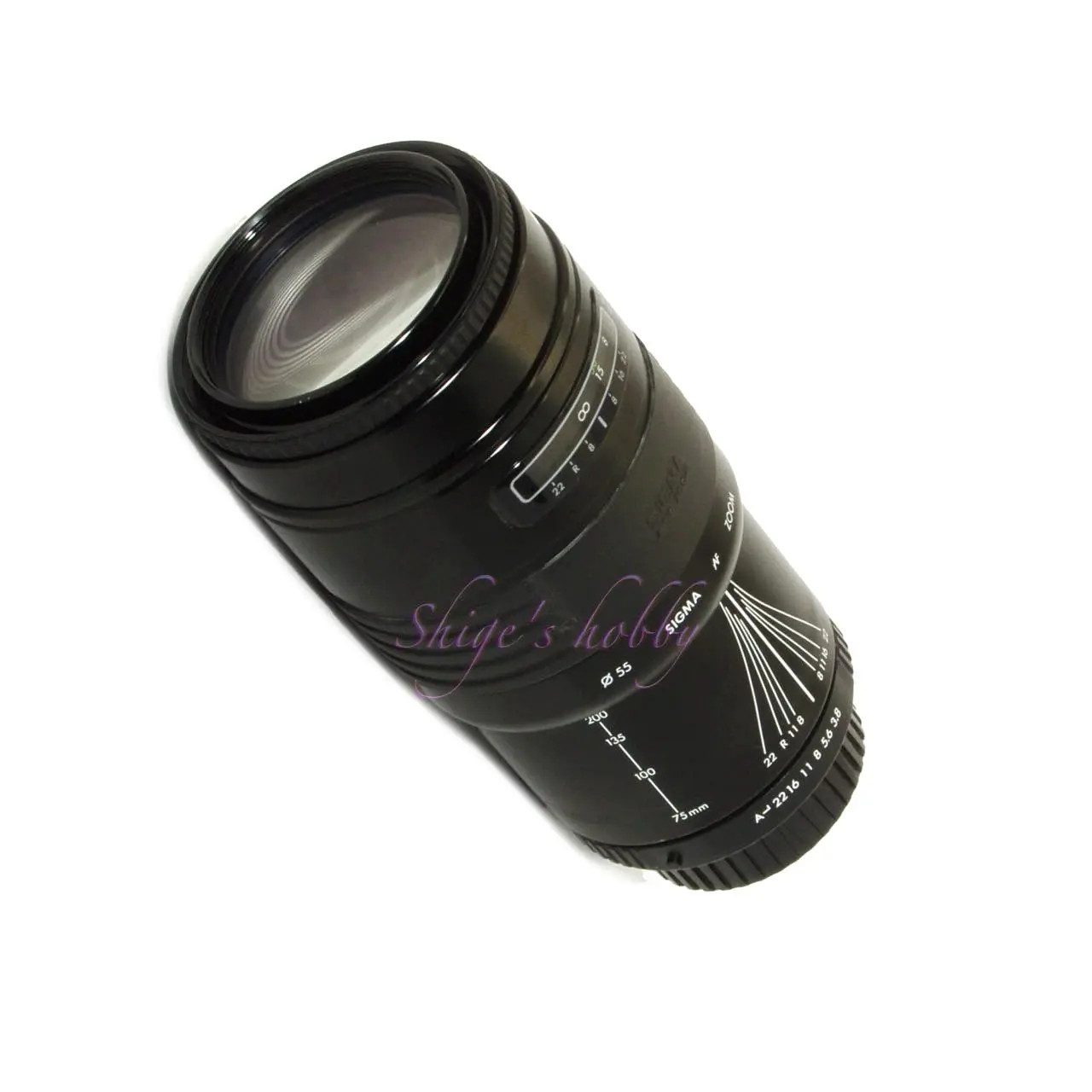
The SIGMA ZOOM 75-200mm F3.8 MC is a telephoto zoom lens released by Sigma in the 1990s, covering 35mm film format.
As the name suggests, the lens has a focal length of 75mm-200mm and an aperture of F3.8 throughout. The minimum focusing distance is 1.2m throughout the entire lens, and the magnification ratio at the telephoto end is 1:4.5.
The lens consists of 12 elements in 9 groups, and apart from being multi-coated, it has no other notable features.
A 55mm diameter plastic cylindrical front filter is included as standard.
Perhaps because it is a mid-range lens with a constant F3.8 aperture throughout the entire lens, it uses a metal mount.
The PENTAX-K mount version allows aperture control on the lens itself, and has an aperture ring at the base of the lens for adjusting the aperture value. Setting the lens aperture to A mode allows aperture control on the camera. Other controls include a zoom ring, focus ring, and macro switch. The lens position indicator is printed on the lens barrel.
This lens is available in five mounts: Sigma SA mount, Nikon F mount, Canon EF mount, Sony A mount, and Pentax K mount.
2.Usability
The SIGMA ZOOM 75-200mmF3.8 MC is an old lens, and the product is no longer listed on the 2000 page of the Sigma official website stored on WebArchive. It is thought to be a product from the 1990s.
<Description>
First of all, the lens’s rendering covers 35mm film, so when used with a camera equipped with an APS-C size sensor, only the central part of the lens is used, resulting in a reasonable image.
As this is a lens from the film era, the beauty of the bokeh and resolution are lacking, and the background bokeh in particular can have a noticeable noisy feel in some scenes.
The resolution in the central area is sufficient when shooting close up, so you can produce decent images in scenes where you want to emphasize the subject by darkening the background. Additionally, since the minimum focusing distance remains the same across the entire lens range and you can get as close as 1.2m at the telephoto end of 200mm, it can be used as a simple macro lens.
<Operability>
Next, I’ll explain how to operate it.
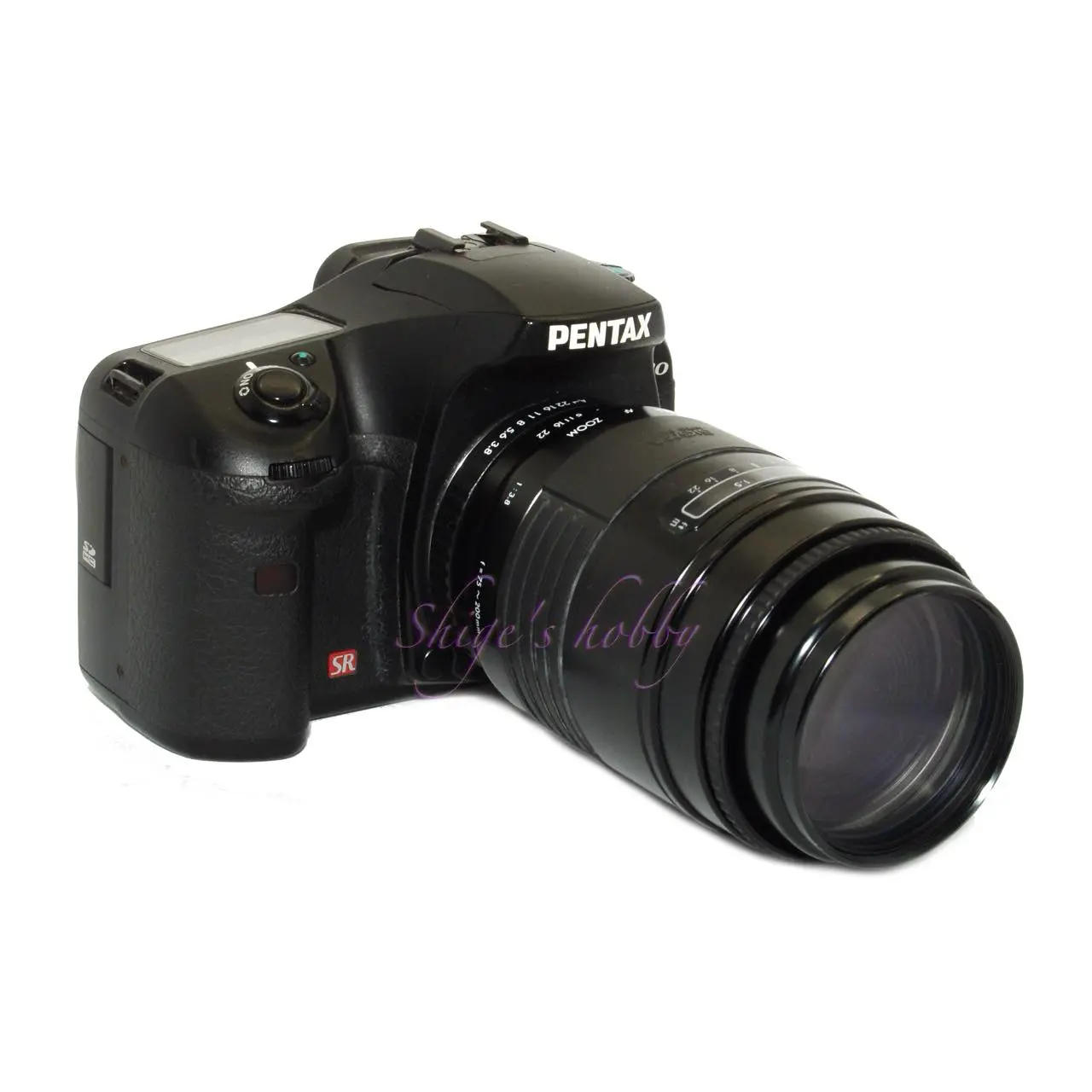
When used with the PENTAX K20D, which has an APS-C sensor, the lens’s focal length of 75-200mm corresponds to a 35mm equivalent focal length range of 113mm-300mm.
Older PENTAX-K mount autofocus lenses do not have a motor in the lens; instead, the camera’s motor is connected to a gear on the lens via a shaft to drive the lens focus ring. Because this lens is inexpensive, manual focus cannot be interrupted during autofocus. To switch to manual focus, you must change the camera’s focus mode to manual focus. Changing the mode frees the shaft connecting the camera to the lens, allowing the photographer to move the focus ring.
With this lens, the autofocus drive speed depends on the power of the camera’s motor, so it is appropriate for the K20D. It is significantly slower than lenses with ultrasonic motors, for example. Additionally, the gear noise during operation is noisy.
Autofocus accuracy depends on the camera, so the lens has little to do with it.
The focus ring feels loose and unsatisfying when using manual focus, and is designed for use with autofocus. This is because a heavy focus ring makes quick focusing difficult with autofocus, and a powerful motor is required to move the focus ring, so it has been made as light as possible.
The zoom is a linear zoom, retaining a remnant of the manual focus era.
The shortest focal length is 75mm, extending to 200mm in a linear direction, making it easy to understand. Since there is no lock on the zoom, if the lens is held down, gravity will cause it to extend, so it is best to avoid holding it facing down when carrying it.
The lens hood is not very deep, and its light-blocking effect is limited. Additionally, the hood does not have threads for reverse mounting, so when stored, it simply fits over the lens. Therefore, when storing the lens hood in a camera bag with the hood attached in reverse, the hood may come off the lens if there is a gap between the bag and the camera. Therefore, if there is space in your bag, it is best to store the hood in its normal screw-on position.
3.Summary
To sum up the SIGMA ZOOM 75-200mmF3.8 MC, it’s an affordable zoom lens made for budget SLR cameras.
However, because you can’t expect much from it in terms of peripheral image rendering, I recommend using it with a camera with an APS-C sensor.
Specifications, considerations, etc.
<KENKO Pz AF 1.5X TELEPLUS SHQ>
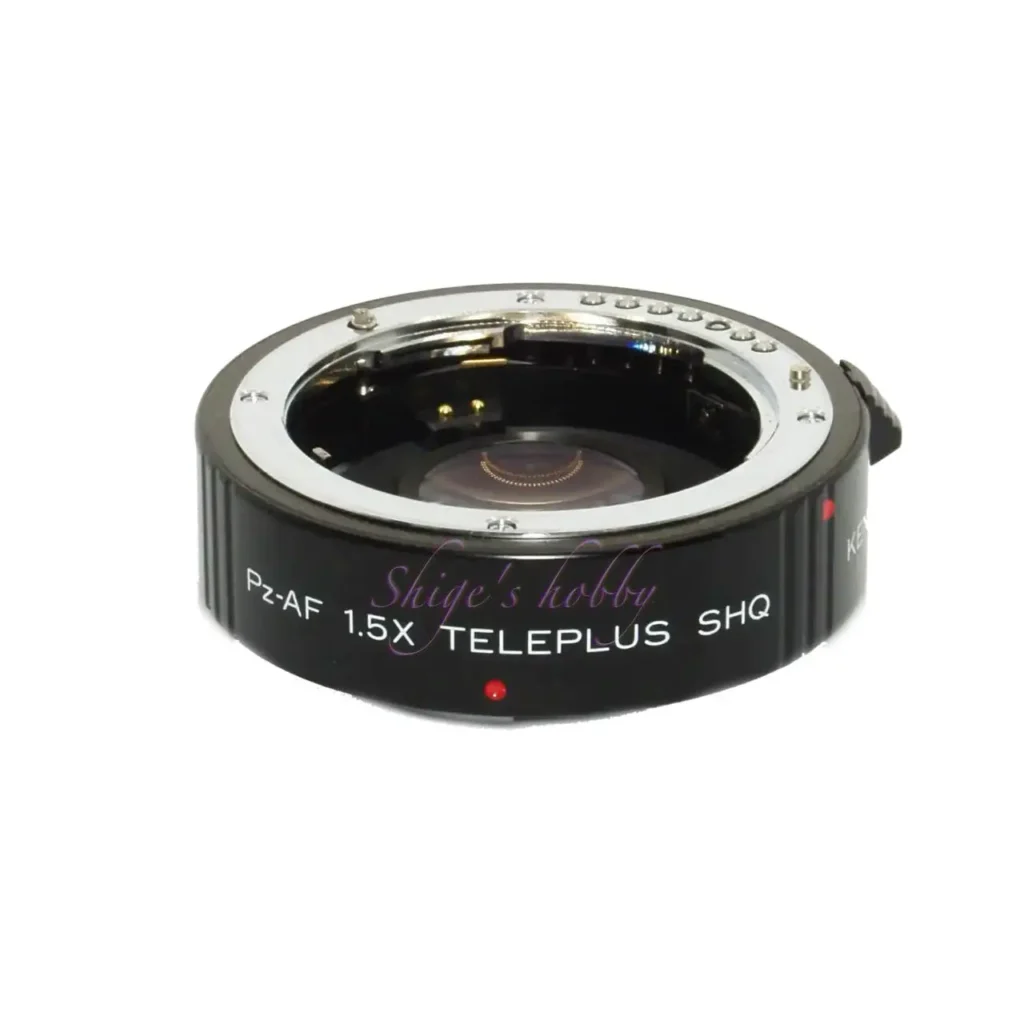
I had a KENKO 1.5x teleconverter, the “Pz AF 1.5X TELEPLUS SHQ,” on hand, and it seemed compatible with this lens, so I tried it out.
This teleconverter has electronic contacts for the PENTAX-KA and a shaft that transmits motor power to the camera. This means that autofocus can be used with autofocus lenses, and if an aperture drive tab is available, the aperture can be controlled from the camera.
The actual focal length with the teleconverter is 113mm-300mm, which, when applied to the crop factor of the PENTAX K20D’s APS-C sensor, results in a telephoto zoom equivalent to 169mm-450mm in 35mm. Sample photos 5 and 6 are examples of using the teleconverter, and show sufficient resolution in the center, making it a decent emergency telephoto extension.
Because the lens element is centered in the converter, this teleconverter can be used with most lenses, regardless of manufacturer, as long as the mount is compatible.
In contrast to teleconverters from the 2000s, which were designed to fit into the lens body and could only be attached to compatible lenses, these general-purpose teleconverters were inferior in image quality to dedicated teleconverters and were no longer made when digital cameras became mainstream.
The teleconverter was also purchased nearly 20 years ago for use with the Sigma SA mount, and the aperture drive tab that got in the way has been removed in order to use it with the Sigma SA mount.
In the summary, I wrote that it should be used only with cameras with APS-C sensors, but with high-resolution cameras like the PENTAX K-1 and Sony α900, which have 35mm full-frame sensors, you can get the most out of your camera by using more modern lenses with resolution all the way to the edges. It’s best to think of older, less expensive lenses as just for fun.
If you want to play around with these old, dark lenses, I recommend a Sony or PENTAX digital camera with in-body image stabilization. Autofocus lenses have electronic contacts that communicate the position of the zoom ring to the camera body, so the image stabilization focal length is automatically set on the body.
In contrast, many manual-focus zoom lenses without electronic contacts lack a mechanism for communicating focal length, making it impractical to manually change the camera body’s image stabilization focal length every time you change the focal length during shooting.
Caution is required with older Sigma lenses, especially Canon EF versions. This is common knowledge for those who used Canon cameras in the 1990s, but Canon would change the signals between the lens and body when releasing a new camera in order to eliminate third-party lenses that were not officially licensed.
As a result, if the manufacturing dates of the lens and camera body do not match, the camera and body will not be able to exchange signals properly, rendering the lens unusable.
The lens introduced here is also available in a Canon EF-mount version, but because it is a product from the 2000s, there is a possibility that an error (Err 01) will occur and the lens will not be usable when attached to a digital SLR camera made around 2010.
While the lens was still in production, Sigma offered a control chip reprogramming service for lenses that displayed an error, making the lens compatible with incompatible cameras.
However, this was also a limited-time service, and the control chip reprogramming service is not available for lenses that have been out of production for a certain period of time and are no longer supported. Therefore, if you purchase an older Sigma Canon EF-mount lens to use with a Canon SLR camera, you will need to attach it to the body and verify that the lens is recognized properly.
The link goes on to introduce a modification that involves manually adding a control chip inside the lens mount to bypass Canon’s protection. The site that introduced the modification has already disappeared, but a record of it remains on WebArchive.
- How can I fix Err 01 with a film-era Sigma lens on a Canon DSLR?
- Canon EOS protocol convertor for old Sigma lens・WebArchive
Nikon, Pentax-K, and Minolta α didn’t have this problem, so you can use old Sigma lenses without worry. Of course, there’s no need to worry about compatibility with the original Sigma-SA mount.
| Items | SIGMA ZOOM 75-200mm F3.8 MC |
| Sensor size | 35mm full frame |
| Focal length(mm) | 75-200 |
| Max aperture | 3.8 |
| Min aperture | 22 |
| Leaf blade | 8 |
| Lens Construction | 12 elements in 9 groups |
| Min distance(m) | 1.2 |
| Lens length(mm) | 110 |
| Max diameter(mm) | 73 |
| Filter Size(mm) | 55 |
| Weight(g) | 640 |
| accessories | Screw-in cylindrical hood |
| Release date | 1990s |
| Lens mount | SIGMA-SA CANON-EF NIKON-F α(DG) PENTAX |
| Price(JP-Yen/No-tax) | – |
Reference links
- SIGMA ZOOM 75-200mm F3.8 MC・Lens DB
- PENTAX K20D・Shige’s hobby
寄付のお願い・Request for donations
Affiliate link
- SIGMA lens・Ads by Amazon
- SIGMA・Ads by Amazon
- SIGMA books・Ads by Amazon

Update history
- 2026.2.8
Be First to Comment