
A review and sample photos of the Voigtländer Macro Apo Lancer (SL) 125mm F2.5 used with digital SLR and digital mirrorless cameras.
- Please see the disclaimer regarding advertising here.
- Italicized links in the text are advertisement links that take you to other sites.
- If you find any images used on this site problematic, please contact us via the comments or inquiry form, either as the rights holder or their representative. We will review the matter and take appropriate action.
Table of contents

Gallery
The following cameras were used to take the sample photos:
- Sigma SD10 (APS-C Foveon digital SLR camera)
- Sony αNEX-5 (APS-C mirrorless digital camera)
- Sony α7 (35mm full-frame mirrorless digital camera)
- HASSELBLAD X2D-100C (medium-format mirrorless digital camera)
Review
1.Overview
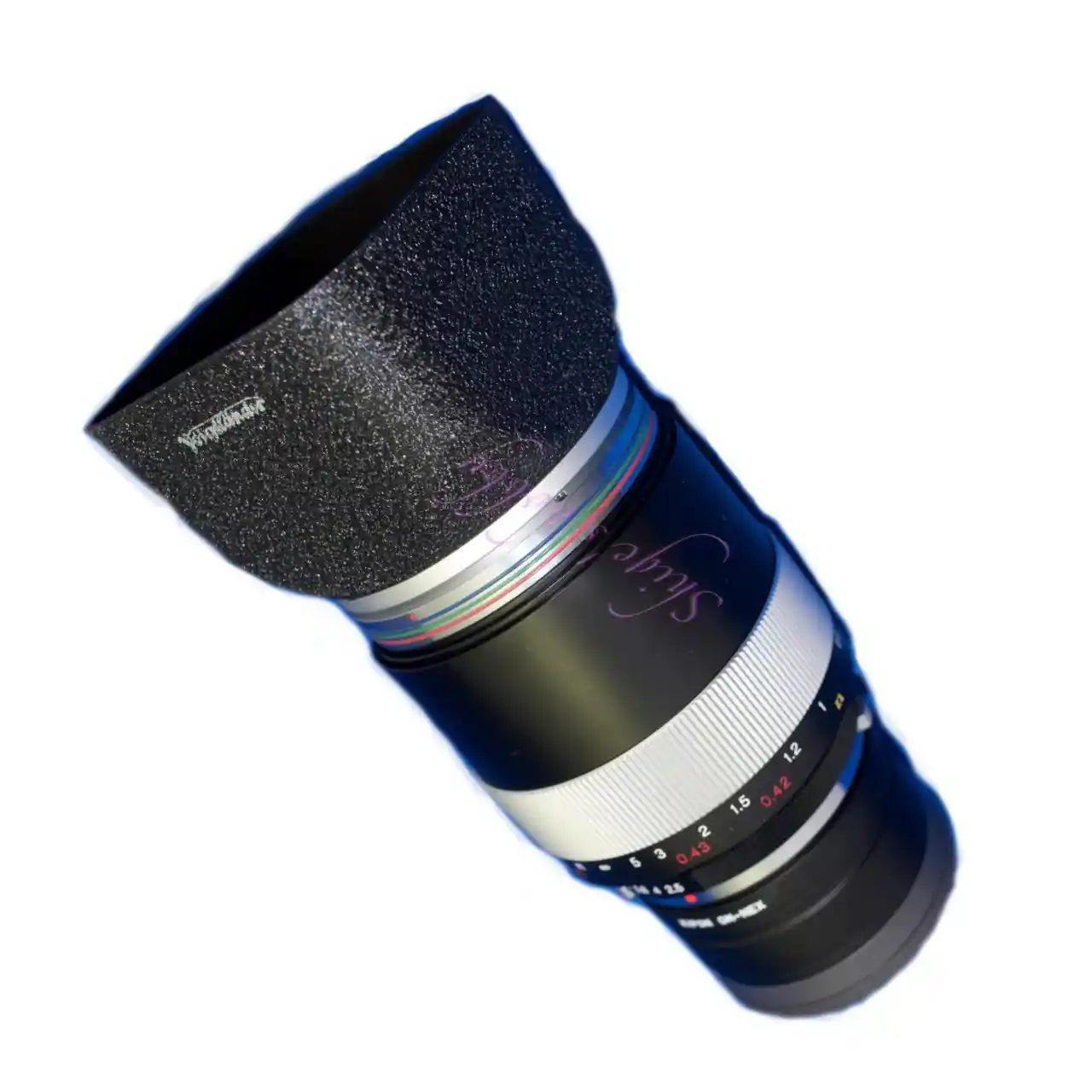
The MACRO APO LANTHAR SL 125mm F2.5 is a large-aperture, medium telephoto, 1:1 macro lens released by COSINA under the Voigtlander brand for SLR cameras.
The main specifications are as follows, and details are listed in the table.
- Maximum Aperture: f/2.5
- Lens Construction: 9 Elements in 7 Groups
- Aperture Blades: 9
- Minimum Focus Distance: 18cm
- Maximum Magnification Ratio: 1:1
- Hood: Dedicated Bayonet Hood
- Filter Diameter: 58mm
The exterior of this lens is designed to be complete with the hood. Therefore, when the hood is attached, it also covers the 58mm filter used to protect the front element.
The M42 screw-mount version has a problem with the lens mounting position. Because the 42mm diameter screw attached to the camera prevents the lens from being properly secured in place depending on the compatibility between the lens and mount, the lens lacks a mechanism for adjusting the position, resulting in the neat, square hood being misaligned. For use with mirrorless cameras, there are also adapters that allow for lens position adjustment on the mount adapter itself.
The lens is available in many mount formats, including Nikon Ai-S, Pentax K, M42, Canon EF, Minolta A-mount, Olympus OM, and Yashica Contax.
With the exception of the latest Canon EF version, all versions lack electronic contacts and only feature a different mount shape. Nikon Ai-S is the most commonly seen on the used market, while other mounts are thought to be less common.
A wealth of information is available online about the difference between 1:1 and 1:2 macro lenses. To summarize, when you photograph an object with a camera, if the object appears on the film or sensor at the same size as the actual object, it is called 1:1, and if it appears at half the size, it is called half 1:2. With a digital camera, the image on the sensor is viewed on a monitor, making it difficult to compare the actual size with the size of the object photographed, so the terms 1:1 and half are difficult to understand with a digital camera.
2.Usability
The MACRO APO LANTHAR SL 125mm F2.5 is a large lens, with a retracted length of 90mm. However, when moved to its closest focusing distance, the lens barrel extends in two stages, approximately doubling in length to approximately 180mm.
Operation is smooth at typical subject distances up to about 2m, and the helicoid rotates smoothly and comfortably, allowing for focus adjustment.
However, operation deteriorates during macro photography. This is because the focus ring is located at the base of the lens barrel, at its maximum diameter of 90mm. When the lens is extended to its closest focusing distance, the lens extends and heavy glass moves to the front of the lens, yet the focus ring is fixed at the base of the lens. This creates an unbalanced camera-lens system, and the closer you get to the subject, the more difficult it becomes to control the focus.
At approximately 90mm in length and weighing 690g, this lens is the largest and heaviest of Voigtländer’s SLR lenses. When you attach it to your camera and get ready to shoot, you can feel the solid feel of iron and glass.
As this lens is supplied with an SLR mount, it can be used with a variety of cameras by using a mount adapter. With digital cameras, the actual shooting range changes depending on the size of the image sensor, and the typical focal lengths equivalent to 35mm film are as follows:
| Sensor size | 35mm film conversion coefficient | 35mm equivalent focal length |
| APS-C, Sigma (up to SD15) | x1.7 | 212.5mm |
| APS-C, Canon | x1.6 | 200mm |
| APS-C: Sony, Nikon, Pentax, Sigma (SD1 and later) | x1.5 | 187.5mm |
| APS-H, Sigma, Canon | x1.3 | 162.5mm |
| 35mm FullFrame | x1 | 125mm |
| Medium format digital | x0.8 | 100mm |
This lens has a wide image circle and is excellent as a macro lens, with no quirks in bokeh, good resolution, and the ability to bring subjects into sharp focus when shooting close up. It’s an easy-to-use lens, and I’ll write about the images it captured on the camera I used it with.
I’ve purchased this lens three times. First, I used the M42 mount version with a SIGMA SD10.
In 2014, I found a used OM mount version at a bargain price, so I bought it and used it with the SONY α7 (ILCE-7) and α NEX-5. Finally, in 2023, I purchased the EF mount version and used it with a HASSELBLAD X2D-100C.
The SIGMA SD10 is equipped with a small APC-C size sensor, and at 213mm, it falls into the telephoto lens category. It captures sharp images that fully utilize the resolution of the Foveon triple-layer sensor. The SIGMA SD10’s sensor has a small pixel count of 3 megapixels x 3. However, judging from the results of the subsequent shots with a medium-format digital sensor, I suspect that satisfactory image quality can also be achieved with the SIGMA SD1’s 15-megapixel x 3 sensor.
The SONY α NEX-5 is equipped with an APS-C-size sensor with a 1.5x magnification ratio in 35mm, making it a telephoto lens with an equivalent focal length of 188mm. This allows for images that fully utilize the 16-megapixel Bayer sensor.
The SONY α7 is equipped with a 24-megapixel 35mm full-frame sensor, allowing this lens to be used at its specified focal length. The 125mm focal length makes it easy to use as a macro lens within the shooting range of a medium telephoto lens.
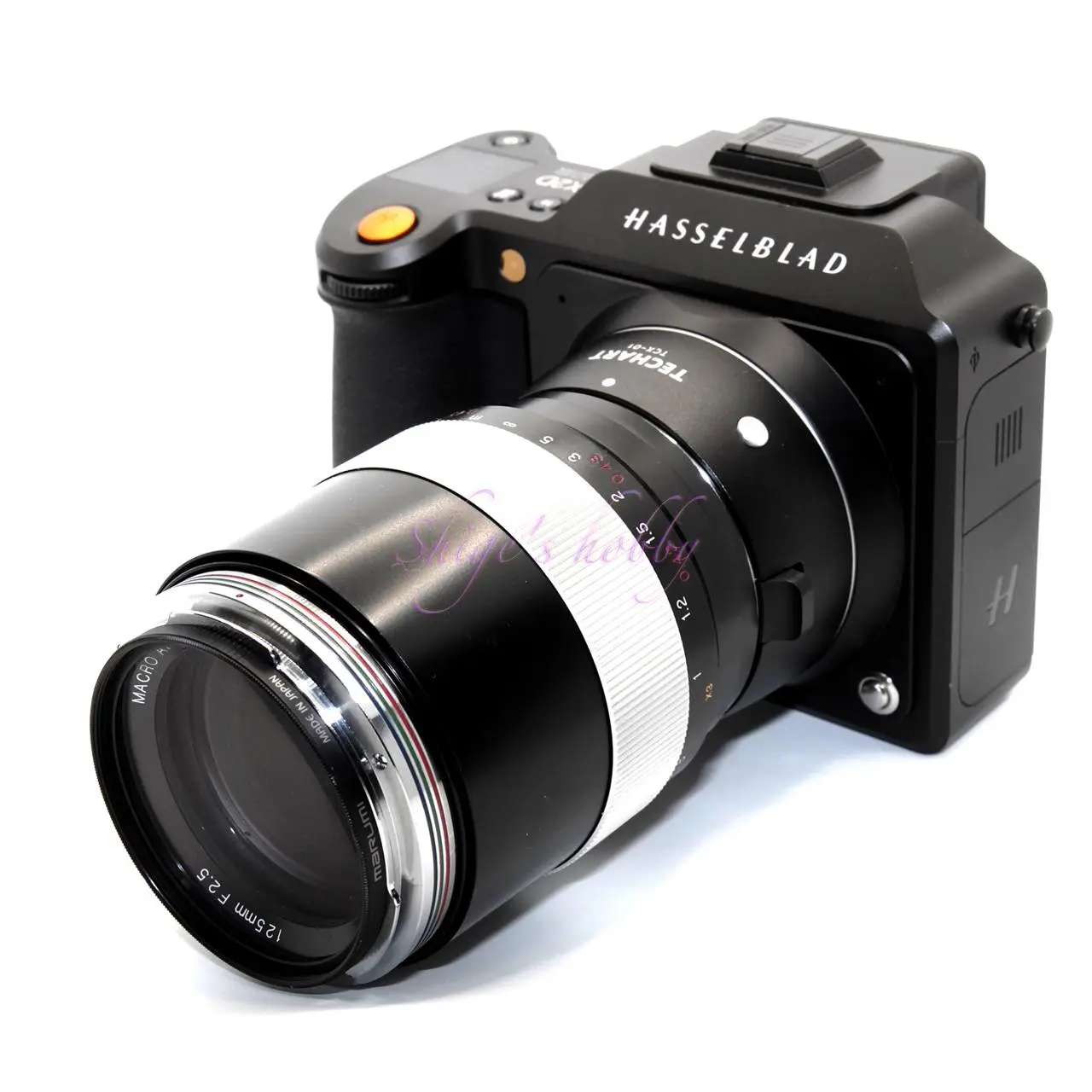
The HASSELBLAD X2D-100C is equipped with a 100-megapixel 44mm x 33mm medium-format digital sensor, which exceeds the intended range of this lens. However, due to the generous image circle design, there is no noticeable vignetting even when used with a medium-format digital sensor. Of course, there’s no denying that image quality drops at the edges, but it can be used without any problems when shooting with the center of the image as the main subject.
Personally, I find the resolution to be sufficient. It all depends on how much lens performance the photographer requires.
I purchased the EF-mount version of this lens to use with the HASSELBLAD X2D-100C. This is because I had the TECHART TCX-01 Hasselblad X to EF mount adapter.
I was aware that the AF would be fixed because the lens is manual focus, but when I started using it, the HASSELBLAD X2D-100C detected it as an XCD125mm, the IBIS (in-body image stabilization) seemed to be working, and some signals were being transmitted from the lens to the camera, but the lens aperture would not operate.
I think the HASSELBLAD X2D-100C and TCX-01, when I owned it, were unable to correctly transmit some lens information to the camera, which prevented the aperture from operating. As of 2024, the TCX-01’s firmware has been updated to 7.0, so it may still work, but I can’t guarantee it.
I didn’t want to sell it in an unused state, so I insulated the electronic contacts with masking tape for sample photos. Since I didn’t know when the TCX-01 would be updated, I ultimately gave up on this combination and let it go.
I only used the X2D for a short period of time, and while there were no issues with focusing when using the EVF’s magnification function, the focus position at full aperture was sensitive and even a slight movement of the focus ring would throw the image off, which meant I had to look at the EVF for long periods of time, making shooting difficult.
3.Summary
To summarize the MACRO APO LANTHAR SL 125mm F2.5, its large image circle covers medium format digital sensors beyond 35mm full-frame sensors.
In terms of operability, if you can tolerate the size of the lens and the ease of use of the focus ring at the base, it is an excellent 1:1 macro lens that will satisfy you.
Of the Cosina Voigtländer SL lenses, this lens has not had a successor made, so it is only available used.
Specification , Study and more
As mentioned in the summary, the MACRO APO LANTHAR SL 125mm F2.5 is one of the Cosina Voigtländer SL lenses for which there is no successor. The Carl Zeiss APO-SONNAR 135/2 has a relatively similar lens configuration, but the focal length, minimum focusing distance, and f-stop are different, so we imagine the lens feels very different in use.
Whether it’s due to manufacturing costs or a lack of glass material, we’re not sure why, but it’s still a very usable lens, so it’s a shame that a renewed version isn’t being sold.
Aside from this lens, the only other Voigtländer SL lenses without successors are the COLOR HELIAR 75mm and APO LANTHER 180mm, while the ULTRON 40mm and APO LANTHER 90mm have had successors for several generations.
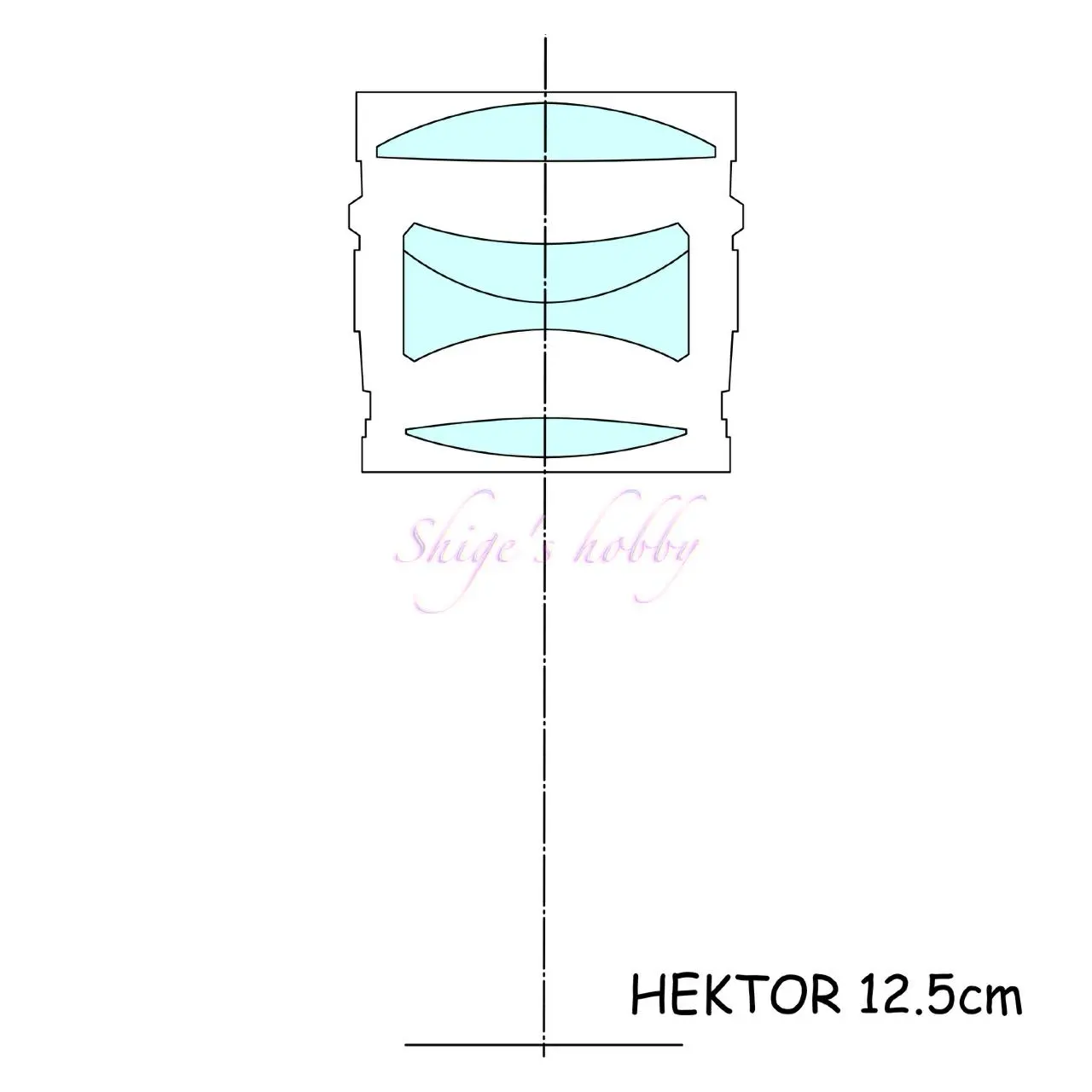
The only prime lens with a 125mm focal length I have is the LEICA HEKTOR 12.5cm for the VISOFLEX, so we compared its specs.
As you can see from the diagram below, the two lenses have the same specifications, but their lens construction is significantly different: the Macro APO LANTHAR has 10 elements in 9 groups, while the HEKTOR has 4 elements in 3 groups.
This is because the HEKTOR 12.5cm is an old lens from the mid-1900s, approximately 50 years after the Macro APO LANTHAR was manufactured. Another reason is that the HEKTOR was originally a lens for projectors and not intended for general photography.
The MACRO APO LANTHAR SL 125mm F2.5 is a highly competitive medium telephoto macro lens, and the decision between it and the Leica APO Macro-Elmarit 100mm can be difficult.
There are many other unique medium telephoto macro lenses, such as the Minolta 100mm and Tamron 90mm, so the only option is to try as many as possible and choose the lens that best suits your style.
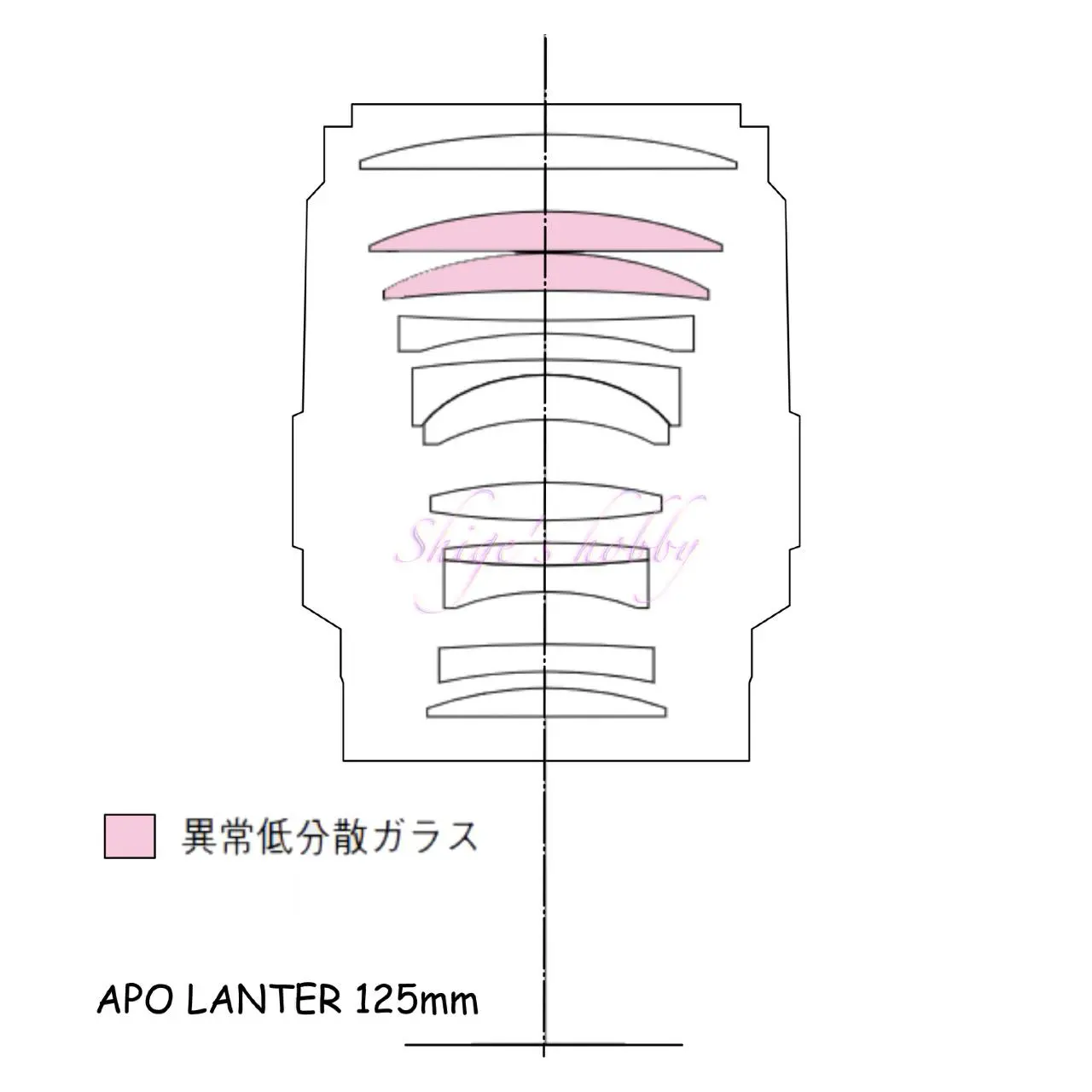
| Lens name | Macro APO-LANTER | HEKTOR |
| Local length(mm) | 125 | 125 |
| Max aperture | 2.5 | 2.5 |
| Min aperture | 22 | 22 |
| Leaf blade | 9 | 20 |
| Lens Construction | 10elements in 9group | 4elements in 3group |
| Min distance(m) | 0.18 | 1.2 |
| Lens length(mm) | 76 | 77(VISO-M) |
| Lens Max diameter(mm) | 82 | 63 |
| Filter Size(mm) | 58 | 58 |
| Weight(g) | 690 | 726(VISO-M) |
| Release date | 2000〜2003 | 1949〜1960 |
| Price | ¥95,000 | – |
The following seven SL lenses were released at the same time as this lens.
The 12mm and 15mm lenses are used with the mirror up, so are not suitable for general photography. In effect, the lens series starts at 40mm. The later SL II series added the COLOR SKOPAR 20mm, COLOR SKOPAR 28mm, NOKTON 55mm, and NOKTON 58mm, a modified version of the Auto Topkor 58mm, increasing the variety of focal lengths.
- Ultra Wide Heliar 12mm (for mirror-up use only)
- Super Wide Heliar 15mm (for mirror-up use only)
- Ultron 40mm
- COLOR HELIAR 75mm
- APO LANTHAR 90mm
- Macro APO LANTHAR 125mm
- APO LANTHAR 180mm
All of the lens designs are consistent except for the two that are designed specifically for mirror up. The black lens barrel with a silver accent on the focus ring is a pleasing combination of classic a
| Items | ULTRON | COLOR HELIAR | APO LANTHAR | Macro APO LANTHAR | APO LANTHAR |
| Focal length(mm) | 40 | 75 | 90 | 125 | 180 |
| Max aperture | 2 | 2.5 | 3.5 | 2.5 | 4 |
| Min aperture | 16 | 22 | ← | ← | ← |
| Leaf blade | 9 | ← | ← | ← | ← |
| Lens Construction | 5群6枚 | ← | ← | 9群11枚 | 7群9枚 |
| Min distance(m) | 0.4 | 0.7 | 0.5 | 0.38 | 1.2 |
| Lens length(mm) | 29.5(Ais) | 40.2(Ais) | 57.6(Ais) | 88.2(Ais) | 79(Ais) |
| Max diameter(mm) | 63.5 | ← | ← | 76 | 65.6 |
| Filter Size(mm) | 52 | 49 | ← | 58 | 49 |
| Weight(g) | 255 | 250 | 390 | 690 | 485 |
| Release date | 2002.05 | 2000.07 | 2002.03 | 2001.06 | 2003.08 |
| Price(Yen/No-tax) | ¥45,000 | ¥50,000 | ¥55,000 | ¥95,000 | ¥65,000 |
- The following is a list of early COSINA / Voigtlander brand lenses for SLR cameras. Two lenses, 15mm and 12mm, are excluded from the table below because they are special lenses that are used with the mirror up.
Reference links
- OpticaLimits /Voigtlander APO-Lanthar 125mm f/2.5 SL – Review / Test Report
- HEKTOR 125mm LEICA WIKI
- Voigtlander SL Lens Product Information PDF・COSINA Official page
- HEKTOR 12.5cm F2.5・Shige’s hobby
- SIGMA SD10・Shige’s hobby
- SONY α7・Shige’s hobby
- SONY α NEX-5・Shige’s hobby
- HASSELBLAD X2D-100C・Shige’s hobby
寄付のお願い・Request for donations
Afiliate Link
- Some external links are advertisements, and clicking them may generate income for the site administrator. I would appreciate your understanding and cooperation in maintaining my page.
- Voigtlander Lens・Ads by Amazon
- Voigtlander Books・Ads by Amazon

Update history
- 2026.2.10
- 2025.7.8
- 2024.03.28:modified article
- 2023.06.08:firest post
Be First to Comment