

Last updated on 2026-03-21
A review and sample photos of the CONTAX G HOLOGON T* 16mm Ms-optics modified lens used with the film rangefinder camera M6TTL, the digital rangefinder camera LEICA M9, and the EPSON R-D1.
- Please see the disclaimer regarding advertising here.
- Italicized links in the text are advertisement links that take you to other sites.
- If you find any images used on this site problematic, please contact us via the comments or inquiry form, either as the rights holder or their representative. We will review the matter and take appropriate action.
Table of contents

Gallery
- The sample photos were taken with an EPSON R-D1 and a LEICA M9.
Review
1.Overview
The Hologon 16mm is a manual focus lens that Kyocera released in 1994 along with the Contax G1.
We will introduce the lens that was modified for Leica M mount (rangefinder camera without rangefinder coupling) by Ms-optics (Miyazaki Optical).
2.Usability
This lens is a manual focus (MF) lens that is not compatible with the autofocus (AF) of the CONTX G series. Therefore, it is equipped with a focus lever on the lens barrel. For this reason, we often see lenses with a mount that has been changed to the Leica M mount, which has a similar flange focal distance.
| Lens mount | Flange back |
| Contax G | 29mm |
| LEICA M | 27.8mm |
The lens I own was converted from G-mount to M-mount by Ms-optics (Miyazaki Optical).
Ms-optics (Miyazaki Optical) M-mount lens modifications are characterized by the ability to link with the rangefinder of Leica M-type rangefinder cameras, but because there is no space in the lens mount, this lens simply requires replacing the mount parts and does not link with the rangefinder of Leica M-type rangefinder cameras.
As a result, the rangefinder of a rangefinder camera, whether film or digital, cannot be used, and the focus position must be determined by eye. The aperture is fixed at F8, which is generally not a problem with film cameras, but with digital cameras, the focus can be checked more precisely than with film cameras. Therefore, I use focus bracketing, which involves taking multiple shots with different focus positions, and then zooming in on the preview after each shot and retaking if there are any problems. A simpler method is to shoot using an electronic viewfinder or the rear LCD screen, which allows for more precise focus alignment.
As shown in the photo below, there is no problem attaching lenses to the LEICA M6 TTL film camera, and as long as you are careful not to get your fingers in the shot, you can use it just like a normal lens. The auto exposure is quite unreliable, and the aperture is fixed at F8, so you can find the reference shutter speed on your light meter or digital camera based on the brightness at the time of shooting, and then increase or decrease the shutter speed according to the situation, allowing you to take photos without much trouble.
When I was using the LEICA M6TTL film camera, I checked the composition through the original 16mm viewfinder.
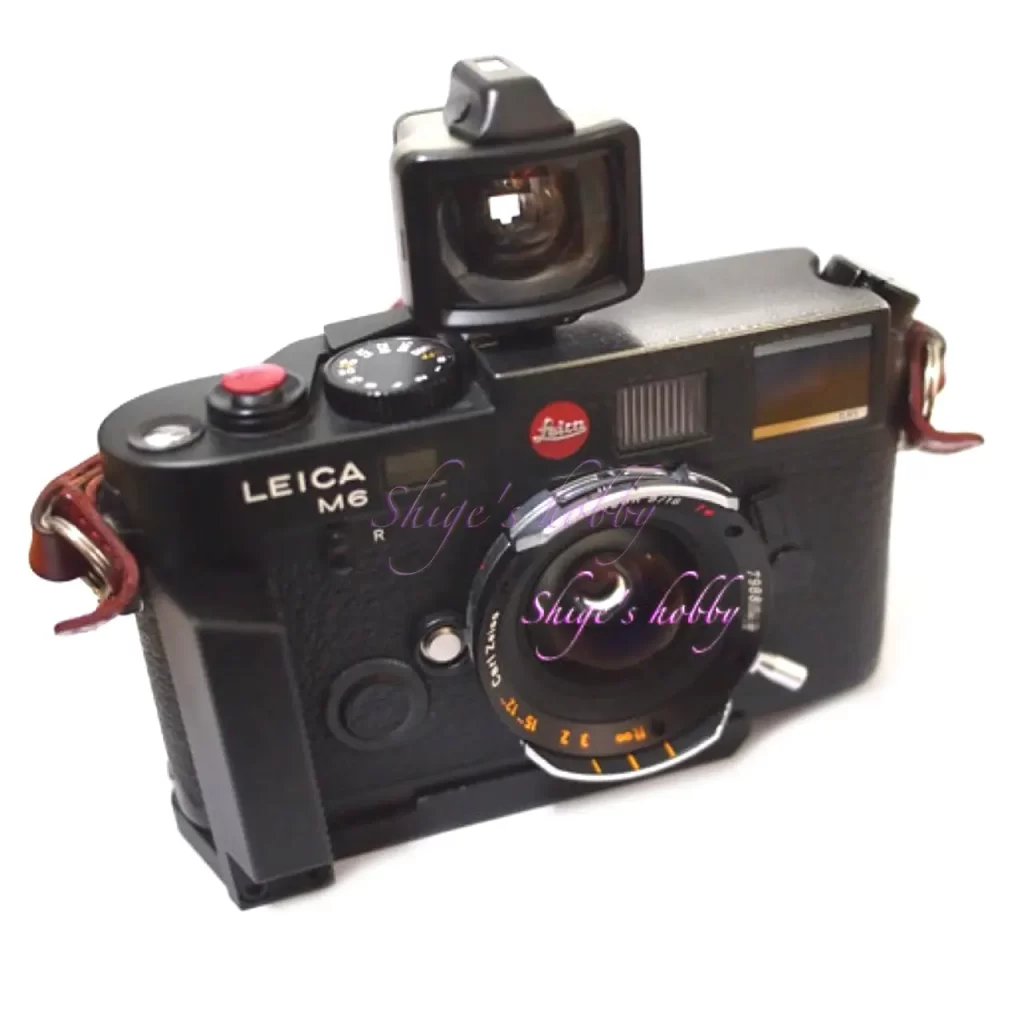
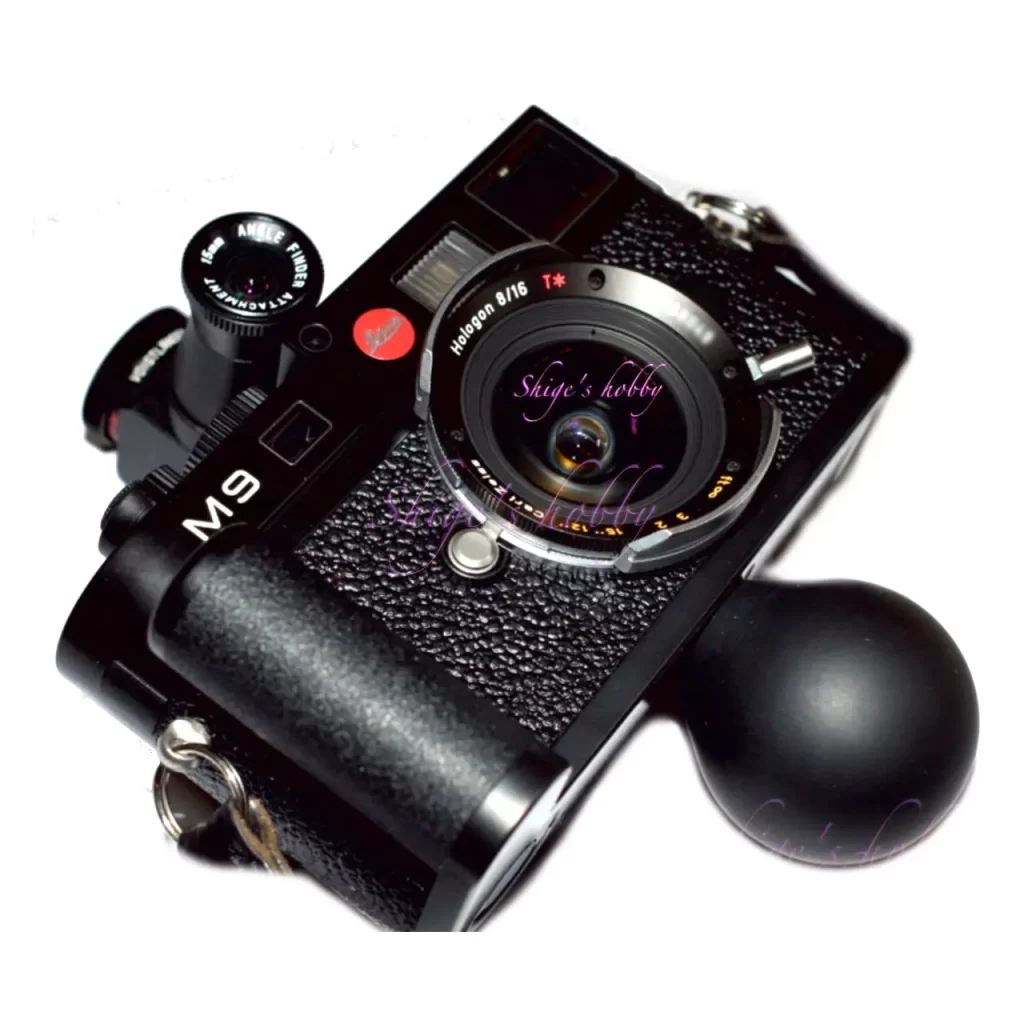
Whether it’s a film camera or a LEICA M-series camera with a 35mm full-frame sensor, if you’re not careful your fingers can appear in the photo, so to avoid this I used a bottom grip as shown in the photo below.
To check the structure of the LEICA M9, I used either the original 16mm viewfinder or a Voigtländer angled viewfinder with a 15mm attachment. Either way, I could check the composition without any problems.
As for the results, in some situations the LEICA M9’s CCD sensor reacts abnormally to light entering at an angle, causing a purple color cast around the edges. Correcting this with image software is quite a hassle, so it’s better to discard color and use the camera in monochrome.
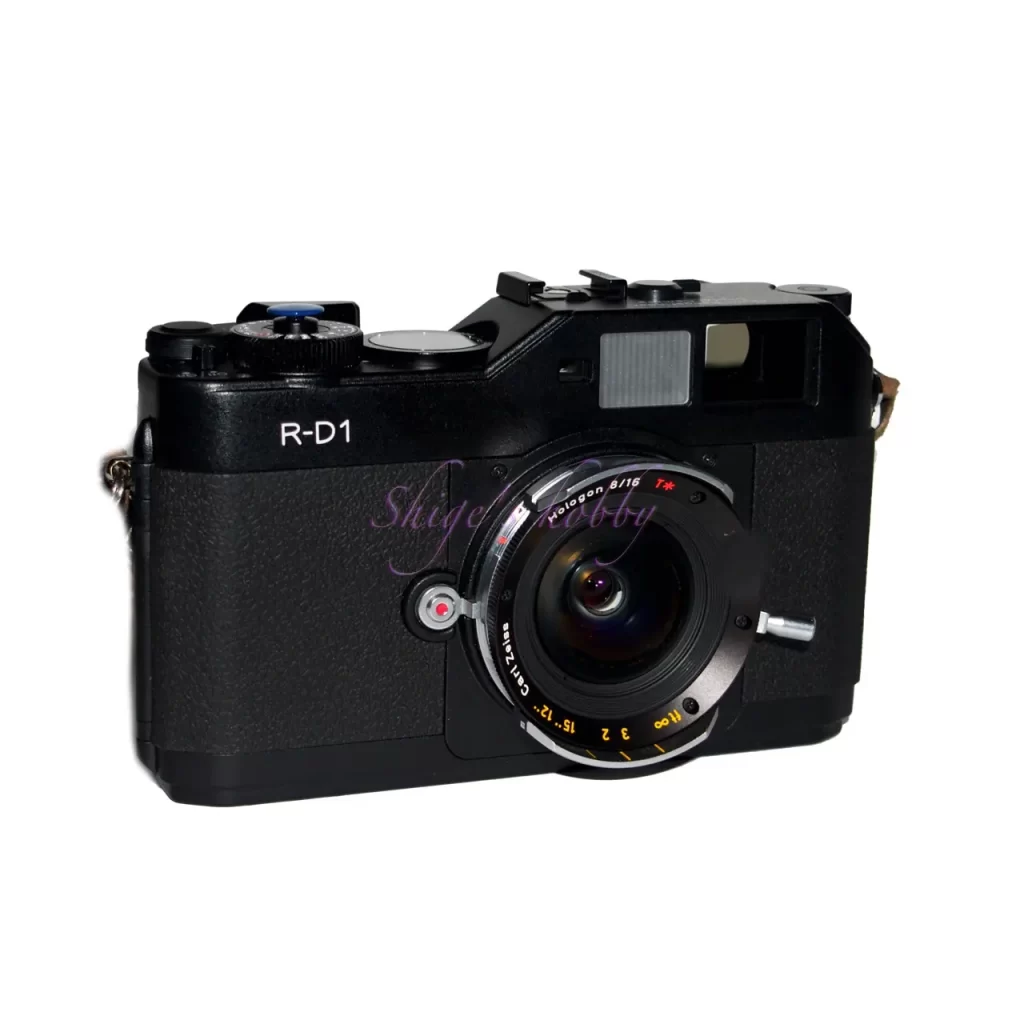
The Epson R-D1 is equipped with an APS-C size sensor, which is smaller than the size of a 35mm film sensor, so the peripheral edges of the 35mm film are forcibly cut off in the resulting image, resulting in less noticeable color cast. However, this has the disadvantage of making the focal length longer, and the focal length converted to 35mm film is 16mm multiplied by the sensor size conversion factor of 1.5, resulting in a lens with an equivalent focal length of 24mm.
The R-D1’s built-in viewfinder does not have a frame for checking the 16mm composition, so I often used an external 24mm or 25mm viewfinder to check the composition, or shot without a viewfinder. The photo below was taken without a viewfinder attached.
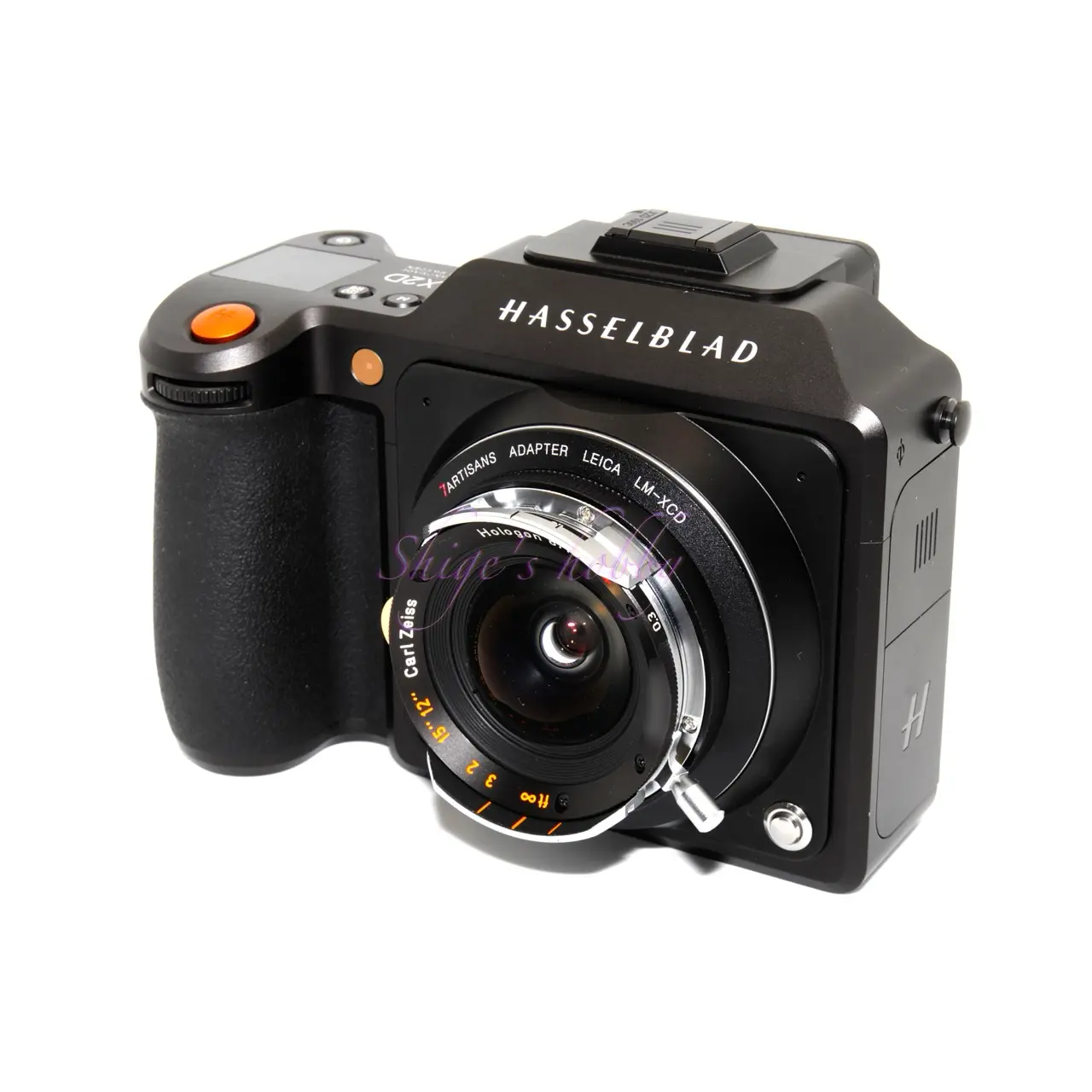
Out of curiosity, I attached it to my HASSELBLAD X2D and took a few photos, and was surprised at the lack of color cast, even though the image circle was significantly smaller. It seems perfectly usable on sunny days, so I occasionally take it out. And it looks beautiful attached to the X2D.
This lens has a protruding rear element, so you might think it might get in the way of the Leica shutter membrane, but in my experience, I’ve had no issues with the digital M-mount cameras it’s used with: the Epson R-D1, M8, M8.2, M9, and M typ240.
However, because the lens guard is located right up against the shutter membrane, there’s a risk of an accident if the membrane bends or warps.
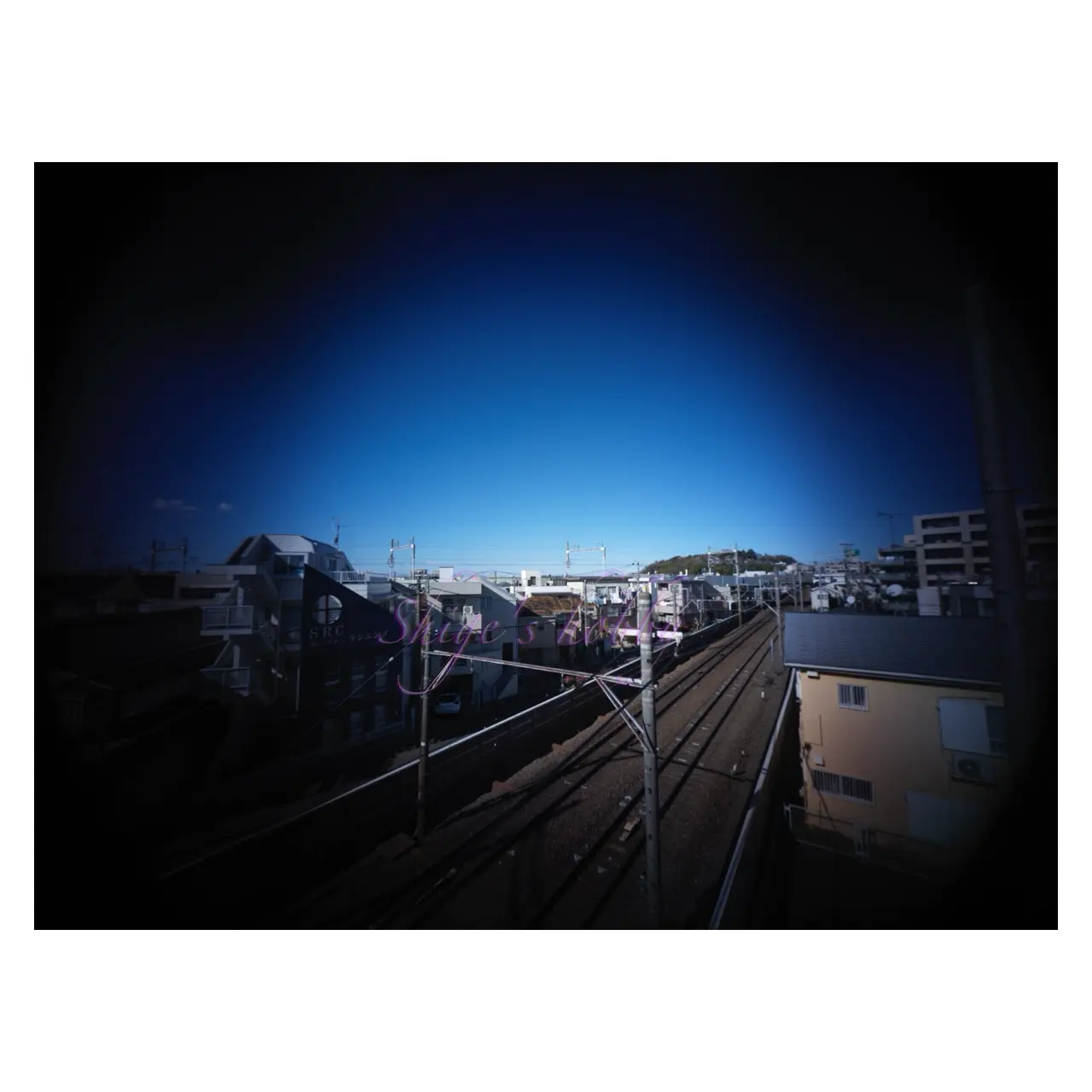
The lens has a fixed aperture of F8, which is dark, and there is significant vignetting. To suppress this, you need to attach a dedicated 4X gradation filter that darkens the aperture to F16, otherwise you won’t be able to get an image with even light intensity all the way to the periphery.
3.Summary
Sum up the HOLOGON 16mm M-mount modification, using an M-mount makes it easier to attach to a variety of cameras, making it more versatile than using a G-mount.
This thin, compact 16mm has no distortion, making it a good lens for broadening the range of expression.
However, since the rear lens is quite close to the film surface, if it cannot be attached to some cameras, automatic exposure may not be able to meter correctly, and it will be necessary to shoot with manual settings when using it. In the case of digital cameras, even if it can be attached to the camera, it may be difficult to use because there may be significant light reduction and color casts on the edges of the image.
Specifications, considerations, etc.
When I was holding the camera body normally and taking pictures, my fingers were often reflected in the edge of the shot. Especially with film cameras, the results can only be checked after development, so it is difficult to notice mistakes, so it is safe to use a bottom grip on the camera.
This lens has a very large and beautiful front lens, and even though it is not practical, I am satisfied just to look at it, and since I have a complete collection of modified G lenses, I keep it, although I use it very rarely.
On the used market, you can see both the original G mount and modified M mount.
I suspect that because it is not very practical, it is not sold, or the buyers sell it quickly.
I remember that I was able to buy my own unit for less than 100,000 yen used, since it was purchased during the film era. Including the cost of modifying the M mount, it would be about 100,000 yen, but currently it is sold for around 200,000 yen used, so the price seems to be high and stable.
Chinese companies have released a number of homages to lenses, but it is unlikely that they will reissue this lens due to low market demand, its large mass, and the fact that it would be difficult to process.
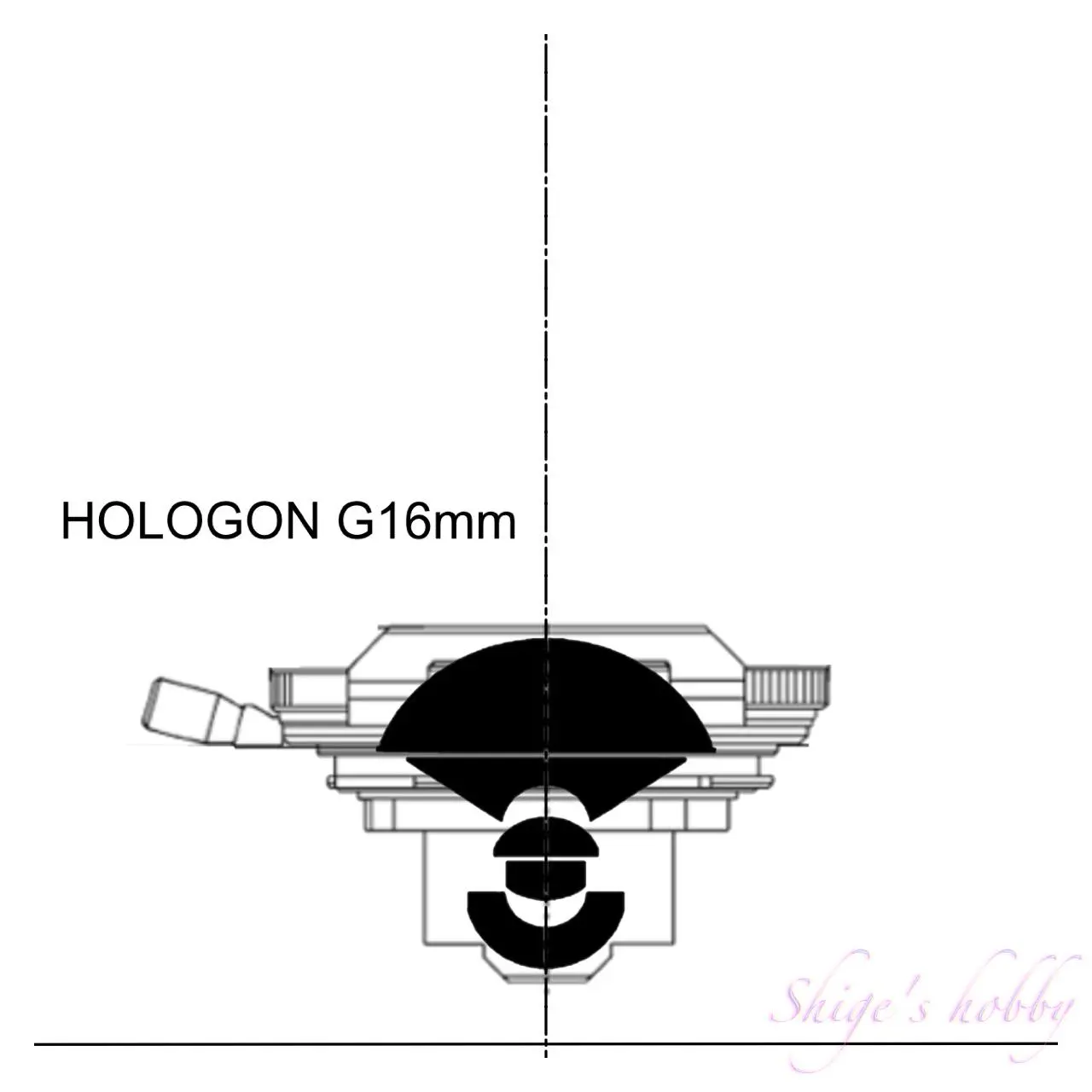

- The lens construction diagrams are quoted from each company’s materials, and the sizes have been adjusted by us, so they are not exact.
| Item | HOLOGON | HOLOGON |
| focal length(mm) | 16.5 | 15 |
| Maximum aperture | 8(fixed) | 8(fixed) |
| Minimum aperture | 16(+Filter) | 16(+Filter) |
| Leaf blade | – | – |
| Lens configuration | 5 elements in 3 groups | 3 elements in 3 groups |
| Minimum distance(m) | 0.3 | 0.2 |
| Lens length(mm) | 11 | – |
| Lens max diameter(mm) | 57 | – |
| Filter type | – Dedicated ND filter | – Dedicated ND filter |
| Weight(g) | 120 | – |
| Hood | なし | なし |
| Lens mount | CONTAX-G | ライカM |
| Release date | 1994 | 1972 |
| Price | ¥280,000 | ? |
Reference links
- Here is a description of the HOLOGON lens from Wikipedia.
- Zeiss Photography Historical Products(There is a data sheet for the CONTAX G lenses in the middle of the linked web page.)
寄付のお願い・Request for donations
Affiliate links
- Amazon Affiliate link for CONTAX lens
- Amazon Affiliate link for Ms-optics
- Amazon Affiliate link for CONTAX books
Update history
- 2026.2.22
- 2025.05.22
- 2024.8.1
- 2024.02.15:Update the article
- 2022.01.24:First draft
Be First to Comment