

A review and sample photos of a Kyocera CONTAX G-mount SONNAR T* 90mm F2.8 lens modified to a LEICA M-mount with the LEICA M8 digital rangefinder, the LEICA M-P typ240, the SONY α7Sii mirrorless camera, and the HASSELBLAD X2D-100C.
- Please see the disclaimer regarding advertising here.
- Italicized links in the text are advertisement links that take you to other sites.
- If you find any images used on this site problematic, please contact us via the comments or inquiry form, either as the rights holder or their representative. We will review the matter and take appropriate action.
Table of contents

Gallery
The following cameras were used to take the sample photos:
Review

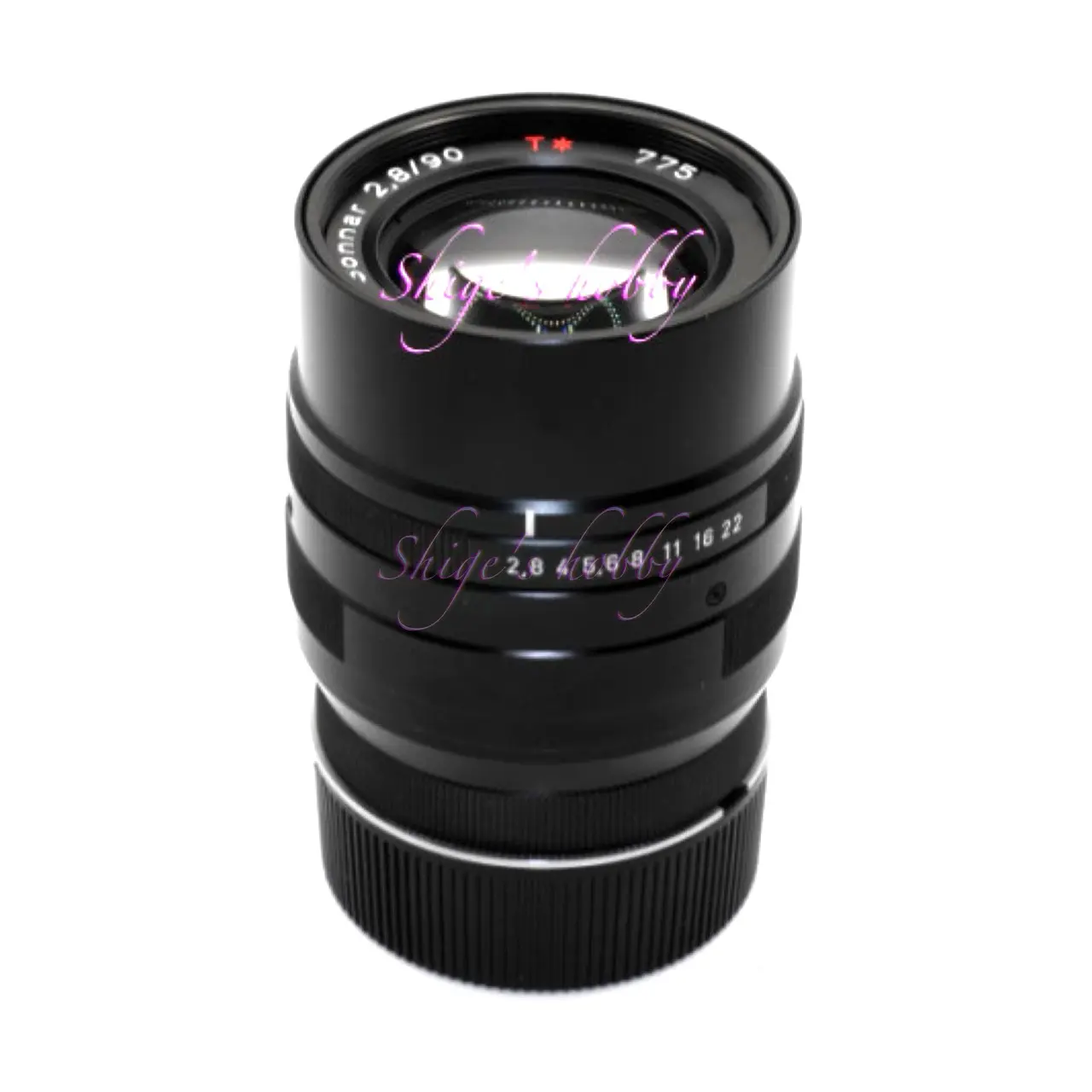
1.Overview
The SONNAR 90mm F2.8 is an autofocus lens released by Kyocera in 1994 along with the Contax G1. Here, we introduce a lens that was modified by Ms-optics (Miyazaki Optical) to fit a Leica M mount (rangefinder camera rangefinder coupled).
After acquiring a black CONTAX G SONNAR 90mm F2.8, I had MS-OPTICS (Miyazaki Optical) modify the lens to fit a Leica M mount rangefinder. This modification does not use the MS-OPTICS general-purpose helicoid, but rather helicoid parts specifically designed for the SONNAR 90mm.
The main differences between the original lens and the Ms-optics modified lens are the following three points.
- Focus movement area
- The outer lens barrel of the original lens is fixed, and the barrel housing the front element moves back and forth to focus; the front frame does not rotate when focusing.
- When the focus ring of the modified lens is turned, the front part of the lens rotates and moves as a whole, so the tip of the lens rotates, including the aperture ring.
- Aperture click stop
- The original lens has a click stop for each aperture.
- The modified lens has a stepless aperture from F2.8 to F22.
- Rangefinder rangefinder linkage
- The original lens is a G mount, so it is autofocus (hereafter, AF).
- The modified lens is linked to the rangefinder of a Leica M-type camera.
The minimum focusing distance is 1m for both the original lens and the modified lens.
I had previously requested a modification of my titanium gold Sonnar 90mm, and when I received the Sonnar 90mm with a black barrel and requested a second modification, the modification parts incorporating a new double helicoid were just about ready.
This double helicoid version is even easier to use than the first modified lens, and Mr. Miyazaki, representative of MS-OPTICS, told me that this new part is highly recommended.
At the time, I was like Amuro’s father in episode 33 of the Gundam TV series, boasting about his new part. This lens is one that Mr. Miyazaki is very fond of, and it was particularly memorable when he spoke with joy at the time of requesting the modification, saying that he often used it on trips and other occasions.
2.Usability
The SONNAR 90mm F2.8 M-mount modified lens features a dedicated double helicoid from MS-OPTICS for smooth focusing. The aperture, a stepless aperture with no click stops, is achieved by MS-OPTICS. Because the diameter of the aperture ring is the same as the lens diameter, it can change without you noticing. If using autoexposure, you may notice it due to a change in shutter speed. With a mirrorless camera, you’ll likely notice the aperture being narrowed if the ISO sensitivity is higher than usual.
The lens renders the focal plane clearly even at widest aperture settings, allowing for a beautifully blurred front and back bokeh. I also like the sharp drop in highlights and shadows that occurs when underexposed.
This M-mount modified lens allows for focus adjustment using double image overlap on rangefinder cameras, but the shallow focal plane (90mm focal length + f/2.8 maximum aperture) means that careful focus adjustment may be noticeable when viewing the image on a monitor after shooting. The slight deviation is due to the compatibility between the camera and lens, so you need to use it for a while to understand its characteristics.
Using a mirrorless camera’s electronic viewfinder or the magnified display on the LCD monitor makes it easy to check the focus, making a mirrorless camera a better choice if focusing accuracy is important.
Here are my impressions of each camera.
Digital Rangefinder Camera
The digital rangefinders used were the LEICA M8.2, equipped with a 10-megapixel APS-H-size sensor (27mm x 18mm), smaller than 35mm film, and the LEICA M-P typ240, equipped with a 24-megapixel 35mm full-frame sensor (36mm x 24mm), the same size as 35mm film.
The LEICA M8.2’s 35mm equivalent focal length is 120mm multiplied by the sensor size conversion factor of 1.33. Since the LEICA M8.2’s viewfinder frame is 28/90mm, shooting with the 90mm frame will generally allow you to achieve the desired composition. However, caution is required when taking close-up shots, as the position of the subject may be off due to differences in the viewfinder position and the center of the lens. If you are particular about composition, taking a photo from a slightly wider angle, with the intention of cropping, may help reduce regrets.
Looking at the water lily photo, the entire frame is sharp, and the 120mm equivalent focal length makes it possible to isolate a slightly distant subject.
The LEICA M-P typ240 has the same feel as 35mm film, but with the ease of digital re-shooting, it’s easy to use a 90mm focal length, which was difficult with a film camera. In the cat photo, the subject was shot by eye, close to the ground, without looking through the viewfinder, but the focus was on the cat’s fangs, resulting in a satisfying result. A major advantage of digital cameras is that they allow you to easily attempt shots that are difficult to capture with film.
The silver electronic viewfinder attached to the LEICA M-P typ240 is an OLYMPUS VF-2 silver with the LEICA logo affixed to it. The genuine LEICA electronic viewfinder, the EVF-2, is only available in black.


Mirrorless Cameras
The mirrorless cameras used were the SONY α7Sii, equipped with a 35mm full-frame (full-frame) sensor, and the HASSELBLAD X2D-100C, equipped with a medium-format digital sensor.
As mentioned above, the advantages of using a mirrorless camera include the ability to check the captured image in real time on the electronic viewfinder and rear LCD screen, and the ability to check for ghosting in backlit conditions as you shoot.
The SONY α7Sii is equipped with a 12-megapixel 35mm full-frame sensor, the same size as a film camera. Its resolution is on par with that of negative film, and its rendering characteristics, such as minimal vignetting, are comparable to those of the LEICA M-P typ240. Shooting with a slightly underexposed setting seems to work well with the SONY α7Sii sensor, producing a dramatic effect with shadows crushed to pitch black.
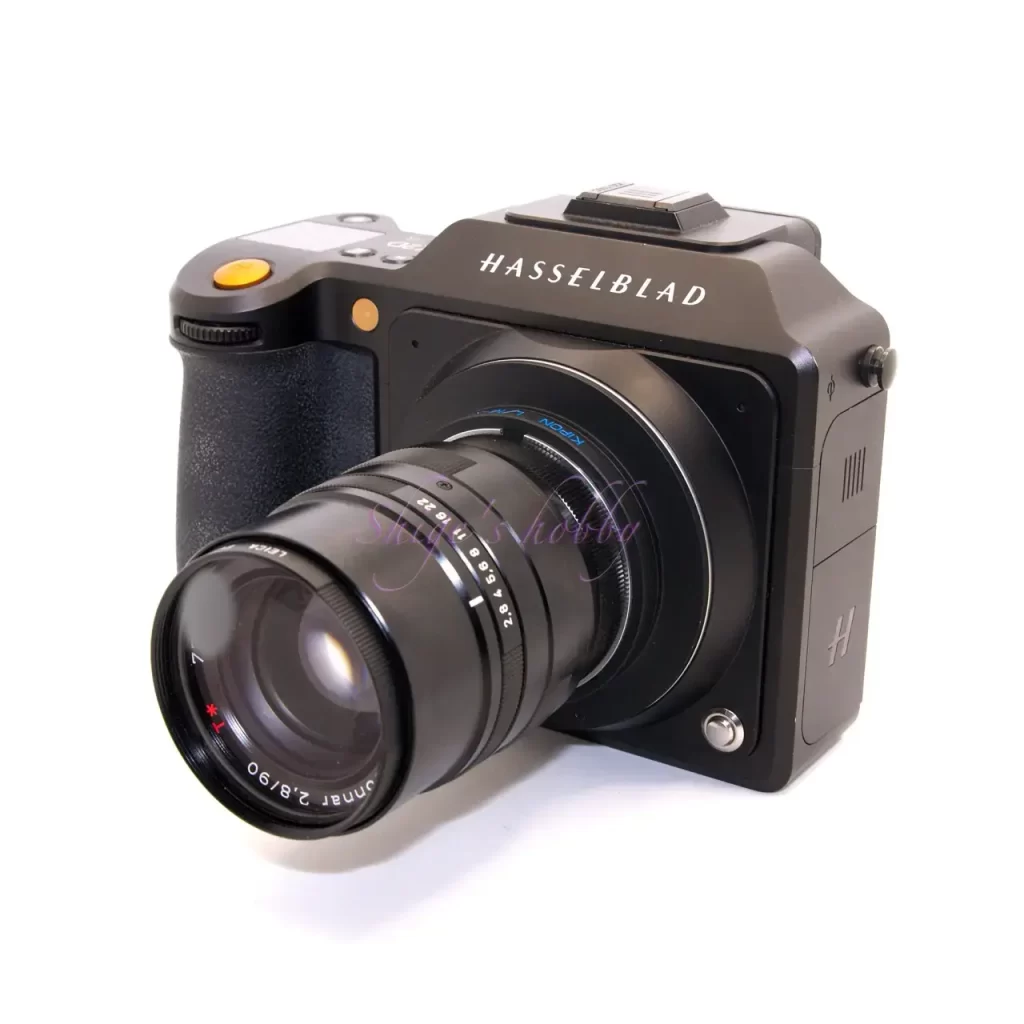
Another mirrorless camera, the HASSELBLAD X2D-100C, is equipped with a medium format digital sensor (44mm x 33mm) that is larger than 35mm film (36mm x 24mm). The resulting focal length for 35mm film is equivalent to 72mm, calculated by multiplying the sensor size by a focal length conversion factor of 0.8.
The SONNAR 90mm is a lens designed for 35mm film, but it can effectively utilize nearly 100% of the medium format digital sensor (44mm x 33mm). As such, the SONNAR 90mm’s wide image circle allows it to produce images with ample detail even at the edges of the frame when used with cameras equipped with sensors smaller than 35mm film.
The sample photo uses the entire medium format digital sensor, demonstrating no problems even at the edges. The HASSELBLAD X2D-100C has 100 million pixels, so even when cropped to 35mm film, 60 million pixels remain, providing ample pixel count.
The FUJIFILM GFX series, which uses the same size medium format digital sensor, has a mechanical shutter in the body, making it easier to use than the HASSELBLAD X series. The problem with the HASSELBLAD X series is that, since it doesn’t have a mechanical shutter in the body, it uses an electronic shutter, which can cause image distortion called rolling distortion in the images of fast-moving subjects.
3.Summary
To summarize the SONNAR 90mm F2.8 Leica M-mount, the MS-OPTICS double helicoid rotates smoothly, making focusing very easy. The aperture is stepless with no click stops, so it may change without you noticing, so you need to be careful.
Image quality is the same as the G-mount version, with a soft yet sharp focus. Another nice feature is the minimal light falloff due to the wide image circle.
Since the focus plane becomes thinner at wide apertures, it is safer to use a mirrorless camera to fine-tune the focus. When using a rangefinder camera, you need to be aware of subtle shifts in focus and adjust accordingly when shooting.
Specification and Competitor
Generally, most 90mm prime lenses do not suffer from any major image degradation, so in the past I have used the APO Summicron M 90mm, Summicron M 90mm, Elmarit M 90mm, Macro Elmar M 90mm, Elmar M 90mm, and Konica M Hexanon 90mm with the M mount. However, of those, this is the only lens I still have.
For the Leica R mount, the APO Summicron R 90mm remains, a lens with high resolution and three-dimensional images, with different image characteristics than the Sonnar 90mm.
At the moment, these two lenses are sufficient for photography, but I’m interested in the extremely expensive Summicron 90mm F1.5 and the popular Chinese-made 90mm F1.25.
Looking at the lens construction diagram below, SONNAR and HEXANON use an Ernostar lens construction with an aperture setting of F=2.8, making them brighter than the Tessar-type TELE TESSOR, with roughly the same lens size and number of lens elements.
As an aside, the reason ZEISS chose the darker Tessar type for the 85mm lens is that the SONNAR 85mm F2 is a more high-end lens, and it is surmised that this was largely a marketing decision, as ZEISS felt that an 85mm F2.8 budget lens would not be enough to differentiate it from other high-end lenses.
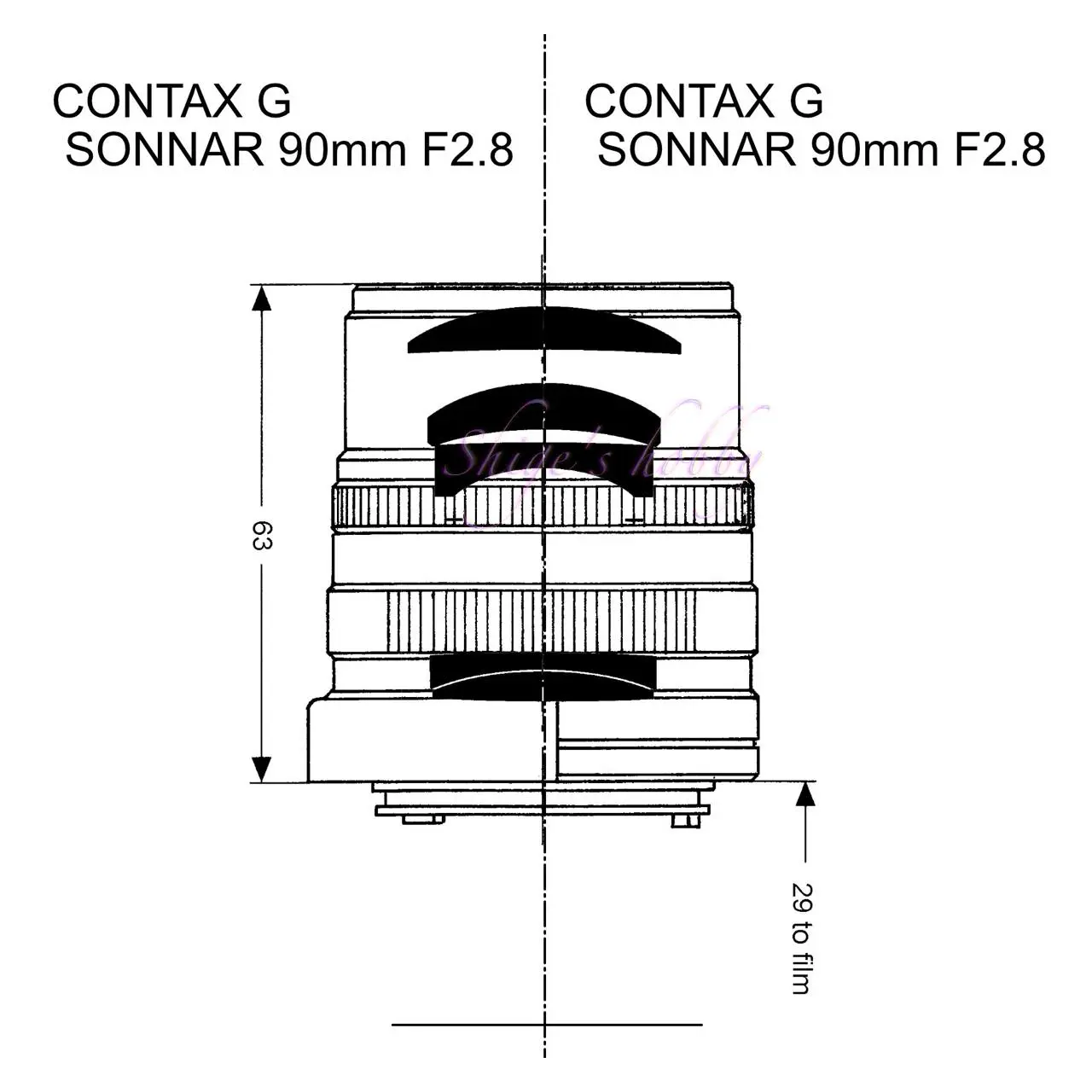
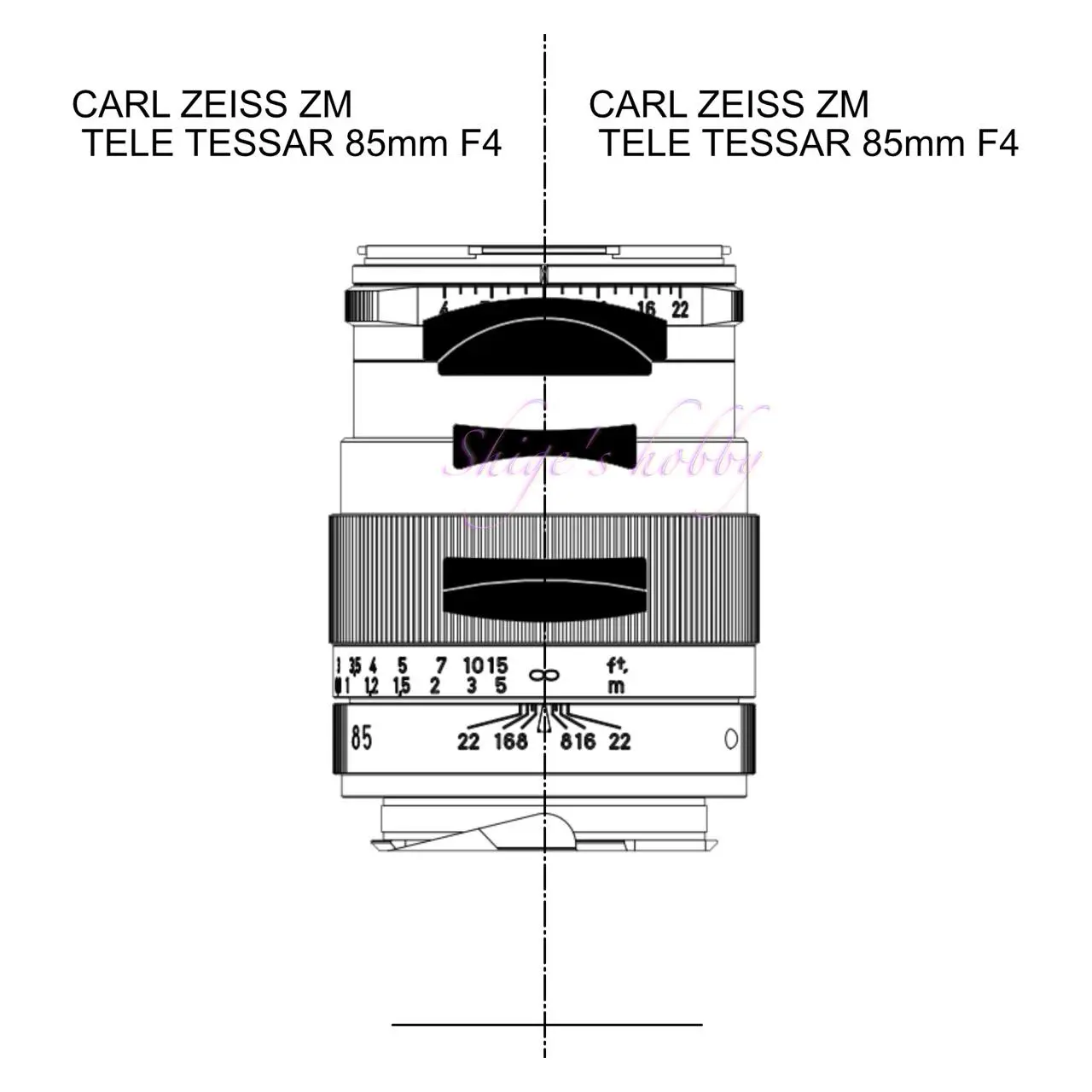
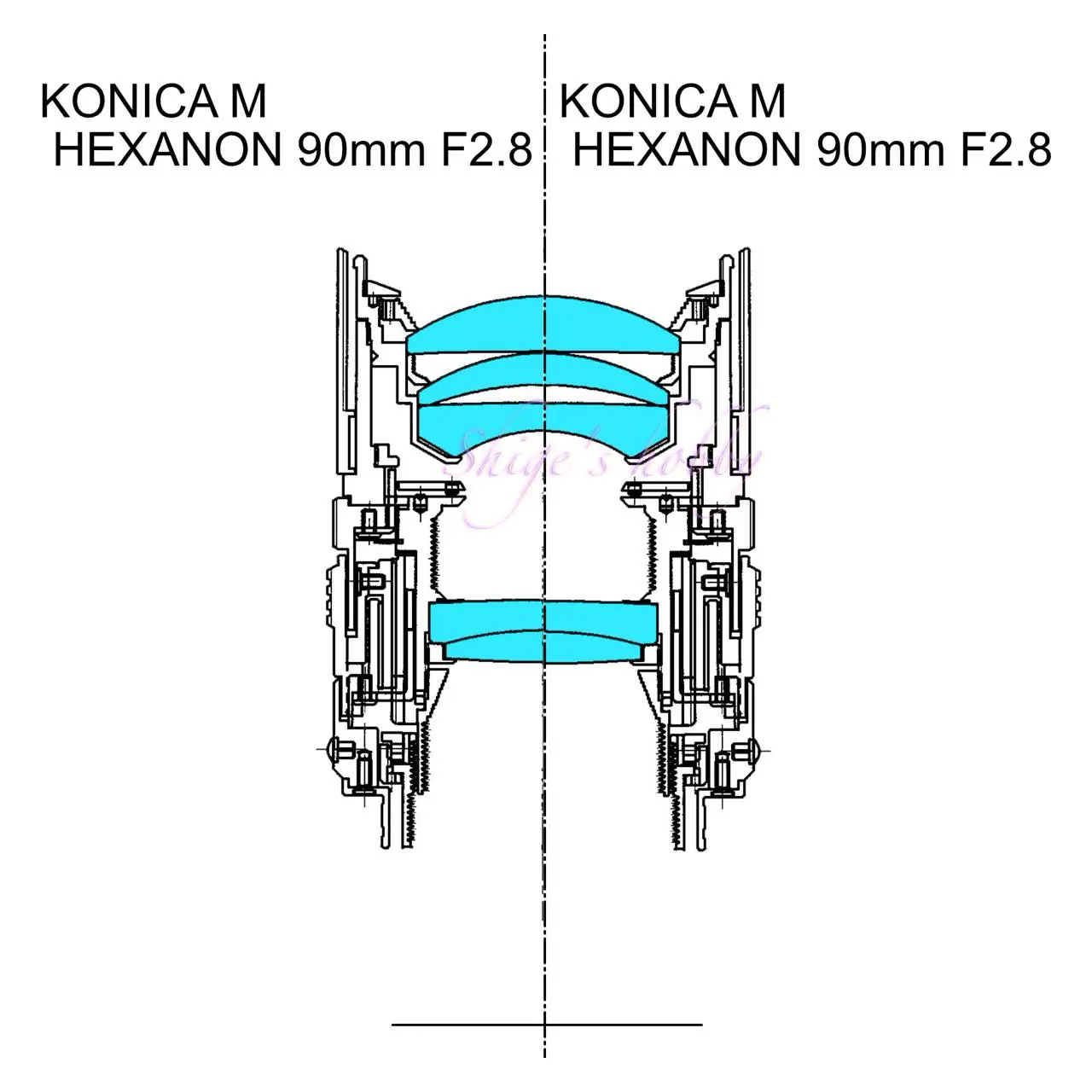
- The lens construction diagrams are taken from materials distributed by each company, and the sizes have been adjusted by us, so they are not exact.
| Item | SONNAR | TELE TESSOR | HEXANON |
| focal length(mm) | 90 | 85 | 90 |
| Maximum aperture | 2.8 | 4 | 2.8 |
| Minimum aperture | 22 | 22 | 22 |
| Leaf blade | 8 | 10 | 10 |
| Lens configuration | 5 elements in 4 groups | 5 elements in 3 groups | 5 elements in 4 groups |
| Minimum distance(m) | 1.0 | 0.9 | 1.0 |
| Lens length(mm) | 63.0 | 70 | 69 |
| Lens max diameter(mm) | 56 | 54 | 55 |
| Filter type | 46 | 43 | 46 |
| Weight(g) | 240 | 310 | 330 |
| Hood | GG-3 | Carl Zeiss Lens Shade for 85mm Tele-Tessar T* 4/85 ZM | Build in |
| Lens mount | CONTAX-G | ZM | M-mount Compatible |
| Release date | 1994 | 2010.2.11 | 1999 |
| Price | ¥47,000 | ¥90,000 | ¥75,000 |
Reference links
- Wikipedia page describing the Zeiss Sonnar
- Zeiss Photography Historical Products(CONTAX G lens data sheet is available in the middle of the linked page)
- CONTAX G SONNAR 90mm Amazon sales site (affiliate link)
寄付のお願い・Request for donations
Affiliate Links
- CONTAX lens・Ads by Amazon
- Ms-optics・Ads by Amazon
- CONTAX books・Ads by Amazon
Update history
- 2026.3.10
- 2025.5.13
- 2024.8.1
- 2024.02.16:Layout Modified
- 2024.01.14:Update
- 2023.03.27:initial draft
Be First to Comment