
A review and sample photographs of the CARL ZEISS C SONNAR T* 50mm F1.5 ZM lens, released in 2006, used with the film rangefinder camera LEICA M6 and the digital rangefinder camera LEICA M9.
- Please see the disclaimer regarding advertising here.
- Italicized links in the text are advertisement links that take you to other sites.
- If you find any images used on this site problematic, please contact us via the comments or inquiry form, either as the rights holder or their representative. We will review the matter and take appropriate action.
Table of contents

Gallery
The following camera and scanner were used to take the example photos.
- LEICA M6 + KODAK E100VS reversal film
- Film scanning was done using Minolta DiMAGE Scan Multi PRO and VueScan
- LEICA M9
Review
1.Overview
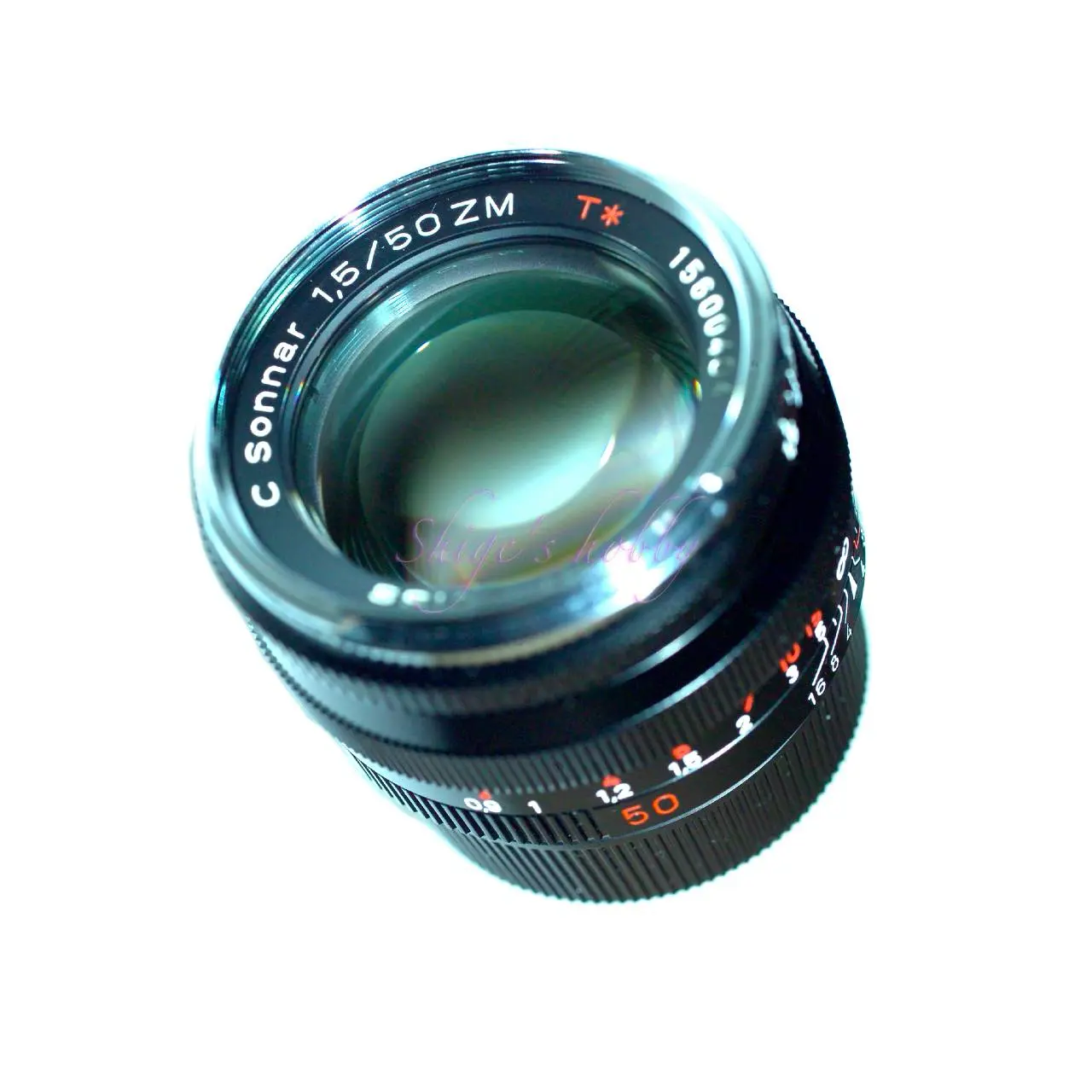
The C Sonnar T* 50mm f/1.5 ZM is a standard lens released by Carl Zeiss in 2006. It is manufactured by Cosina in Japan.
The main specifications are as follows, and the details are listed in the table.
- Aperture value: 1.5
- Lens construction: 6 elements in 4 groups
- Aperture blades: 10
- Minimum focusing distance: 0.9m
- Leica M rangefinder camera rangefinder coupling: 0.9m
- Hood: Dedicated bayonet hood
- Lens color variations: Silver and black
2.Usability
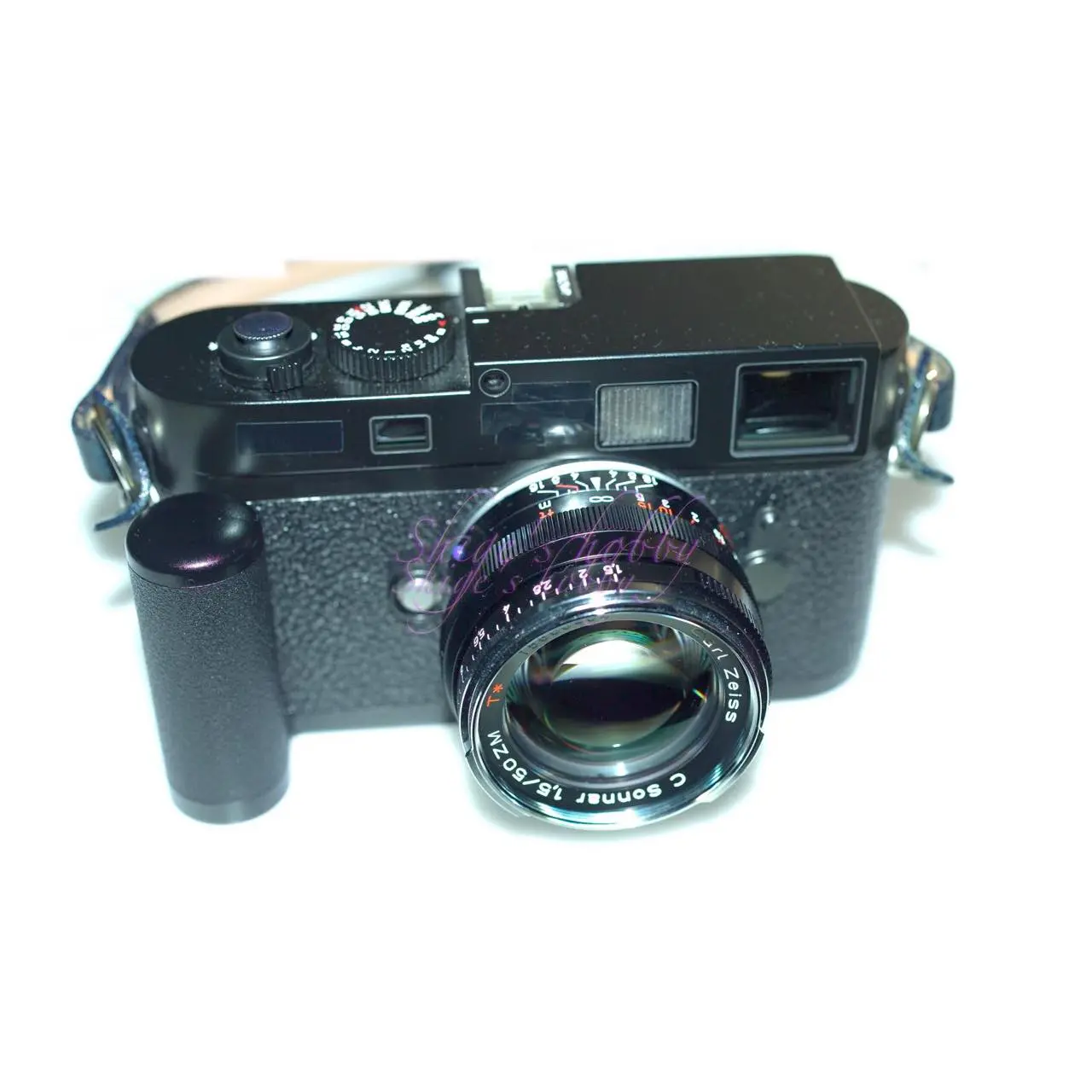
The C Sonnar T* 50mm f/1.5 ZM has a moderately thick lens barrel, giving it a natural look when mounted on various rangefinder cameras.
However, because it is a compact lens, it may appear underwhelming when mounted on a large mirrorless camera. Therefore, it is best suited to smaller cameras.
As a fixed focal length, manual focus lens, the controls are simple and consist only of an aperture ring and a focus ring. The aperture ring, which features 1/3 stop aperture adjustment, is located at the front of the lens barrel. The focus ring is moderately wide, and combined with the smooth helicoid, focusing is problem-free.
Film shooting results show a modern rendering with sharp focus, smooth bokeh, and minimal distortion at the edges. The high contrast of the images is due to the use of “KODAK E100VS” reversal film, which prioritizes saturation.
The LEICA M9 is a digital rangefinder camera with an 18-megapixel, 35mm, full-frame CCD sensor. Photos taken with this camera have absolutely no dull, old-lens feel. Furthermore, there is minimal flare and ghosting in backlit situations and no distortion or vignetting at the edges. This makes it a perfectly satisfactory lens, even when used with a digital camera.
3.Summary
In summary, the C Sonnar T* 50mm F1.5 ZM provides a polished, modern rendering that stays true to the Sonnar style, offering excellent detail, even at the edges.
This lens’s value lies in its ability to produce a rendering characteristic of modern lenses while being manufactured as closely as possible to the original Sonnar. Its superior lens coating, manufacturing precision, and manufacturer warranties offer a level of reassurance not found in older lenses, making it suitable for photographers who want to enjoy the rendering of a Sonnar-style lens, a style that is becoming increasingly rare.
Specifications, considerations, etc.
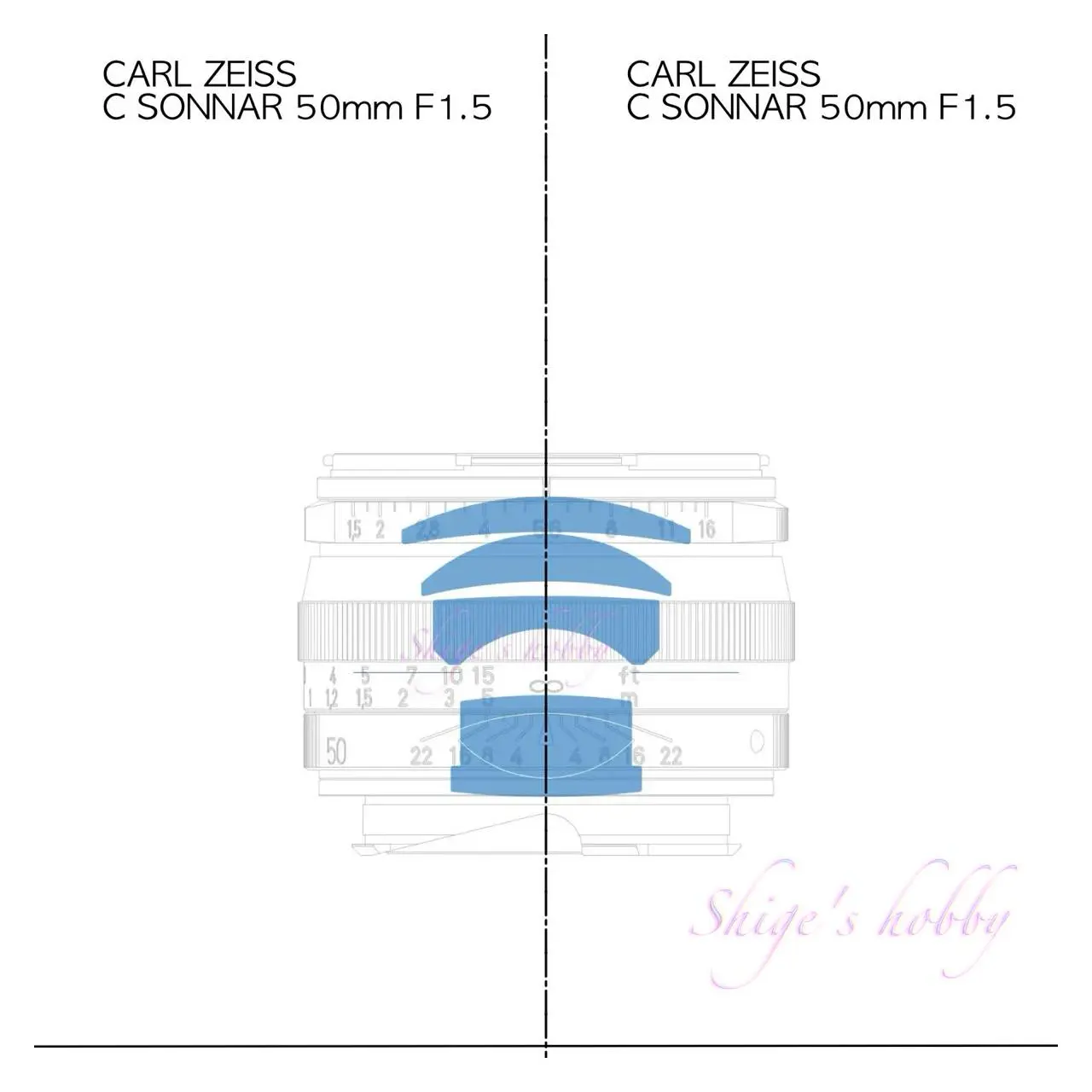
As its name suggests, the C Sonnar T* 50mm F1.5 ZM is a lens that employs the Sonnar design. The original large-aperture Sonnar lens is generally recognized as the 3-group, 7-element lens produced in 1932. Its configuration uses two sets of three cemented lenses, as seen in the original Sonnar. This design is from an era when coating technology was immature.
While this lens has the same 50mm F1.5 specifications as the original Sonnar, its configuration is a 4-group, 6-element design. The three elements in the front group are independent lenses, and the three elements in the rear group are cemented, paying homage to the original Sonnar.
Considering the examples of newer Carl Zeiss lenses, the “C” prefix in the lens name likely stands for “Classic.” It is designated as part of the Classic series because its lens configuration adopts the Sonnar design previously released by Zeiss.
Prior to the release of the C Sonnar T* 50mm f/1.5 ZM, Mr. Miyazaki of Ms-Optics (Miyazaki Optical) released the Sonnetar series of lenses. These modern standard lenses claimed to be of the Sonnar type and were an evolution of the Sonnar design.
These lenses include the “MS-Mode Dual 50mm F1.3,” the brightest Sonnar-type lens; the “SONNETAR 50mm F1.1”; and the “SONNETAR 50mm F1.3,” a revival of an early lens. All of these lenses evolved from the Sonnar design at Ms-Optics.
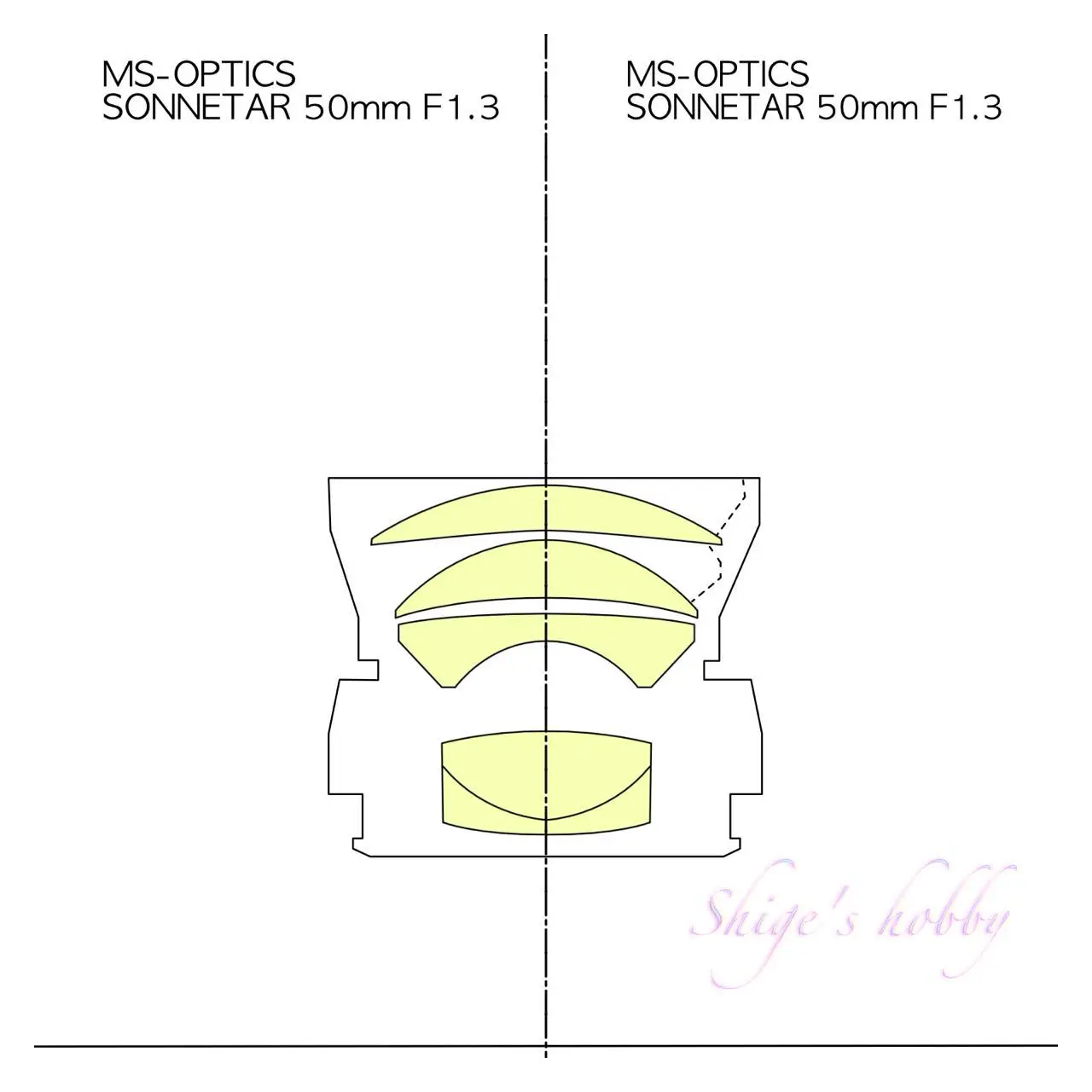
Below is a comparison of the configuration diagrams for the C Sonnar 50mm f/1.5 ZM and the Sonnetar 50mm f/1.3.
The Sonnetar 50mm f/1.3 has a lens configuration of four groups and five elements, with the rear group consisting of two cemented lenses. This configuration prioritizes manufacturing cost and ease of design over adhering to the original Sonnar’s three-element cemented design.
I imagine Zeiss revived the C Sonnar 50mm f/1.5 ZM out of pride as the original Sonnar manufacturer.
- The lens configuration diagrams are quoted from materials distributed by each company, and the sizes have been adjusted by us, so they are not exact.
| Lens name | C SONNAR | SONNETAR |
| Focal length | 50 | 50 |
| Max aperture | 1.5 | 1.3 |
| Min aperture | 16 | 16 |
| Leaf blade | 10 | 10 |
| Lens Construction | 6 elements in 4 groups | 5 elements in 4 groups |
| Min distance(m) | 0.9 | 0.8 |
| Lens length(mm) | 38.2 | 36 |
| Max diameter | 56 | 50 |
| Filter Size(mm) | 46 | 49 |
| Weight(g) | 250 | 110 |
| Lens hood | Carl Zeiss Lens Shade 35mm/50mm | Special trumpet type 49mm reverse thread |
| Lens mount | ZM | LEICA M |
| Release date | 2006.8.4 | 2022 |
| Price(Yen/No-tax) | ¥105,000 | -¥100,000 |
ZM Lens list
- Distagon T✻ 15mm ƒ/2.8 (Made in Germany)
- Distagon T✻ 18mm ƒ/4
- Distagon T✻ 21mm ƒ/2.8
- C Biogon T✻ 21mm ƒ/4.5
- Biogon T✻ 25mm ƒ/2.8
- Biogon T✻ 28mm ƒ/2.8
- Distagon T✻ 35mm ƒ/1.4
- Biogon T✻ 35mm ƒ/2
- C Biogon T✻ 35mm ƒ/2.8
- C Sonnar T✻ 50mm ƒ/1.5
- Planar T✻ 50mm ƒ/2
- Tele-Tessar T✻ 85mm ƒ/4
- Sonnar T✻ 85mm ƒ/2 (Made in Germany)
Reference links
寄付のお願い・Request for donations
Affiliate link
- LEICA lens・Ads by Amazon
- Zeiss lens・Ads by Amazon

Update
- 2026.4.29
- 2025.4.9
- 2024.04.20
- 2024.01.24
Be First to Comment