

A review and sample photos of the LEICA M6 Titanium rangefinder film camera.
- Please see the disclaimer regarding advertising here.
- Italicized links in the text are advertisement links that take you to other sites.
- If you find any images used on this site problematic, please contact us via the comments or inquiry form, either as the rights holder or their representative. We will review the matter and take appropriate action.
Table of contents

Gallery
The following lens were used to take the example photos. Click on the photos to enlarge.
- MACRO ELMAR M 90mm F4
- SUMMILUX M 50mm ASPH.
- SUMMILUX M 35mm ASPH.
- ELMARIT-M 28mm 2nd
- SUPER ELMAR M 18mm
- MS-PERAR28mm F4
- CANON S 25mm
Review
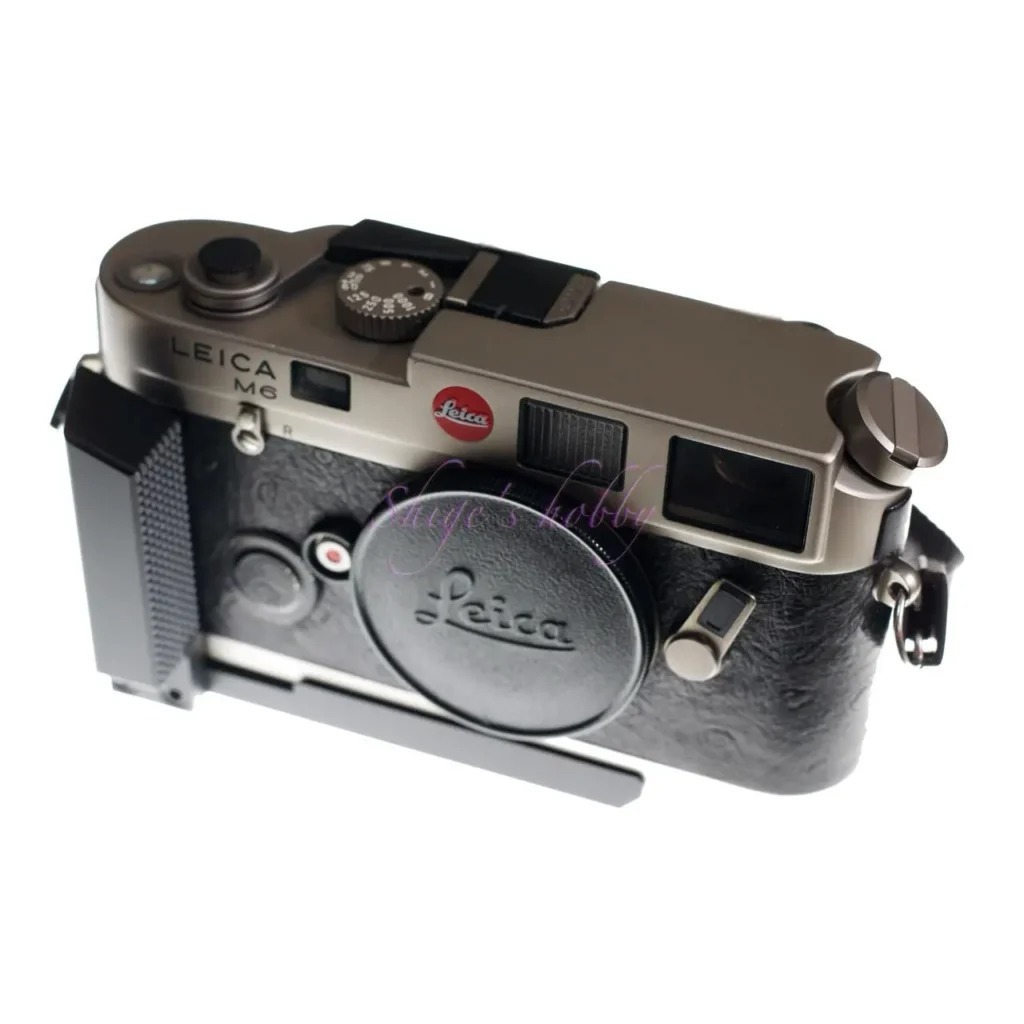
1.Overview
The LEICA M6 is a Leica M-mount rangefinder film camera with a built-in light meter, released by Leica in 1984.
The body frame is made of brass and is available in black, silver, or titanium.
It features a shutter curtain, TTL direct metering, a maximum shutter speed of 1/1000, a baseline length of 69.25mm, and two viewfinder specifications vary depending on the magnification:
- The 0.72x magnification has an effective baseline length of 49.86mm and three viewfinder frames (28/90mm, 35/135mm, and 50/75mm) with six frames.
- The 0.85x magnification has an effective baseline length of 58.86mm and three viewfinder frames (90mm, 35/135mm, and 50/75mm) with five frames.
Film advance and rewind are manual by default.
To operate the exposure meter, two CR 1/3N or LR44 batteries are installed in the front of the camera.
2.Usability
I purchased the LEICA M6 Titanium as a set with the SUMMILUX M 35mm ASPH. Titanium and the SUMMILUX M 50mm Titanium. I remember getting a significant discount when I mentioned I was buying the lenses together, as the M6 was at its lowest price.
The M6’s great feature as a camera was the soft sound of its cloth-curtain shutter, which allowed me to shoot without being intimidating to my subjects. With a maximum shutter speed of 1/1000, I had no choice but to stop down large aperture lenses, and I used all of my lenses at around f/5.6, which made me realize why Leica’s large aperture lenses weren’t popular.
Loading and winding the film manually is a bit of a hassle, but since I only used about two rolls per day, it wasn’t too much of a hassle.
The VISOFLEX can be attached without any problems. The stepped VISOFLEX viewfinder included with the VISOFLEX 2, as shown in the photo below, fits snugly against the camera and looks great. The 3-inch straight viewfinder is designed for the LEICA M6TTL and LEICA M7, which have taller bodies, and when attached to the M6, it leaves a gap, giving the impression of being a bit awkward.
As the M6 is not an AE camera, the actual shooting process is a bit tedious: check the shutter speed corresponding to the aperture using an external light meter, set the shutter speed using the camera’s shutter dial, focus on the VISOFLEX, and press the shutter.
If using F5.6 during the day, setting it to around 1/250 will generally be correct without having to measure it with a light meter every time, so using this as a reference, you will learn to increase or decrease the speed around 1/250 depending on the light conditions as you shoot.
Digital M cameras such as the LEICA M8 are equipped with auto exposure, so you can set the shutter speed to A and concentrate on focusing and shutter release with the VISOFLEX. With a digital camera, you can simply look at the image and, if the AE is off, adjust the shutter speed and retake the photo.
Digital M cameras from the LEICA M typ240 onwards can be fitted with an EVF, allowing you to use a variety of lenses without using the VISOFLEX.
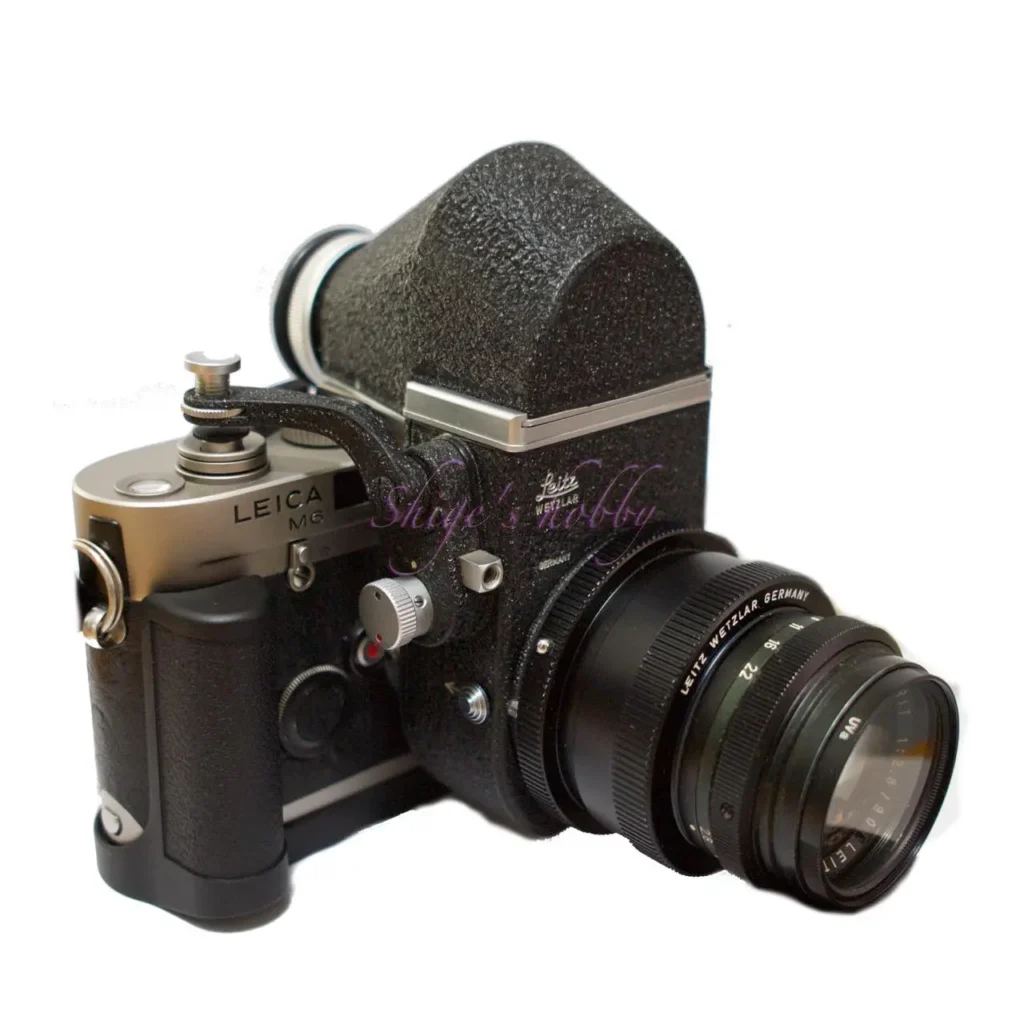
One drawback of the LEICA M6 is the diffuse reflection from the viewfinder frame, which is mentioned in old magazines (such as Leica Tsuushin no. 4 Aimook 284), but I hardly ever noticed it while using it. Leica and Kanto Camera Service have taken measures to address this.
I once had a problem when I was shooting with the original ELMARIT M 28mm, a lens that didn’t fit the viewfinder frame, and after repeatedly fiddling with the frame switch rubber to manually position it at 28mm, the internal spring flew off, preventing the frame from switching. After the repair, I was able to simply attach an external viewfinder and start shooting again.
In conclusion, to sum up the LEICA M6 is a camera that allows you to use M-series Leica cameras with a reasonable degree of reliability.
Its basic performance is unchanged from the LEICA M3, the forerunner of the M series. The only major changes are that the larger body of the LEICA M5 has been restored to the size of a conventional M camera, and the exposure meter has been changed from an arm-type CdS light sensor to an SPD light sensor with screen metering.
In the 2020s, the prices of both cameras and film have risen sharply, making it difficult to use casually. However, the gentle sound of the cloth-curtain shutter, which is not available in digital M cameras, has an irreplaceable appeal.
Specifications, considerations, etc.
The LEICA M6 has an exposure meter but no autoexposure or autowind, so it’s basically the same as older Leica Ms.
The M6 is often compared to the HEXAR RF, but it’s fair to say the two are quite different cameras.
The HEXAR was cheaper than Leica and was as automated as possible, making it what Japanese people consider the best rangefinder camera. However, since Konica withdrew from the camera business, only a successor has been released. In contrast, the M6 is a camera that incorporates the trends of the times without abandoning M tradition. The same is true of the LEICA M7, which incorporates autoexposure; the basics remain the same, with only minimal incorporation of trends.
But that trend saw a major change in 2025. With the release of the LEICA Q, it was technically proven that a rangefinder-style camera with an EVF was possible. The mirrorless camera released in November 2025, called the LEICA M EV1, retains the M mount and body size but eliminates the rangefinder mechanism. While a rangefinder wheel remains inside the mount, it’s not there for rangefinder accuracy; it merely functions to notify the camera that the focus ring is operating and trigger the EVF’s magnified display. This function can be turned on or off, and if it’s turned off, it becomes completely meaningless these days.
The LEICA M EV1 is clearly cheaper to manufacture than M-series digital Leicas with rangefinder mechanisms, yet it sells for roughly the same price as other M-series Leicas.
This is perhaps an unavoidable decision, as a cheaper price could have led to mirrorless M sales and put an end to the rangefinder M model. It will be interesting to see whether mirrorless cameras bearing the M name only in appearance will become mainstream in the future.
| Camera | LEICA M6 | HEXAR RF |
| Finder Mechanisim | Real-image reverse Galilean perspective finder | Real-image reverse Galilean perspective finder |
| Viewfinder Magnification | 0.72x 0.85x | 0.6x |
| Finder Frame | 28,90 / 35,135 / 50,75(x0.72) 90 / 35,135 / 50,75(x0.85) | 28/90、35/135、50/75 |
| Baseline length(mm) | 69.25 | 69.2 |
| Effective baseline length(mm) | 49.86(x0.72) 58.86(x0.85) | 41.5 |
| Shutter Mechanisim | Mechanically timed horizontal running cloth shutter | Electronically controlled vertically moving metal focal plane shutter |
| Shutter speed(sec) | 1/1000〜1 | 1/4000〜16(Auto) 1/4000〜1(Manual) |
| Photometry method | Shutter curtain, TTL direct metering | Shutter curtain, TTL direct metering |
| Light receiving element | SPD | SPD |
| Battery | CR 1/3N x1、LR44 x2 | CR2-3V x2 |
| Size(mm) W x H x D | 139 x 77 x38 | 139.5 × 80 × 35 |
| Weight(g) | 560 | 560 |
| Release date | 1984 | Normal (1999.1) Limited(2001) |
Reference links
- Field Cameraman note Camera talk 17・nagy
- Everything about the Konica Hexar RF (EI mook 205) Mook – January 1, 2000・Ads by Amazon
- HEXAR RF Limited・Shige’s hobby
- HEXAR RF・Shige’s hobby
- MACRO ELMAR M 90mm F4・Shige’s hobby
- SUMMILUX M 50mm ASPH. ・Shige’s hobby
- SUMMILUX M 35mm ASPH. ・Shige’s hobby
- ELMARIT-M 28mm 2nd・Shige’s hobby
- SUPER ELMAR M 18mm・Shige’s hobby
- MS-PERAR 28mm F4・Shige’s hobby
- CANON S 25mm L39・Shige’s hobby
寄付のお願い・Request for donations
Affiliate links
- LEICA lens・Ads by Amazon
- KONICA lens・Ads by Amazon
- Konica Hexar RF body・Ads by Amazon
- Everything about the Konica Hexar RF (EI mook 205) Mook – January 1, 2000・Ads by Amazon

Update history
- 2025.12.3
Be First to Comment