
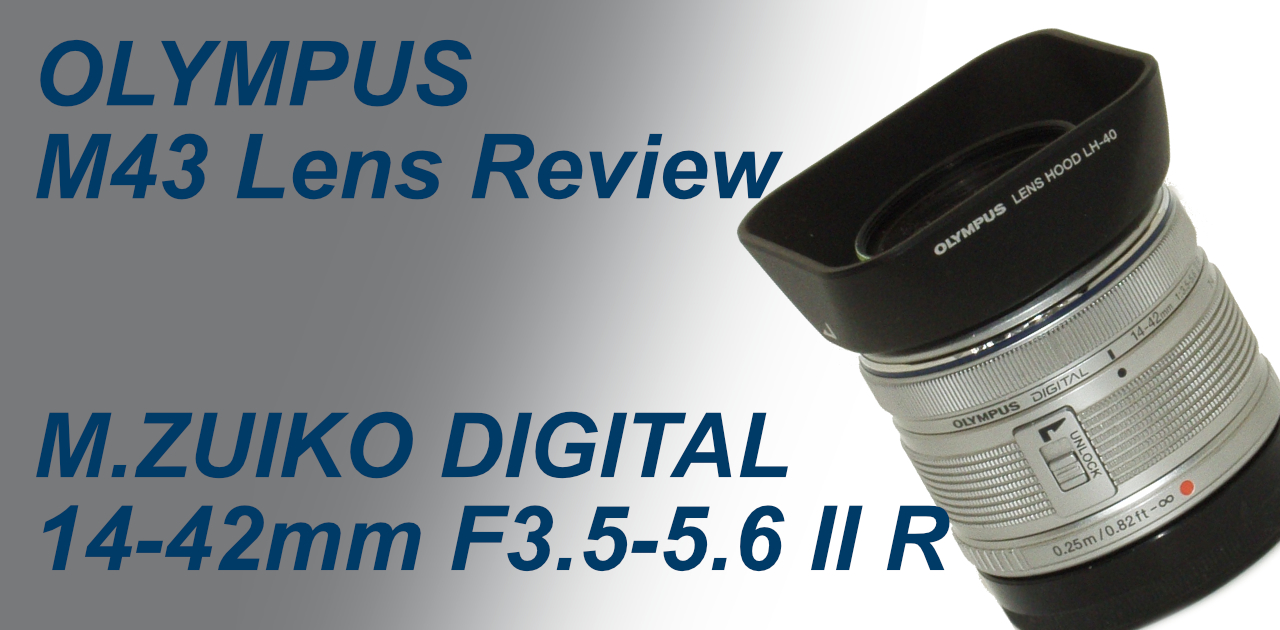
This article is a review and sample photographs of the Olympus M.Zuiko D 14-42mm F3.5-5.6-II R lens, released on July 22, 2011, used with the Panasonic LUMIX DMC-GM5 mirrorless camera.
- Please see the disclaimer regarding advertising here.
- Italicized links in the text are advertisement links that take you to other sites.
- If you find any images used on this site problematic, please contact us via the comments or inquiry form, either as the rights holder or their representative. We will review the matter and take appropriate action.
Table of contents

Gallery
The following cameras were used to take the sample photos.
Review
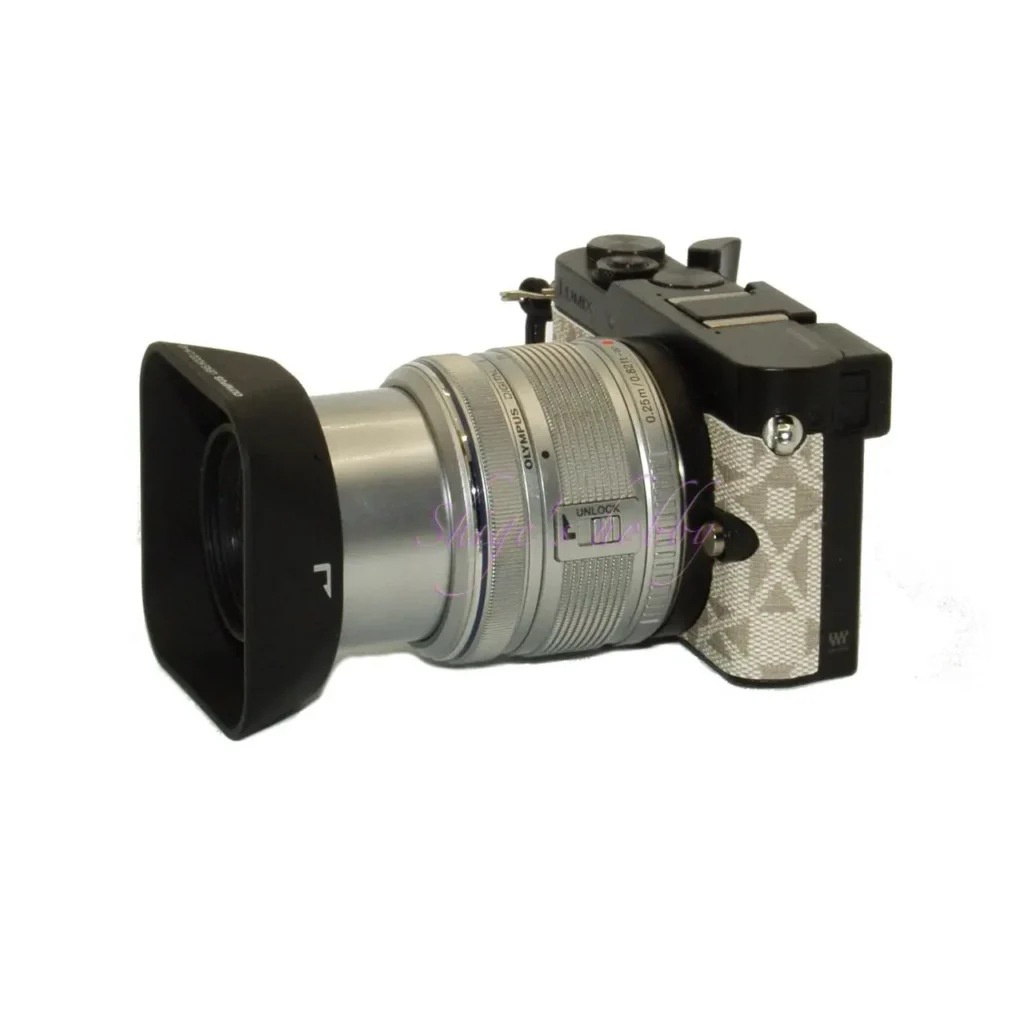
1.Overview
The M.Zuiko Digital ED 14-42mm f/3.5-5.6 II R is an affordable standard lens for Micro Four Thirds cameras. It was released by Olympus (now OM SYSTEM) in 2011. When used with a Micro Four Thirds camera, the 35mm equivalent focal length ranges from 28mm to 84mm.
The lens barrel features a focus ring, a zoom ring, and a lens lock for retraction. The lens is retractable. However, image stabilization is not built into the lens itself.
The lens construction consists of seven elements in five groups. Though the name does not include “ASPH,” the lens incorporates three aspherical lenses. A lens hood (model number LH-40, ¥4,000) is sold separately.
The detailed specifications of the lens are listed in the table.
2.Usability
The M.Zuiko Digital ED 14-42mm f3.5-5.6 II R is a standard zoom lens with a focal length ranging from 28mm to 84mm in the 35mm film format. It was bundled with lower-priced mirrorless cameras from Olympus (now OM SYSTEM). Although it is sold separately, it’s unlikely that many people purchase it individually.
As of 2020, a more compact power zoom lens is included, and this lens is no longer sold.
This lens has a retractable barrel to improve portability and has a length of 50 mm when retracted. When shooting, rotating the zoom ring to the left while holding the lens brings it past the lock point to a focal length of 14 mm. Turning the ring further to the left moves the lens to the telephoto end of 42 mm. Conversely, extending and rotating the ring increases the barrel’s length by about 20 mm, resulting in a lens length of approximately 70 mm.
Since you need to rotate the zoom ring to move the lens to a usable position, the lens is compact when stored but fairly long when in use.
Regarding image quality, it’s a perfectly usable lens for the low price, but don’t have high expectations.
3.Summary
In summary, the M.Zuiko Digital ED 14-42mm f/3.5-5.6 II R is an ordinary zoom lens. Because it is designed for OM System (formerly Olympus) cameras, it lacks built-in image stabilization. If you’re concerned about camera shake when using a Micro Four Thirds camera without in-body image stabilization, it’s better to choose a Panasonic zoom lens.
Specifications, considerations, etc.
In the 2020s, there are five types of standard zoom lenses (seven in total) and two types of power (motorized) zoom lenses (two in total) for Micro Four Thirds systems.
- M.ZUIKO DIGITAL 14-42mm F3.5-5.6
- M.ZUIKO DIGITAL 14-42mm F3.5-5.6 II(New)
- M.ZUIKO DIGITAL 14-42mm F3.5-5.6 II R (Different lens shapes as shown above)
- M.ZUIKO DIGITAL ED 14-42mm F3.5-5.6 EZ
- LUMIX G VARIO 14-45mm/F3.5-5.6 ASPH/MEGA O.I.S. H-FS014045
- LUMIX G VARIO 14-42mm/F3.5-5.6 ASPH./MEGA O.I.S. H-FS1442
- LUMIX G VARIO 14-42mm/F3.5-5.6 II ASPH./MEGA O.I.S. H-FS1442A(Different lens shapes as shown above)
- LUMIX G X VARIO PZ 14-42mm/F3.5-5.6 ASPH./POWER O.I.S. H-PS14042
The main difference between OM SYSTEM (formerly Olympus) and Panasonic is whether image stabilization is built into the lens. OM SYSTEM (formerly Olympus) has incorporated in-body image stabilization in its standard zoom lenses since the early days of Micro Four Thirds cameras. In contrast, Panasonic did not include this feature until its high-end camera, the G9 Pro II, was released in 2023.
When compared to OM SYSTEM’s (formerly Olympus) latest power zoom lens, the power zoom is approximately 20-30mm shorter when stored and in use. If you don’t mind that the zoom is electric rather than physically controlled, the latest power zoom is easier to handle.
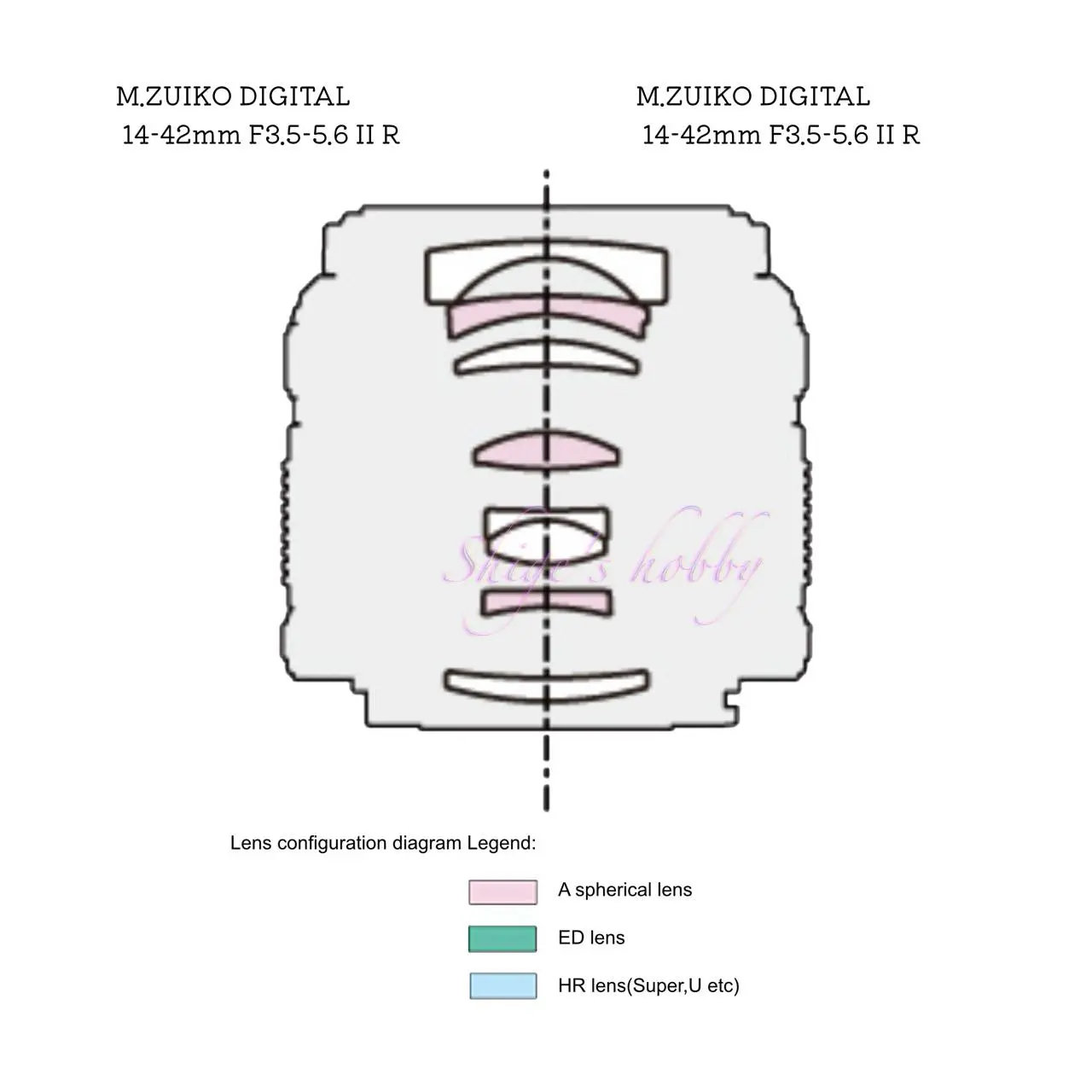
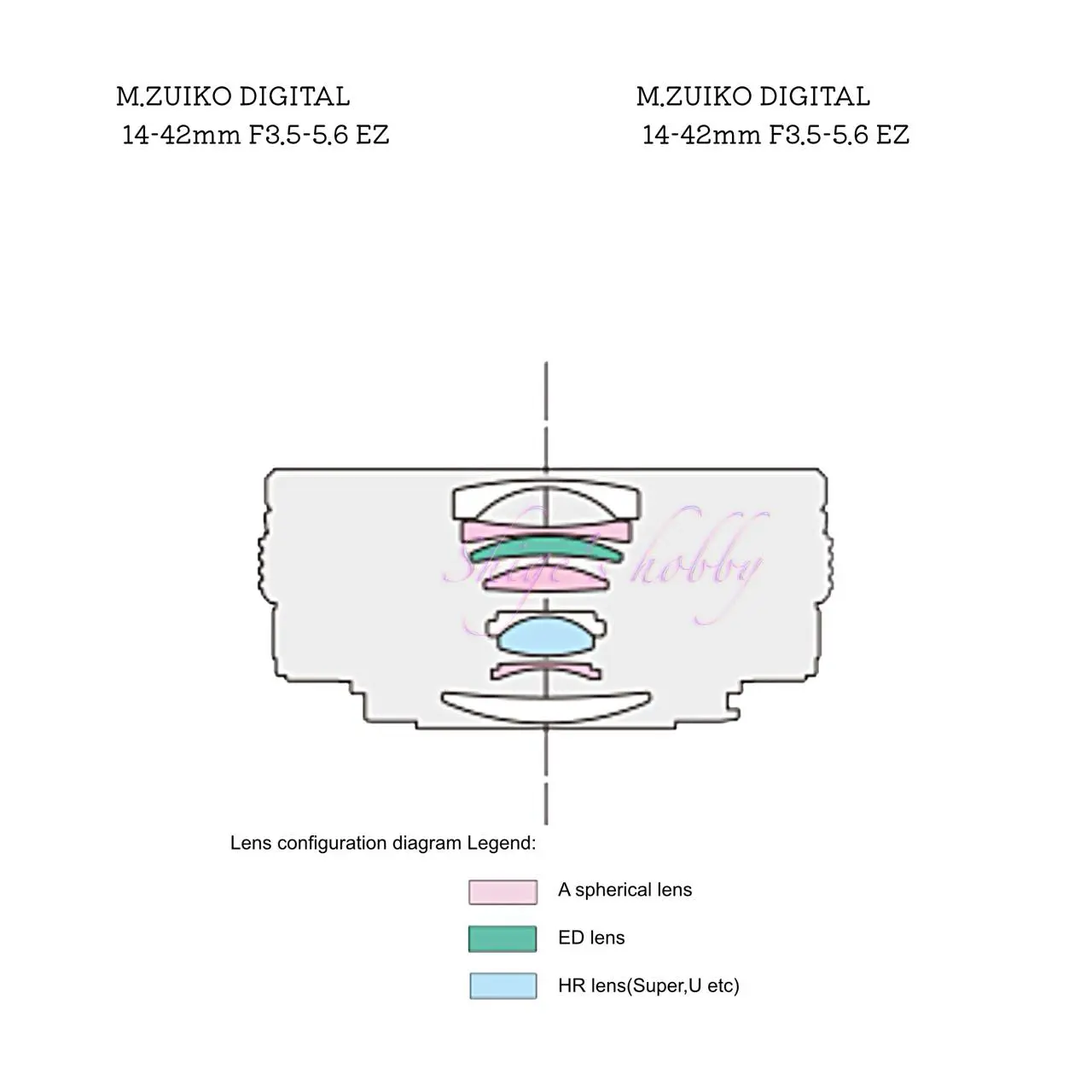
The lens configuration diagrams were taken from each company’s official website, and the scale has been adjusted.
| lens name | M.ZUIKO DIGITAL 14-42mm F3.5-5.6 II R | M.ZUIKO DIGITAL ED 14-42mm F3.5-5.6 EZ |
| Focal length(mm) | 14-42mm | 14-42mm |
| 35mm equivalent focal length (mm) | 28-84mm | 28-84mm |
| Max aperture | 3.5-5.6 | 3.5-5.6 |
| Min aperture | 22 | 22 |
| Leaf blade | 7 Circular iris diaphragm | 5 Circular iris diaphragm |
| Lens Construction | 8 elements in 7 groups (3 aspherical lenses) | 8 elements in 7 groups (3 aspherical lenses,1 ED lens, 1 Super HR lens) |
| Min distance(m) | 0.25〜0.3 | 0.2〜(0.29)〜0.25 |
| Lens length(mm) | 50 | 22.5 |
| Max diameter(mm) | 56.5 | 60.6 |
| Filter Size(mm) | 37 | 37 |
| Weight(g)(lens only) | 113 | 93 |
| Lens mount | Micro Four Thirds | Micro Four Thirds |
| Release date | July 22, 2011 | February 28, 2014 |
Reference links
- M.ZUIKO DIGITAL 14-42mm F3.5-5.6II・Official page
- M.ZUIKO DIGITAL ED 14-42mm F3.5-5.6 EZ・Official page
寄付のお願い・Request for donations
Affiliate links
- MZD 14-42mm F3.5-5.6-II R・Ads by Amazon
- MZD 14-42mm F3.5-5.6-II R・Ads by Rakuten
- MZD 14-42mm F3.5-5.6-II R・Ads by Yahoo Shopping

更新履歴
- 2026.5.30
Be First to Comment