
Last updated on 2026-04-26
This is a review and sample photographs of the Sony α NEX-7 mirrorless camera, released in 2011, used with Sony’s genuine E-mount lenses and Sigma SA-mount lenses via the MC-11 mount adapter.
- Please see the disclaimer regarding advertising here.
- Italicized links in the text are advertisement links that take you to other sites.
- If you find any images used on this site problematic, please contact us via the comments or inquiry form, either as the rights holder or their representative. We will review the matter and take appropriate action.
Table of contents

Gallery
The following lenses were used in the photo examples:
- SONY FE 28mm F2 (SEL28F20)
- SONY E 30mm F3.5 Macro
- CANON EF 40mm
- SIGMA EX DG 24-70 HSM
- SIGMA 400mm HSM
- Rollei Triotar 40mm
Review
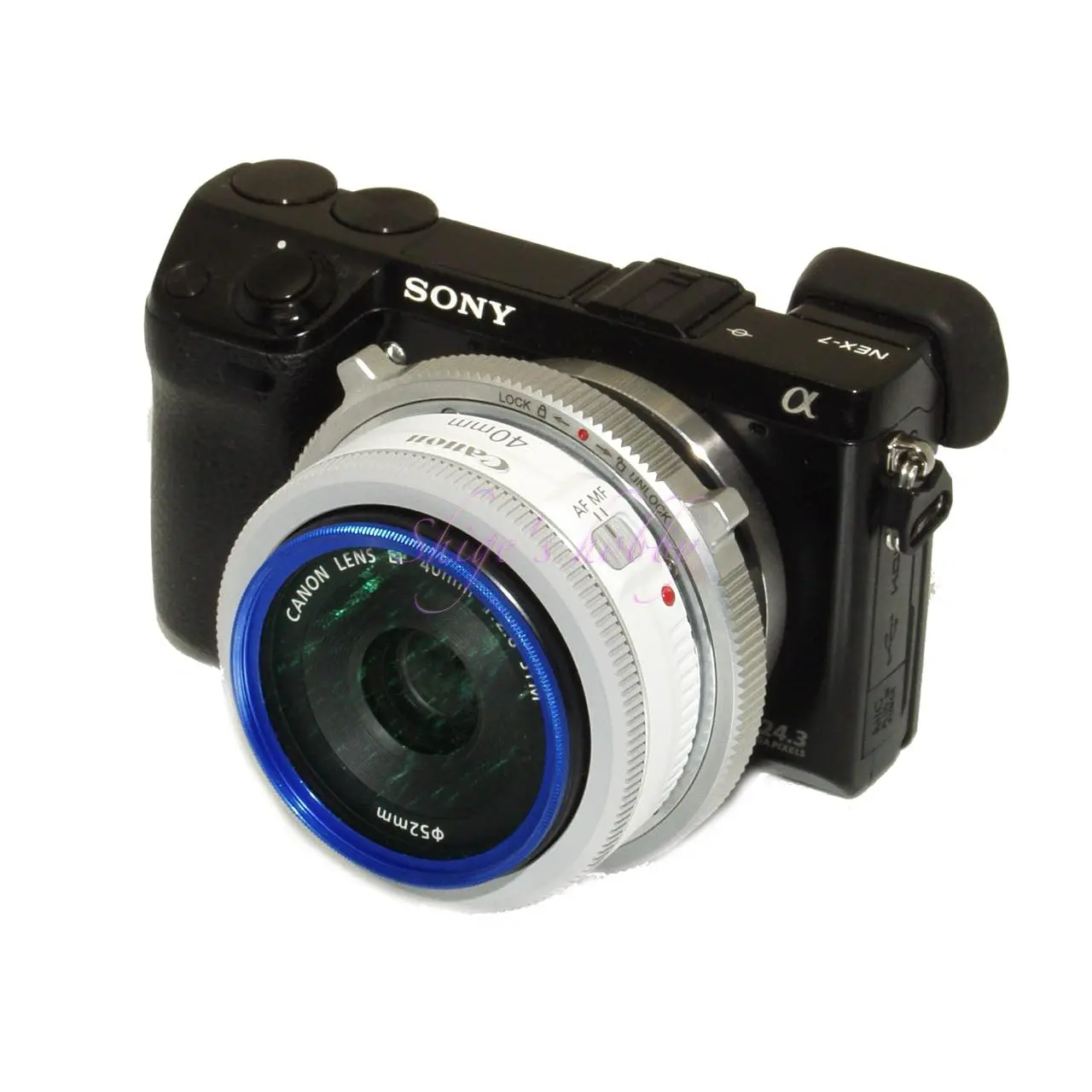
The photo on the left shows a setup with a “SONY α NEX-7 + CANON EF 40mm + Metabones Speed Booster ULTRA x0.71”.
1.Overview
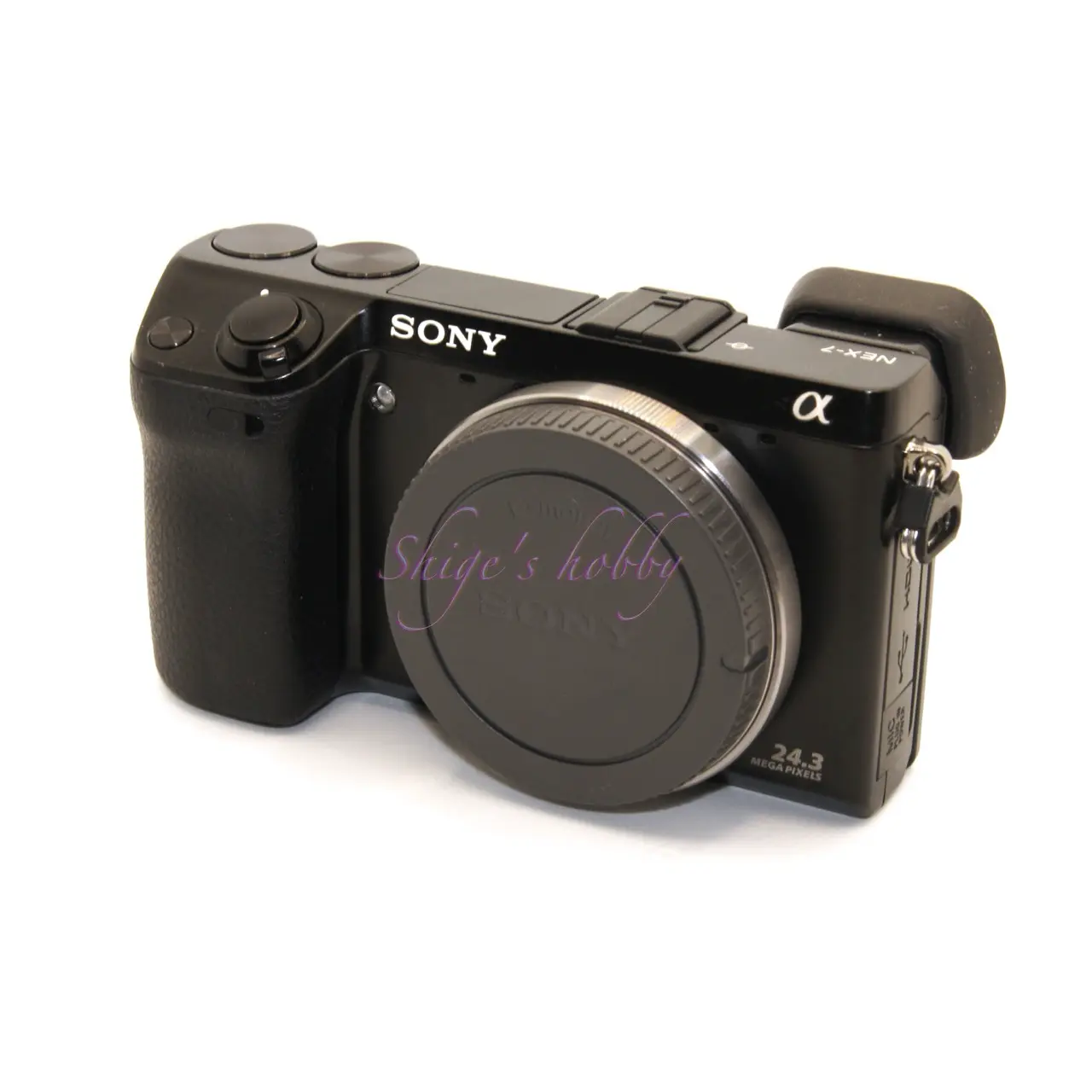
The α NEX-7 is a mirrorless camera with an electronic viewfinder (EVF) that was released by Sony in 2011. Boasting a 24-megapixel sensor, it maintains the highest pixel count among Sony’s APS-C size sensor cameras. Even today, it is considered a top-of-the-range camera in terms of pixel count.
Key specifications include a 2.36-million-dot EVF and a 3-inch, 920,000-dot rear LCD screen. Measuring 120 x 67 mm at the front, it is smaller than a smartphone. However, as it is a camera, it has depth in the grip area, and with a lens attached, it becomes considerably larger. Detailed camera specifications are listed in the table below.
The LCD monitor can be adjusted vertically, allowing for angle changes from 0 to 90 degrees. However, it does not offer 180-degree rotation for selfies or the flexible angle adjustment of a vari-angle LCD.
The NP-FW50 battery is common to the α NEX series.
2.Usability
The α NEX-7’s operation is relatively flexible thanks to its “Tri-Dial Navi” and “Triple Dial Control” interfaces — the camera’s standout features. These allow shooting functions to be easily assigned, resulting in a user experience tailored to individual preferences.
I purchased the α NEX-7 as an upgrade to the NEX-6. The most welcome improvement is the ability to assign exposure compensation to the rightmost dial, which was difficult with the α NEX-5 and α NEX-6. This enables exposure settings to be adjusted with a single action, greatly enhancing usability.
With the NEX-5 and NEX-6, you had to press the dial at the bottom on the back before turning it, requiring two actions, which I disliked. This improvement alone makes the α NEX-7 worth purchasing.
Camera operations such as menu processing and image saving are responsive and stress-free, even by today’s standards.
However, as the α NEX-7 uses an early 24-megapixel sensor, the image processing is not yet fully refined. This sensor is difficult to handle as it is prone to false colours and colour cast, depending on the lens used. In particular, when using old wide-angle lenses with rear elements close to the image sensor, the edges are cropped and a purple colour cast occurs at the periphery, even though it has an APS-C size sensor. The colour cast is discussed in the middle section of the Ms-Optics APOQUALIA 28 mm review article.
Since the sensor is APS-C size, you can also use a focal reducer adapter to widen the field of view. The Metabones Speed Booster ULTRA x0.71, which converts a Canon EF mount to a Sony E mount and enables autofocus, was used with the Canon EF 40 mm lens to take the example images.
The KIPON BAVEYE 0.7, which converts a Leica R mount to a Sony E mount, is used to attach manual focus Leica R lenses, but does not support autofocus.
Results when shooting with a focal reducer mount adapter are commensurate with the performance of the original lens and bokeh in the periphery may not be optimal. However, as there is no noticeable decrease in overall sharpness, it is perfectly practical for certain shooting purposes.
The following images were taken with an α NEX-7 + KIPON BAVEYE 0.7 + LEICA ELMARIT-R 24 mm f/2.8.


Many manufacturers also sell mount adapters that simply pass through without a focal reducer function. The Sigma MC-11 enables you to attach Canon EF or Sigma SA mount lenses to an E-mount camera and use autofocus. However, autofocus performance is poor, limiting its practicality. The Sigma EX DG 24-70 HSM and Sigma 400mm HSM lenses used to take the example images are Sigma SA mount lenses.
This camera lacks in-body image stabilisation, which makes it lightweight and easy to take pictures with. Therefore, when using lenses via a mount adapter, you need to be careful about camera shake.
The NP-FW50 battery is common to the α NEX series. Perhaps in order to maintain the camera’s processing speed, the battery life isn’t very good. It is worrying not to carry a spare battery when shooting. This is a dissatisfying point, but the fact that the battery model number has continued is positive. Incidentally, during the era of Sony’s “Cyber-shot” compact digital cameras, when companies such as Canon, Panasonic and Nikon had high sales volumes, Sony was one of the manufacturers from which it was difficult to obtain batteries for older cameras due to the wide variety available.
The flash connection uses the same auto-lock accessory shoe as the α SLR cameras, so you need to select a flash with an ‘AM’ model number.
As the successor APS-C size sensor is likely to have undergone various improvements, I would like to try the α6500, which uses the same batteries as the α6000 and has in-body image stabilisation, at some point.
3.Summary
In summary, the α NEX-7 is an experimental camera featuring a 24-megapixel sensor with peak performance, an unmarked ‘Tri-Dial Navi’ dial and an older accessory shoe standard. While its basic performance is high, making it perfectly usable in 2025 and beyond, it’s important to understand that its autofocus speed and accuracy are significantly inferior to those of newer cameras. It also lacks features such as face recognition.
Furthermore, even autofocus-compatible mount adapters will have inferior autofocus speed and accuracy compared to E-mount lenses, requiring constant manual focus adjustments when used. Additionally, some Leica rangefinder lenses exhibit colour cast, so testing before field use is recommended.
A reasonable number of α NEX-7s are available on the used market as of 2025, making it a worthwhile option if you need a camera in good condition.
Specifications, considerations, etc.
| Model name | NEX-7 | NEX-6 | α6500 |
| Effective Pixel number | 24.2-Mega pixcels | 16.1-Mega pixels | 24.3-Mega linpixels |
| Sensor size | APS-C 23.5 x 15.6mm | APS-C 23.5 x 15.6mm | APS-C 23.5 x 15.6mm |
| Back LCD Pixels | 3.0 921,000 dots | 3.0 921,000 dots | 3.0 921,000 dots |
| EVF | Include 2.36 million dots | Include 2.36 million dots | Include 2.36 million dots |
| Shake reducrtion | × | × | ○ |
| Max shutter speed | 1/4000 | 1/4000 | 1/4000 |
| Battery | NP-FW50 | NP-FW50 | NP-FW50 |
| Touch panel | × | × | ○ |
| WIFI | ○ | ○ | ○ |
| NFC | × | × | ○ |
| AF | Contrast | Contrast Image phase difference | Contrast Image phase difference |
| accessory shoe | Auto-locking accessory shoe | Multi Interface Shoe | Multi Interface Shoe |
| Recorded media | MS-Pro-Duo SDXC | MS-Pro-Duo SDXC | MS-Pro-Duo SDXC |
| Release date | 2011.8 | 2012.11 | 2016.12 |
| Size | 120 x 67 x 43 | 120 x 67 x 43 | 120 x 67 x 53 |
| Weight (body only) | 291 | 287 | 410 |
| Color | Black | Black | Balck |
Options
- HVL-F20AM (flash)
- HVL-F43AM (flash)
- HVL-F58AM (flash)
- LA series mount adapter
- Eyepiece cup FDA-EP10
- AC adapter AC-PW20
- Battery charger BC-TRW
Reference links
寄付のお願い・Request for donations
Affiliate Link
- Please see the disclaimer regarding advertising here.
- Italicized links in the text are advertisement links that take you to other sites.
- If you find any images used on this site problematic, please contact us via the comments or inquiry form, either as the rights holder or their representative. We will review the matter and take appropriate action.
- SONY・Ads by Amazon
- Sony lens・Ads by Amazon
- Sony books.・Ads by Amazon

Update history
- 2025.4.11
- 2024.12.17
Be First to Comment