

Last updated on 2026-04-11
A review and photo examples of the LEICA C typ112, a 12-megapixel compact digital camera (compact camera) released in 2013.
- Please see the disclaimer regarding advertising here.
- Italicized links in the text are advertisement links that take you to other sites.
- If you find any images used on this site problematic, please contact us via the comments or inquiry form, either as the rights holder or their representative. We will review the matter and take appropriate action.
Table of contents

Gallery
Review
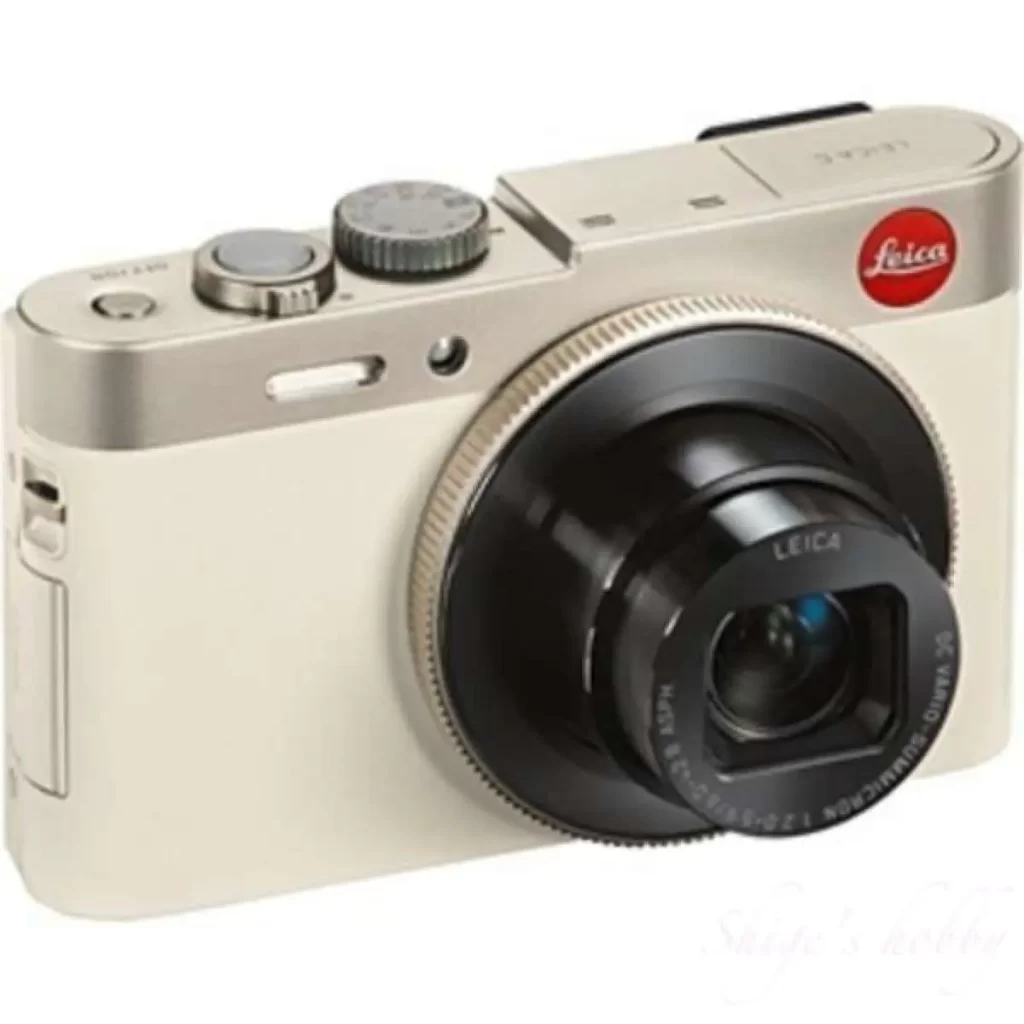
1.Overview
The Leica C Typ 112 was released on 19 October 2013. It was the first release in five years since the C-LUX3, the predecessor to the LEICA C series of compact digital cameras. As of 2025, it remains the most recent model in Leica’s compact digital camera range to feature a sensor measuring less than 1 inch.
- The sensor size is 1/1.7 inches
- The sensor pixel count is 12.1 million pixels
- It has a wide shooting range, covering focal lengths from 28mm to 200mm.
- Shooting distances are 3cm to ∞ on the wide-angle side and 0.8m to ∞ on the telephoto side in macro mode
- Equipped with a 200,000-dot EVF
- The rear has a 920,000-dot 3-inch LCD
This camera is an OEM of Panasonic, and the original camera was the LUMIX DMC-LF1
2.Usability
Following the trend of compact digital cameras from the 2010s, the Leica C Typ 112 features a slim body and a telephoto focal length.
While previous models had a telephoto range of around 100 mm, the lens’s field of view has been expanded to 200 mm in this camera. However, the wide-angle end is 28 mm, which is narrower than the 24 mm of the C-LUX3 and could be considered a slight step backward.
Inclusion of an electronic viewfinder in a camera of this size is commendable in terms of shooting stability at telephoto focal lengths and differentiation from competitors. However, due to size and cost constraints, the resolution of the electronic viewfinder is only 200,000 dots, which is comparable to products from the 2000s and makes colour reproduction and focus confirmation difficult. Consequently, it is only useful for checking the shooting range and composition. As the rear LCD screen has a high resolution of 920,000 dots, the electronic viewfinder is rarely used.
The camera’s sensor is slightly larger at 1/1.7 inches compared to the 1/2.33 inch sensor used in previous C-LUX models. The image quality is typical of compact digital cameras from 2013 and decent in bright sunlight. However, when the ISO sensitivity is increased in low light, the noise characteristic of small sensors becomes apparent.
This camera has three drawbacks when it comes to image rendering.
Firstly, at the maximum telephoto focal length (equivalent to 200 mm in a 35 mm film format), distant objects tend to have poor resolution and appear soft when shooting handheld, even with increased ISO sensitivity and reliance on image stabilisation.
The example below shows the results of shooting at a 200 mm optical focal length (left), a cropped image at an 80 mm optical focal length (centre) and an image at an 80 mm optical focal length (right). Although these images have been reduced and compressed, there is little difference between the 200 mm and 80 mm cropped images. If you’re concerned about camera shake at 200 mm, it is better to shoot at around 100 mm and crop, as the results will be almost identical.
Of course, you can achieve decent resolution with close-up shots. However, rather than risking camera shake by using a 200 mm focal length for close-ups, you would likely achieve better results by getting closer to the subject and shooting at a focal length of around 100 mm.


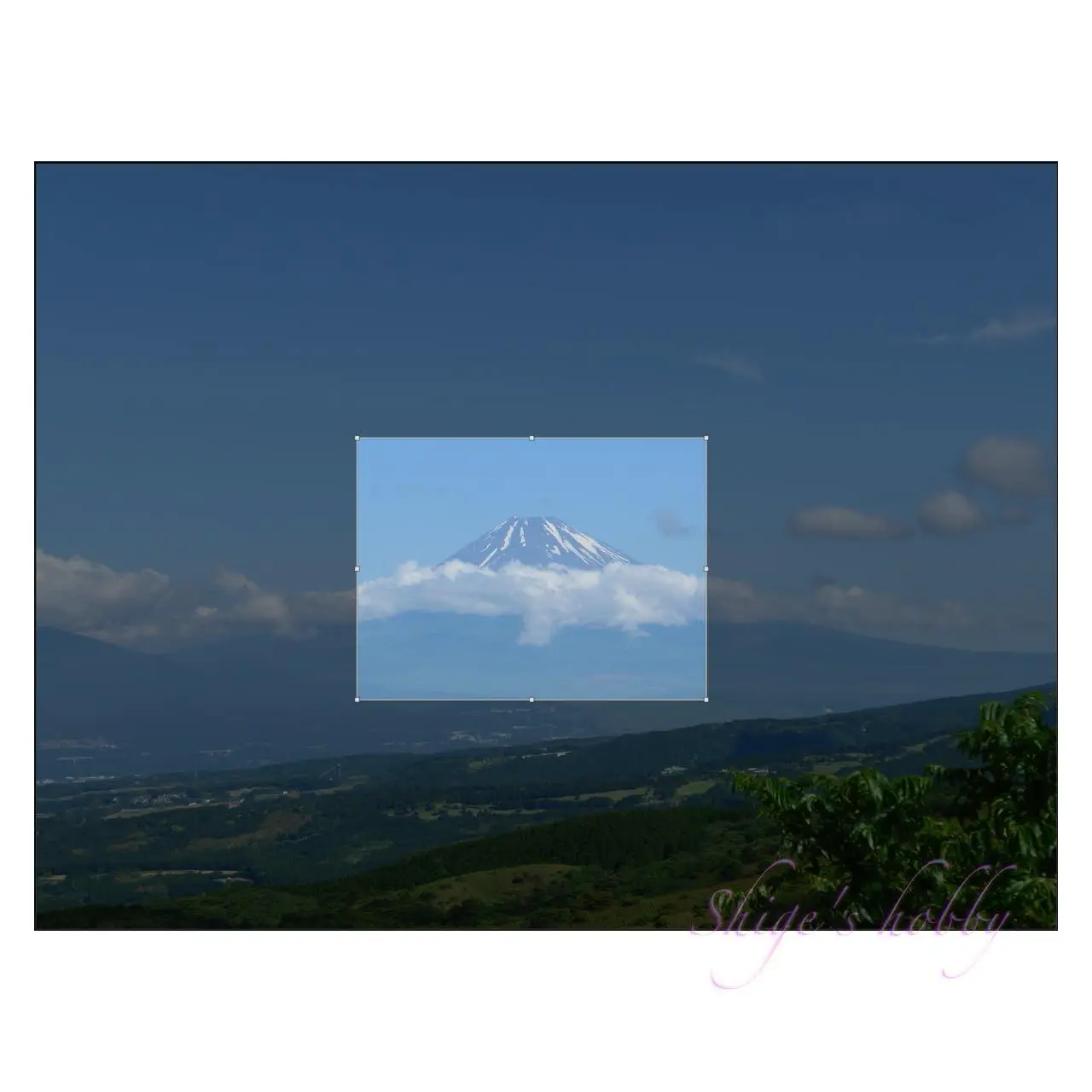
A second drawback is the appearance of false colours near power lines.
This is particularly noticeable when the exposure is too high for the scene. However, consistently underexposing the image introduces noise.
While this narrow exposure range is a common weakness of small sensors, it would be preferable to have a wider exposure tolerance for different scenes.
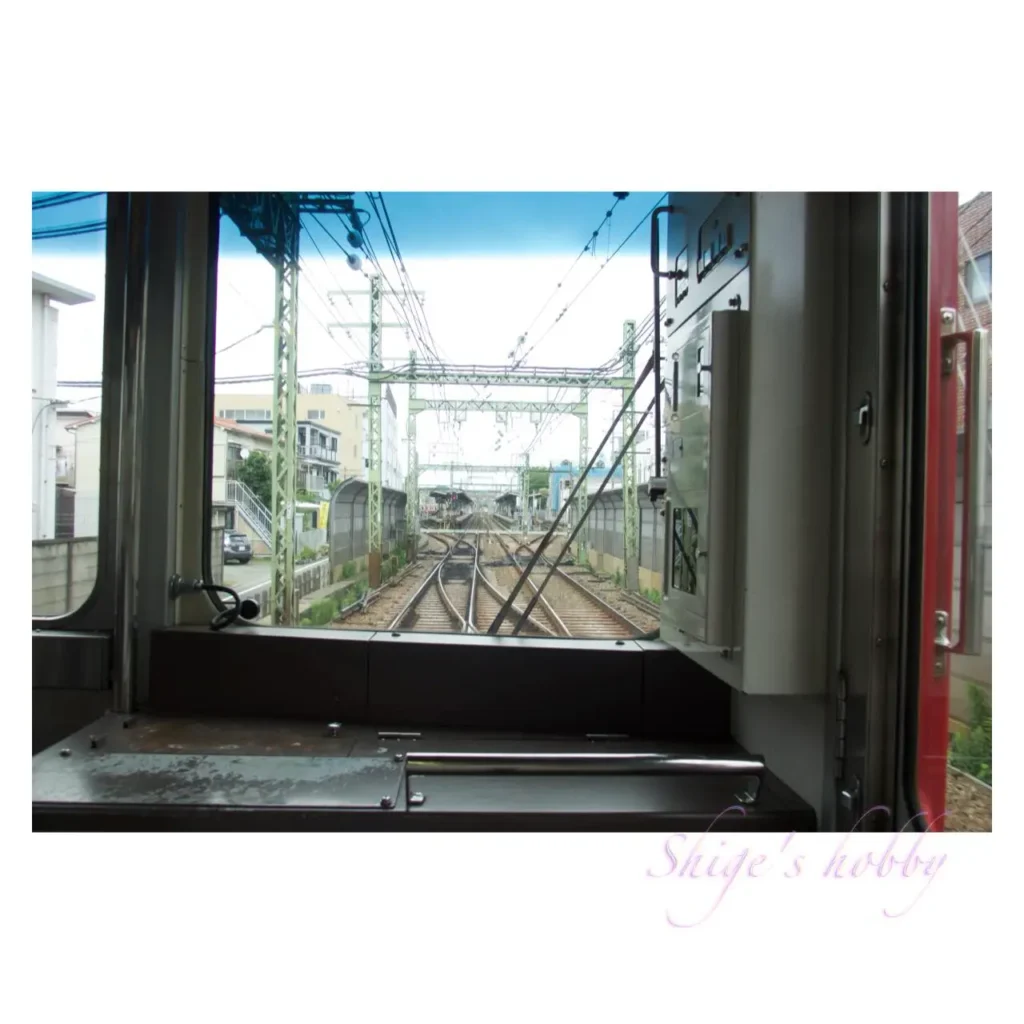
Finally, the third drawback is that, although the focal length of the lens extends to 200 mm at the telephoto end, there is noticeable distortion at the wide-angle end. The photo below shows a sign taken from a distance of about two metres. The image on the left has been corrected to make the lines straight, while the image on the right is uncorrected and slightly barrel-shaped.
While this level of distortion might be acceptable, it would be preferable for the camera to process the distortion in-camera for JPEG images.
The following functions in Affinity Photo 2 were used for lens correction:
- Filter → Distortion → Lens Correction → Camera: Leica C-LUX, Lens: Panasonic DC-ZS200, 18mm results in an almost straight image.


3.Summary
In summary, the Leica C Typ 112 is a compact digital camera with enhanced telephoto capabilities. Although it has some minor shortcomings in terms of practical aspects, such as EVF performance and the effectiveness of image stabilisation, it’s a handy camera for taking quick notes.
Although Leica has remained silent on small-sensor compact digital cameras, the release of the D-LUX 8 with a Micro Four Thirds sensor in 2024 suggests that further releases of fixed-lens compact digital cameras are expected in the future.
Specifications, considerations, etc.
The main differences between the Leica C Typ 112 and the LUMIX DMC-LF1 are their colour variations and exterior design. The Leica C Typ 112 is available in two colours: vibrant gold and subdued dark red, whereas the LUMIX DMC-LF1 is only available in black.
The most notable exterior design difference is the shape of the top plate of the camera. The Leica C Typ 112 has an L-shaped indentation in the centre of the camera body to minimise the protrusion of the EVF, creating a cohesive design. In contrast, the LUMIX DMC-LF1 features a design where the controls and EVF are partially raised, subtly conveying the Leica aesthetic with minimal changes — a highly refined design.
Nevertheless, compared to previous Panasonic camera designs, the LUMIX DMC-LF1 has a cleaner, more stylish look with fewer unnecessary protrusions on the front of the body.
The Leica and Panasonic versions have identical specifications, making it difficult to discern differences between them based on photographic results alone. Panasonic, which has an OEM partnership with Leica, has continuously released cameras with small sensors and high-magnification zooms, such as the LUMIX TZ95D in 2022 and the LUMIX TZ99 in 2025. However, there appear to be no plans to release a Leica-branded camera based on these models.
Below is a list of Leica compact digital cameras that I have owned. Please click on any camera that interests you.
- C-LUX1・Shige’s hobby
- C-LUX2・Shige’s hobby
- C-LUX3・Shige’s hobby
- LEICA C・Shige’s hobby
- C-LUX・Shige’s hobby
- D-LUX4 Safari・Shige’s hobby
- D-LUX typ109・Shige’s hobby
| Items | LEICA C | DMC-LF1 |
| Effective pixels(Megapixels) | 12.1-Megapixels | 12.1-Megapixels |
| Lens construction | LEICA DC VARIO-SUMMICRON f=6~42.8mm 35mm format conversion: 28-200mm | LEICA DC VARIO-SUMMICRON f=6~42.8mm 35mm format conversion: 28-200mm |
| Sensor size | 1/1.7 type MOS sensor | 1/1.7 type MOS sensor |
| View finder | Color LCD viewfinder 0.2 type, equivalent to 200,000 dots | Color LCD viewfinder 0.2 type, equivalent to 200,000 dots |
| Rear LCD | 3.0型 | 3.0型 |
| Min distance | SDXC card: No maximum capacity listed | SDXC card: No maximum capacity listed |
| Build in memory | Approximately 87MB Can take about 20 photos | Approximately 87MB Can take about 20 photos |
| Battery | BP-DC14 | DMW-BCN10 |
| Size(mm) W x H x D | 102.5 × 62.1 × 27.9(mm) | 102.5 × 62.1 × 27.9(mm) |
| Weight (g) (with battery) | 173 | 173 |
| Release date | 2013.10.19 | 2013.6.20 |
| Price | Open Direct store price: 86,100 yen | Open Initial sales price was just under 40,000 yen |
Options
- Twist (camera case) for Leica C(18784)
- Snap (front cap) for Leica C(18786)
- clutch bag(18788)
Reference links
- LEICA C product review・Digital camera watch
- Digital Camera Watch: “The compact Leica C with built-in EVF will be released on October 19th”・Digital camera watch
- DCM-LF1 official page by panasonic
- DCM-LF1 article・Digital camera watch
寄付のお願い・Request for donations
Affiliate links
- Leica Lens・Ads by Amazon
- Leica Books・Ads by Amazon
- Leica Digital Camera Leica C Typ 112・Ads by Amazon
- Panasonic Digital Camera Lumix LF1・Ads by Amazon
- LEICA C-LUX3・Ads by Amazon
- BP-DC14・Ads by Amazon
- DMW-BCN10・Ads by Rakuten

Update history
- 2026.3.4
- 2025.7.22
- 2025.3.17
- 2024.8.21
- 2024.04.05
- 2023.07.05
Be First to Comment