

Last updated on 2026-04-29
A review of the MS-OPTICS (Miyazaki Optical) Sonnetar 73mm F1.5 lens, using it with the digital rangefinder cameras LEICA M-P typ240, LEICA M10, and the mirrorless cameras LEICA SL typ601, HASSELBLAD X2D-100C, and LEICA T typ701, along with sample photos.
- Please see the disclaimer regarding advertising here.
- Italicized links in the text are advertisement links that take you to other sites.
- If you find any images used on this site problematic, please contact us via the comments or inquiry form, either as the rights holder or their representative. We will review the matter and take appropriate action.
Table of contents

Gallery
The following cameras were used to take the sample photos:
- LEICA M10
- LEICA M-P typ240
- HASSELBLAD X2D-100C
- LEICA SL typ601
- LEICA T typ701
Review

1.Overview
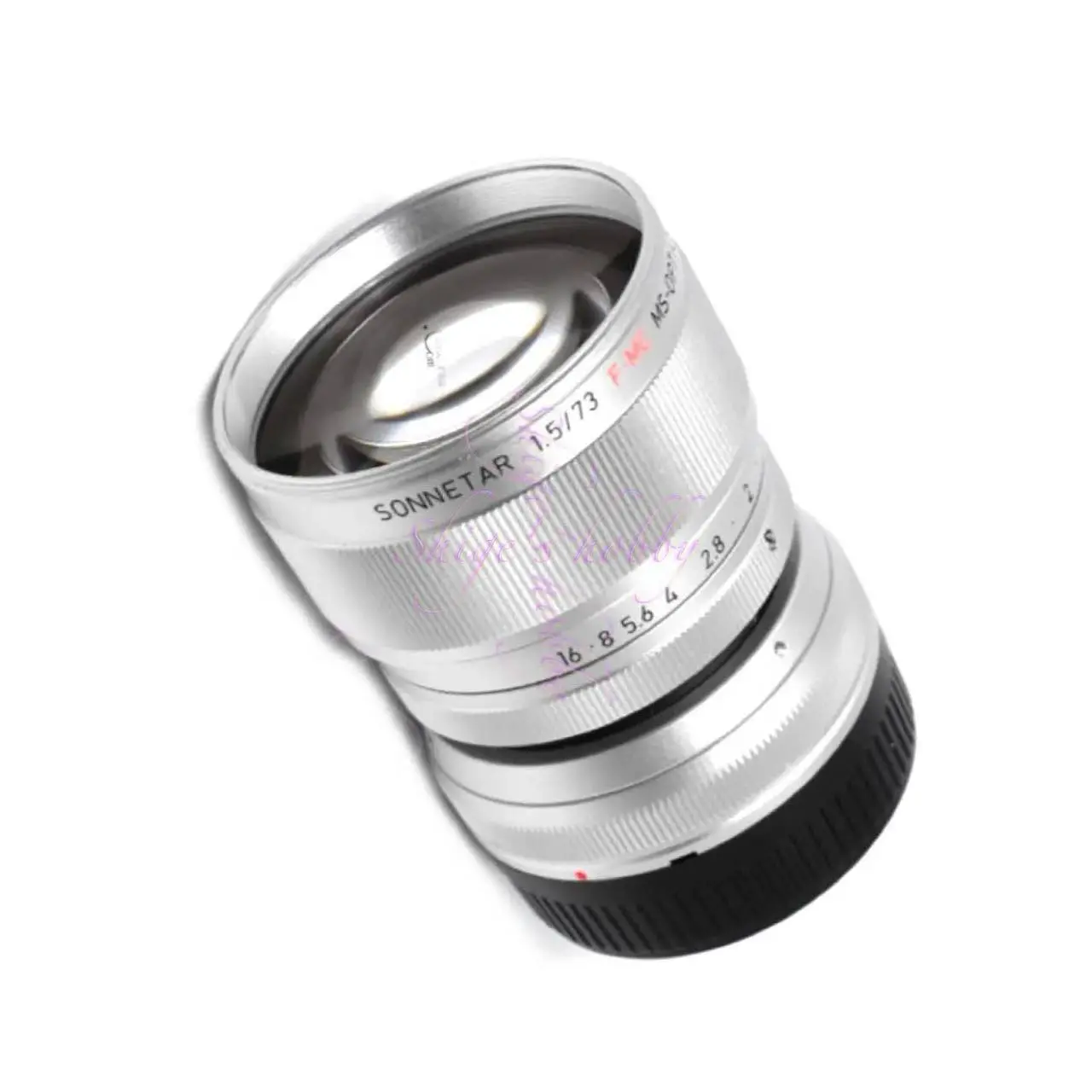
The MS-SONNETAR 73mm F1.5 is MS-OPTICS’ (MS-OPTICAL / Miyazaki Optical) first bright mid-telephoto lens with a focal length of 73mm.
The minimum focusing distance is 1m, the aperture ranges from F1.5 to F16 with no click stops, and it has 12 aperture blades.
The front lens element, which is the largest in diameter, is mounted in a unique way that minimizes the lens barrel thickness, resulting in a front lens diameter that is almost the same as a 49mm filter diameter. This makes it an exceptionally compact lens for a 75mm focal length lens.
2.Usability
As can be seen in the sample photos, the MS-SONNETAR 73mm f/1.5 can produce a slightly dreamy image at full aperture, depending on the lighting conditions, resulting in a flare in the center. It’s also a unique lens, with the periphery appearing wildly depending on the background.
This is one of the characteristics of MS-OPTICS lenses, but stopping down the aperture slightly improves image quality, so keeping the aperture at around f/2.8 will provide a stable image.
The lens design is refined, on a par with Miyazaki lenses from the late 2010s, and the lens barrel’s surface finish and assembly precision have been improved. This increases the satisfaction of owning this lens.
The minimum focusing distance is 1.0m, likely due to reduced helicoid extension. This is a bit disappointing; it would be more convenient if it could be extended to 0.7m, the minimum distance within the rangefinder coupling range of a rangefinder camera. Because mirrorless cameras, which we’ll discuss later, have a shorter flange focal length than M-mount cameras, using a mount adapter with an extension mechanism can reduce the minimum focusing distance.
The lens is very compact, with a length similar to that of a large 50mm standard lens and a slender barrel. This makes it a medium-telephoto lens that fits easily into a camera bag, making it a great travel companion. During a trip to Thailand, this lens proved extremely useful when photographing subjects at a distance. The sample photos taken with the LEICA M10 were taken in Thailand.
From here on, I’ll share my impressions of using it with a digital rangefinder and a mirrorless camera.
Digital Rangefinder Camera
For the digital rangefinders, I used the LEICA M-P typ240 and the LEICA M10, both of which feature a 24-megapixel, 35mm full-frame (full-frame) sensor, the same size as a film camera.
The 73mm f/1.5 lens, used with rangefinder cameras, has a slightly unstable focusing effect due to the Leica M’s double image overlap at full aperture. Unless you focus carefully, the image may not be in focus as intended. To ensure accurate focusing, it’s safer to use an electronic viewfinder.
At full aperture, the image remains sharply focused, while the soft, subtle flare is a unique feature of this lens. Stopping down the aperture eliminates the flare. Ghosting can be seen in backlit situations; however, with rangefinder cameras, the viewfinder is only used to confirm composition, so ghosting is not noticeable when shooting in backlit situations. Therefore, with film cameras, you can enjoy the finished product; with digital cameras, you can see it by previewing the image.
The lens has a wide image circle, so there’s no vigilant focus at the edges.
Based on the results from the two cameras used, it can be said that this lens has sufficient resolution for a 20-megapixel camera.
I have never used this lens with a film camera due to concerns about its focusing accuracy with rangefinder cameras. With the advancement of digital cameras and the high cost of film and development, especially since the 2020s, I believe there will be very few opportunities to use it.
Mirrorless Cameras
I’ve used it with the following mirrorless cameras: the LEICA SL typ601 with a 35mm full-frame (full-frame) sensor, the LEICA T typ701 with an APS-C sensor, and the HASSELBLAD X2D-100C with a medium-format digital sensor.
The original LEICA SL typ601 is equipped with a 24-megapixel 35mm full-frame sensor, the same size as a film camera, and its rendering characteristics, such as sufficient resolution and little vignetting, are almost identical to those of the LEICA M10 and LEICA M-P typ240.
One advantage of using a mirrorless camera is the ability to check the image in real time on the electronic viewfinder and rear LCD screen. The LEICA SL typ601 in particular is equipped with a high-resolution Eye-res electronic viewfinder with 4.4 million dots, making it easy to focus the large F1.5 lens without using the magnification function. Another benefit is that you can check ghosting in backlit situations while shooting.
The APS-C size sensor installed in the LEICA T typ701 is smaller than that of 35mm film, so the focal length is equivalent to 110mm, multiplied by a focal length conversion factor of 1.5.
This lens’s wide image circle allows it to produce consistent images across the entire frame, even on 35mm full-frame sensor cameras. However, with cameras equipped with APS-C size sensors, the peripheral areas are cropped, resulting in better overall image consistency.
The HASSELBLAD X2D-100C is equipped with the largest medium-format digital sensor (44mm x 33mm), which is larger than the 35mm film sensor (36mm x 24mm). Therefore, the focal length of the captured image is close to that of a standard lens equivalent to 58mm, calculated by multiplying the focal length conversion factor (0.8) by the sensor size.
The image circle of the lens is wide, covering approximately 92% of the 44 x 33mm sensor, or 40.5 x 27mm (cropped 3:2). This leaves more room for the image circle of a full-frame 35mm sensor.
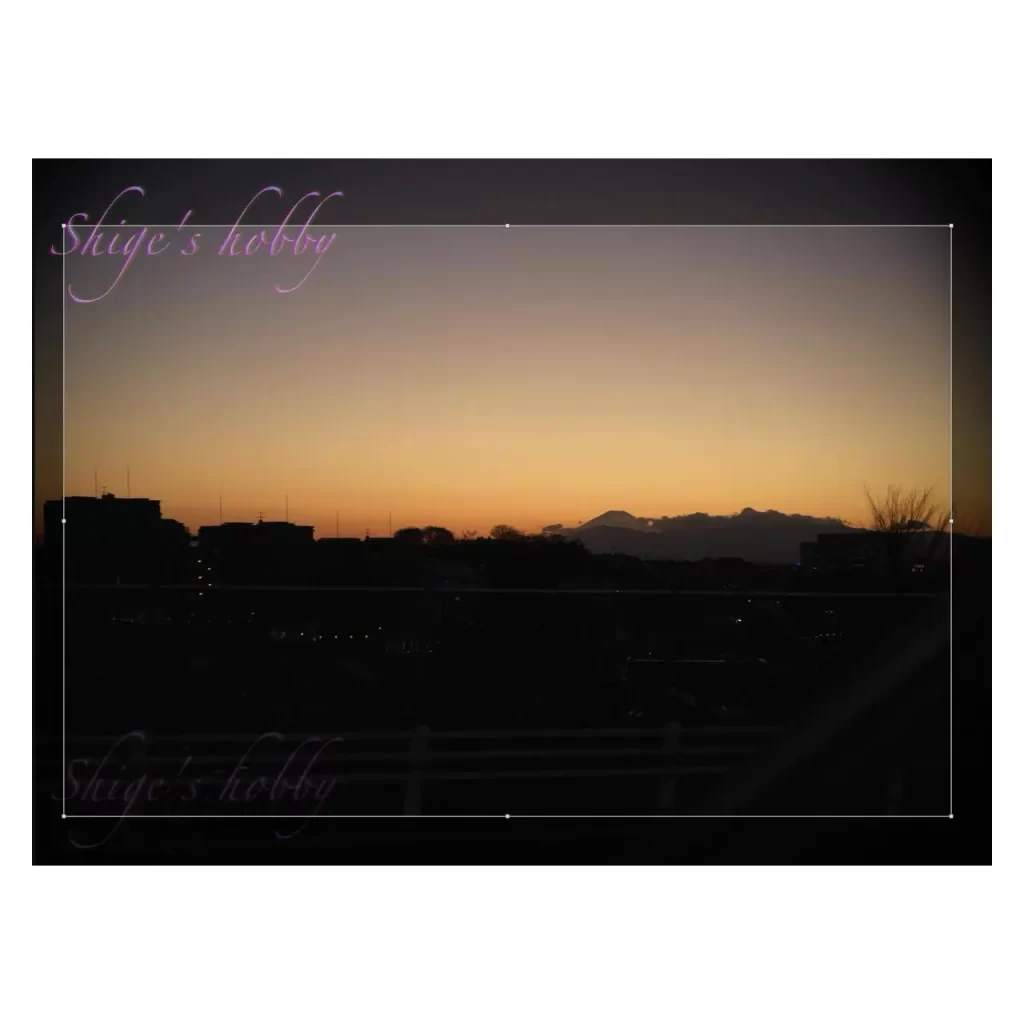
In a scene like the one shown in the example, it is possible to use the entire surface of the medium-format digital sensor, or crop it to 35mm film, allowing for the use of two focal lengths.
The FUJIFILM GFX series, which uses the same medium-format digital sensor size, is more user-friendly than the HASSELBLAD X series due to its built-in mechanical shutter. To put it simply, the problem with the HASSELBLAD X series is that since the body does not have a mechanical shutter, shooting is done with an electronic shutter, which can cause image distortion called rolling distortion in the results of photos of fast-moving subjects.
3.Summary
To sum up, the MS-SONNETAR 73mm F1.5 is an extremely compact medium telephoto lens.
The lens is roughly the same size as a 50mm standard lens, so when you combine it with a wide-angle lens, you can compose shots that are closer to the subject than with a standard lens.
At the widest aperture of F1.5, the image distorts everywhere except at the focal point, but it’s fun to find a composition that makes the most of this.
This is a lens that we recommend for photographers who are put off by 75mm class lenses on rangefinder cameras because they are too heavy.
Specifications, considerations, etc.
As shown in the overview, the SONNETAR 73mm F1.5 is extremely compact, with a maximum diameter of 50mm and a weight of just under 200g.
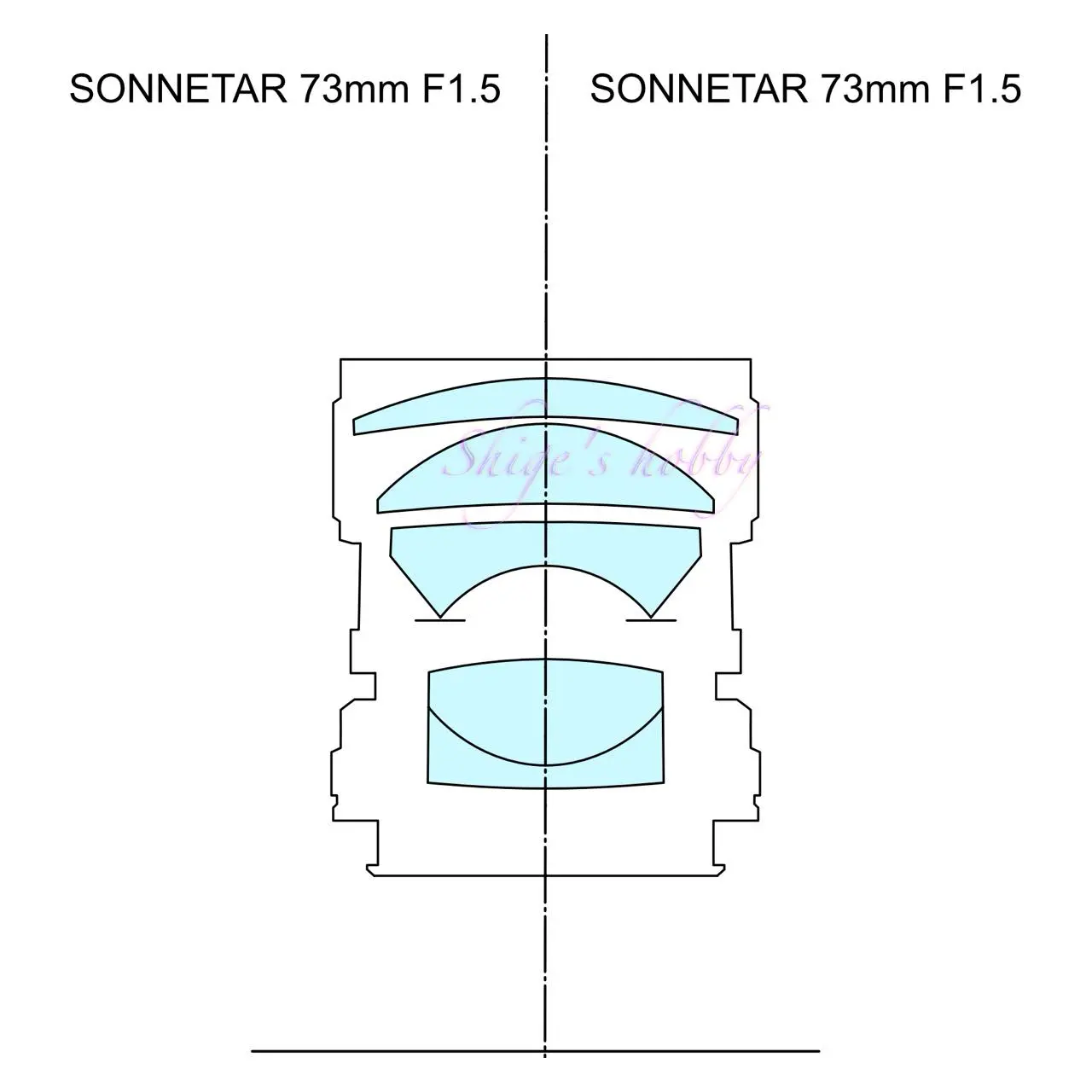
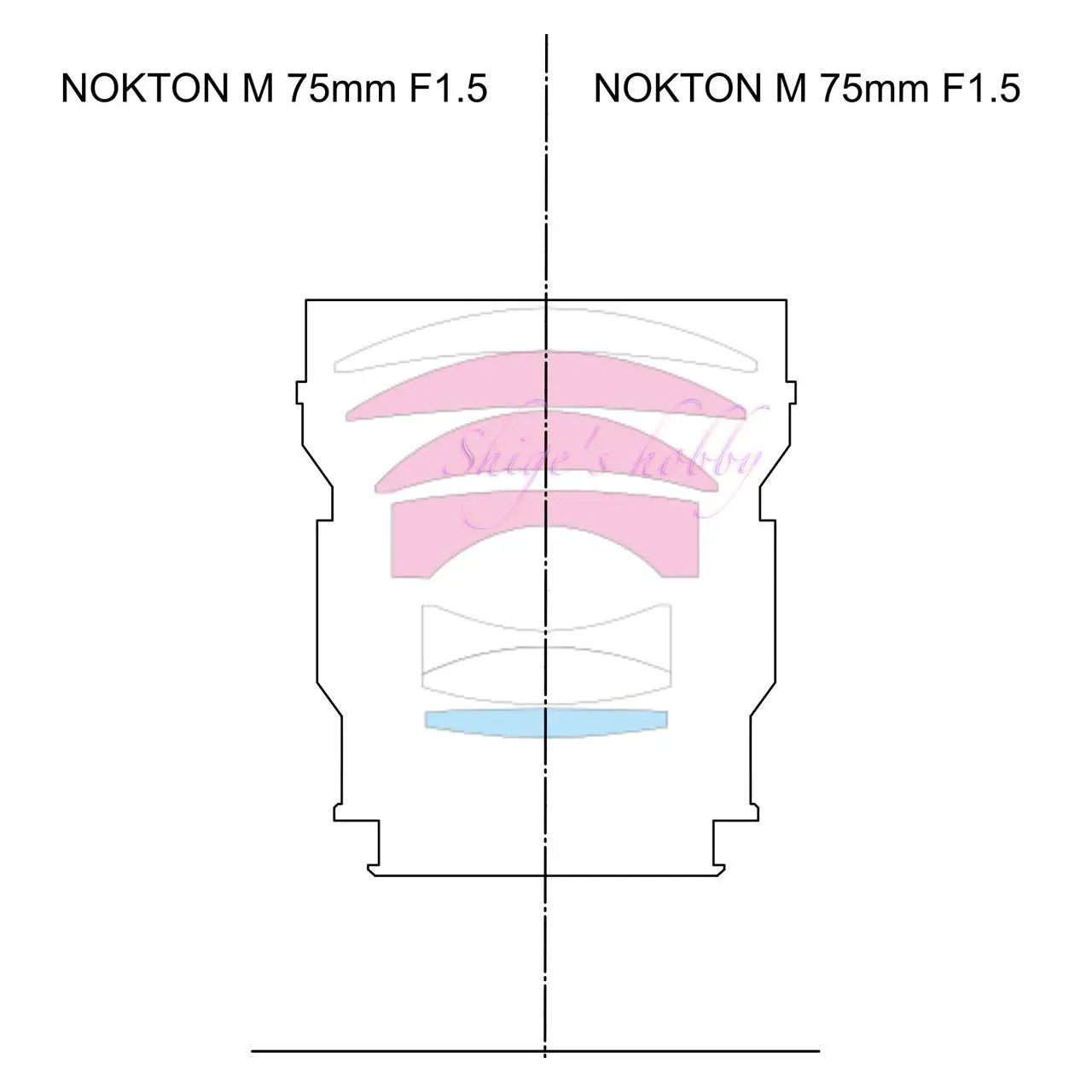
To make a more specific comparison, the LEICA SUMMILUX 75mm F1.4, which has a focal length 2mm longer and is slightly brighter, has a maximum diameter of 69mm and weighs 560g, while the Voigtlander NOKTON 75mm F1.5, which has a focal length 2mm longer and the same brightness, has a maximum diameter of 63mm and weighs 350g. Both lenses are more than 20% larger in diameter and 2.3 and 1.7 times heavier, respectively, demonstrating the SONNETAR’s compactness.
Among MS-OPTICS lenses, this and the APORIS 135mm are the only ones with a focal length longer than 60mm.
According to designer Miyazaki, the reason for choosing the 73mm focal length was that “we were conscious of the LEICA HEKTOR 73mm F1.9.”
Personally, I think there would be more market demand for a lens with the same specifications as the 75mm Summilux, but the choice of 73mm seems typical of Miyazaki, a fan of old lenses.
Furthermore, if the focal length were 75mm and the maximum aperture were f/1.4, the lens length and diameter would have to be larger to meet the specifications, so it can be assumed that the current lens specifications were determined by working backwards from today’s compact lens barrel sizes. And the fact that the current 73mm f/1.5 specification is not roughly rounded up and advertised as 75mm f/1.4 shows the seriousness of lens designer Miyazaki.

| Items | SONNEATR | SUMMILUX | NOKTON |
| Focal length(mm) | 73 | 75 | 75 |
| Max aperture | 1.5 | 1.4 | 1.5 |
| Min aperture | 16 | 16 | 16 |
| Aparture blade (Diaphragm) | 12 | 10 | 12 |
| Lens Construction | 5 elements in 4 groups (Sonnar type) | 7 elements in 5 groups | 7 elements in 6 groups |
| Min distance(m) | 1.0 | 0.75 | 0.7 |
| Lens length(mm) | 57 | 80 | 63 |
| Lens Max diameter(mm) | 50 | 69 | 63 |
| Filter Size(mm) | 49(Reverse attach) | 60(E60) | 58 |
| Weight(g) | 197 | 560 | 350 |
| Production numbers | 400 *2 | 14,752 *1 | – |
| Release date | 2018 | 1980 | 2019.8.8 |
| Price(Yen/No-tax) | ¥100,000- (Prices vary by reseller) | ¥400,000- 2024 2000s: ¥300,000 | ¥125,000- |
*2:The figures are from when the product was released in 2018. It is unclear whether the product has been reproduced since then.
Reference links
- Wikipedia’s description of the Sonnar-type lens
- Bright medium telephoto SUMMILUX M 75mm・Shige’s hobby
- LEICA M10・Shige’s hobby
- LEICA M-P typ240・Shige’s hobby
- LEICA SL typ601・Shige’s hobby
- HASSELBLAD X2D-100C・Shige’s hobby
- LEICA T typ701・Shige’s hobby
寄付のお願い・Request for donations
Affiliate links
- Leica Lens・Ads by Amazon
- Ms-optics・Ads by Amazon
- Leica Books・Ads by Amazon

Update history
- 2026.3.8
- 2025.6.11
- 2024.11.13
- 2023.05.29:First draft
Be First to Comment