
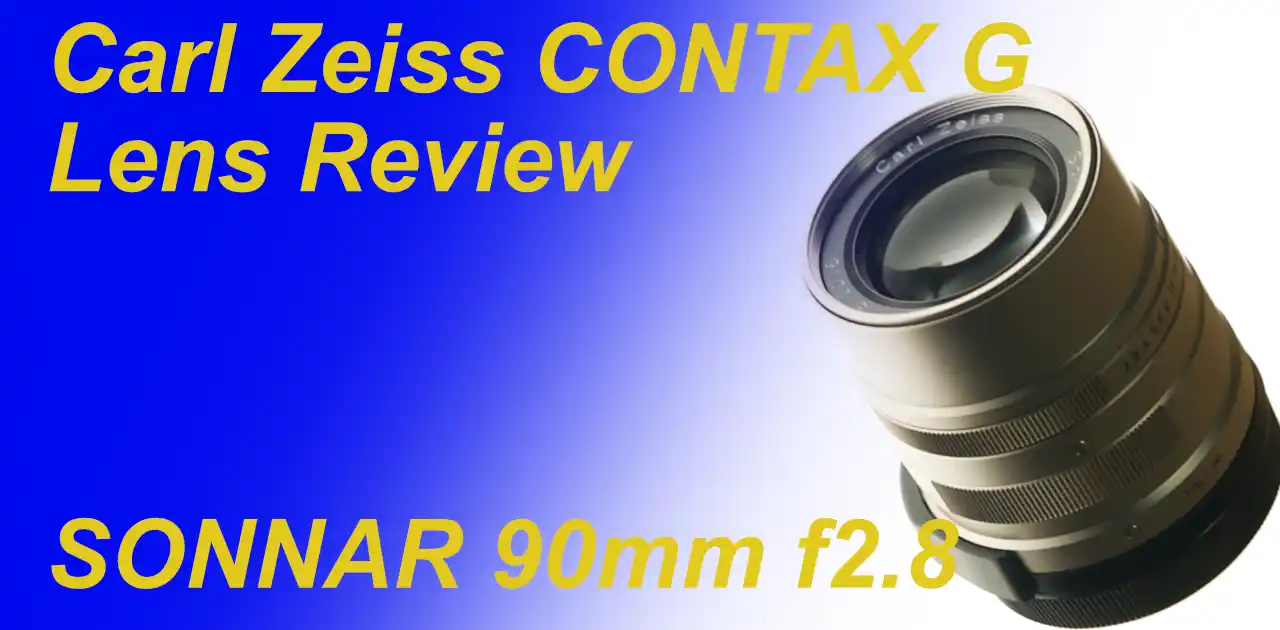
A review and sample photos of the CONTAX G SONNAR T* 90mm used with the film cameras CONTAX G1 and CONTAX G2.
- Please see the disclaimer regarding advertising here.
- Italicized links in the text are advertisement links that take you to other sites.
- If you find any images used on this site problematic, please contact us via the comments or inquiry form, either as the rights holder or their representative. We will review the matter and take appropriate action.
Table of contents

Gallery
- The example photos were taken with a CONTAX G2 camera body, Fujifilm TREBI 100 film, and KODAK E100GX film.
- The film was scanned with a NIKON COOLSCAN V ED and a MINOLTA DiMAGE SCAN Pro.
Review
1.Overview
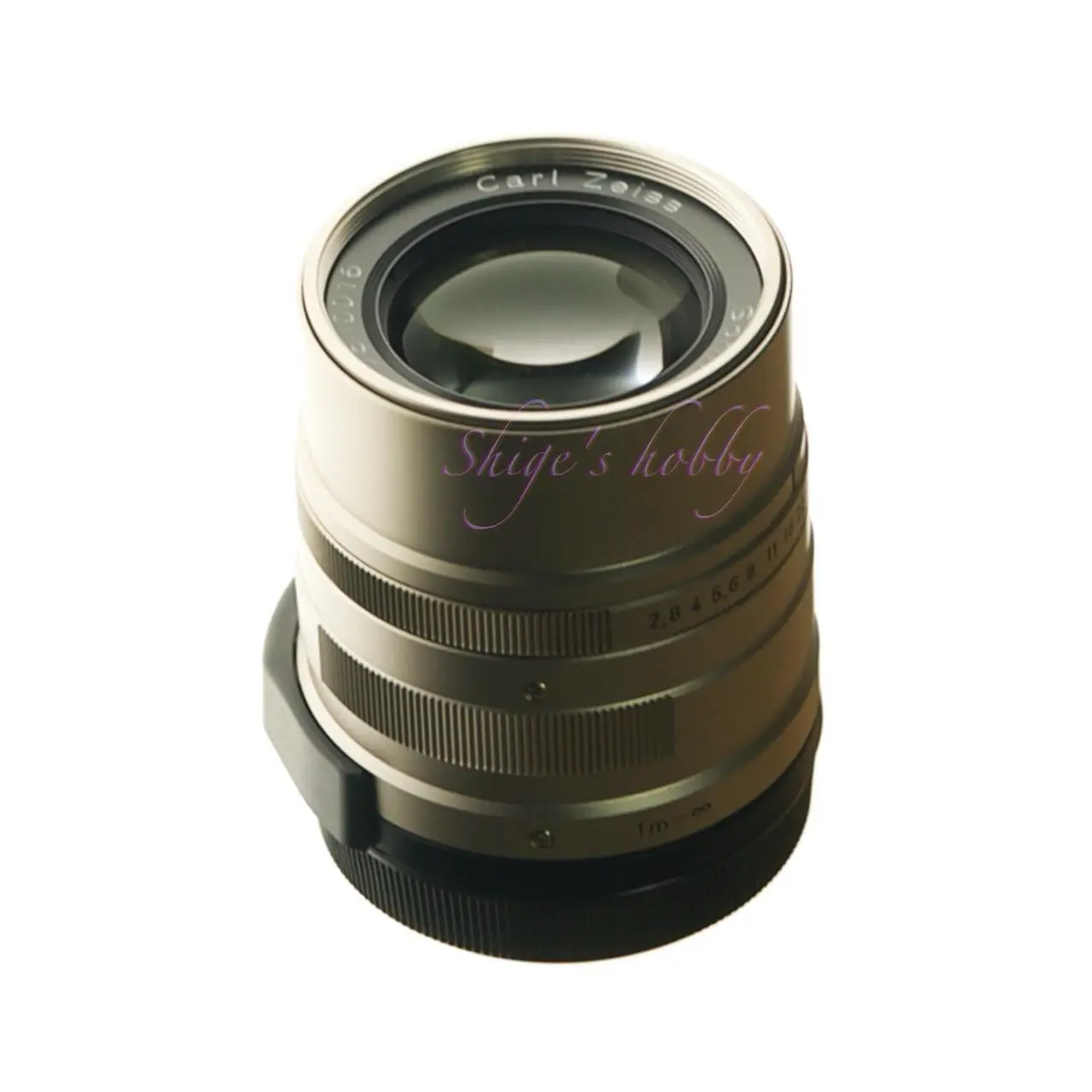
The CONTAX G SONNAR T* 90mm is an autofocus lens for the CONTAX G released in 1996.
Its main specifications include autofocus, a focal length of 90mm, an aperture of f/2.8, and a minimum focusing distance of 1.0m.
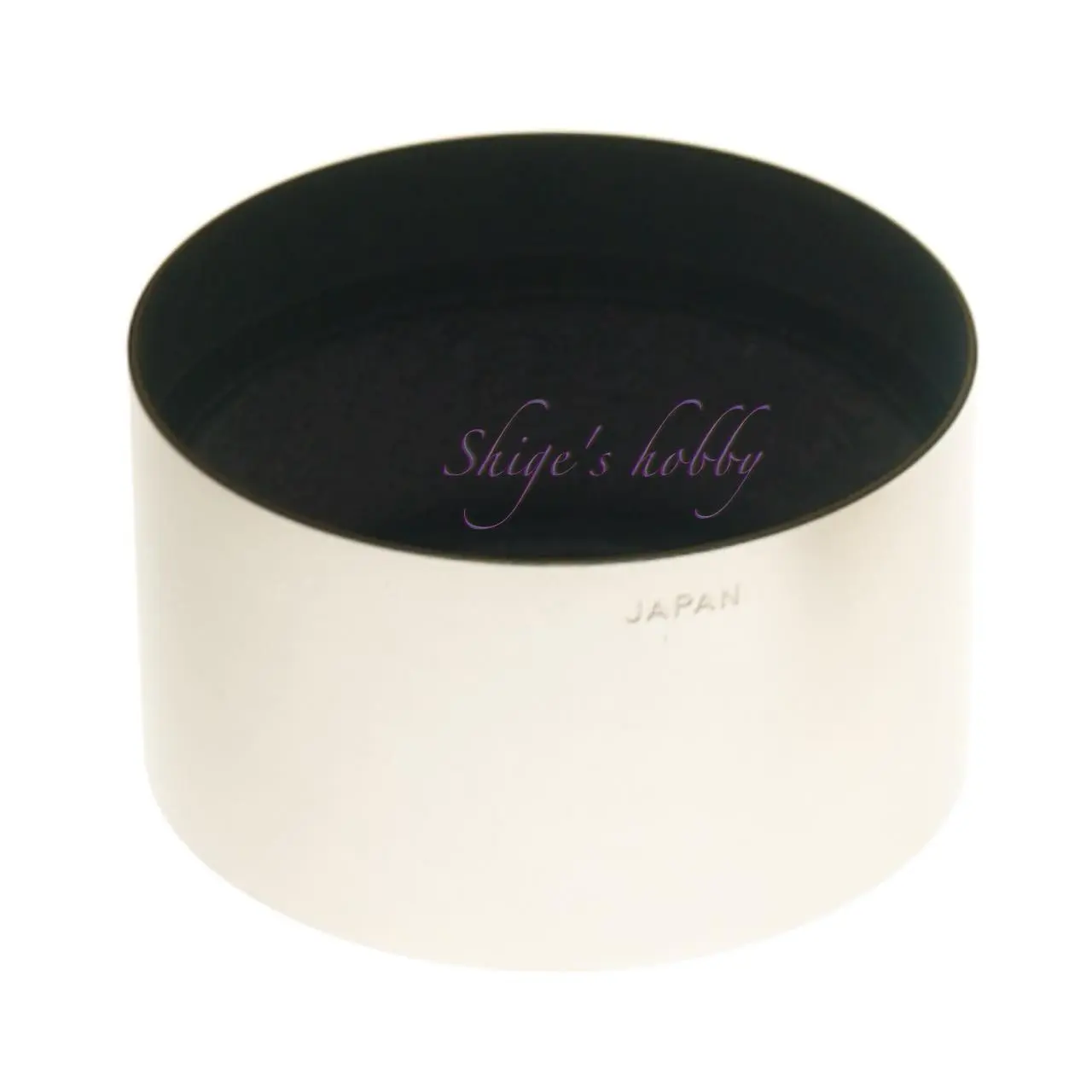
A dedicated 46mm screw-on GG-3 lens hood is available.
This telephoto lens was released along with the CONTAX G1, and can be used with the CONTAX G1 without the ROM improvement, but the autofocus accuracy is inferior to that of the CONTAX G2.
Since this lens uses a motor to drive the lens focus mechanism, after the era of mirrorless cameras, autofocus and manual focus mount adapters were released, making it compatible with a wide range of cameras.
2.Usability
I used the CONTAX G SONNAR T* 90mm with the CONTAX G1 and CONTAX G2.
Autofocus can be used for focusing, and the appropriate shooting range is displayed in the viewfinder of the CONTAX G1 and CONTAX G2.
When shooting with autofocus, the focal length of 90mm and the maximum aperture of f/2.8 make the focal plane thin, making focusing accuracy difficult and resulting in many out-of-focus photos.
In particular, when using it with the CONTAX G1, it was almost impossible to focus on moving subjects, or subjects hidden behind bushes or fences, which were difficult for autofocus cameras of the time.
In contrast, the CONTAX G2 has an improved autofocus mechanism, allowing for more reliable shooting, so the example photos shown here were taken with the CONTAX G2.
Using manual focus is a hassle, as there is no distance indicator on the lens barrel, so you rely on the rangefinder displayed in the camera’s viewfinder and adjust the shooting distance using the focus ring on the top of the camera (G1) or the focus ring on the front of the camera (G2).
With manual focus, the photographer needs to determine the distance from the subject, and since laser rangefinders and the like were not readily available, I never used manual focus.
For auto exposure, which determines the brightness of the photo, I used the TTL (Through the Lens) actual aperture metering (center-weighted average metering) of the original CONTAX G series body, as the lens is an Ernostar type with a distance between the rear lens and the film plane, and was able to determine the exposure with satisfactory accuracy.
The image is uniform throughout, producing a soft image rather than the sharp, sharp image common to CONTAX G lenses. The foreground and background bokeh at wide open aperture blends beautifully. There is also no light falloff in the peripheral areas, and as long as the focus position is not an issue, the lens produces good images.
The FUJIFILM TREBI 100C and KODAK E100GX films used in the example photos were discontinued in the 2020s. To briefly summarize their characteristics, TREBI is a film with a lower price point than PROVIA and a wider latitude aimed at beginners to reversal film, while E100GX is warmer than the E100G reversal film in the same series, and produces softer images with less saturation than E100VS. Neither film offers particularly sharp resolution.
Looking at the three example photos with TREBI, the first image of the sitting cat has soft fur and sufficient resolution, but the whites appear a bit washed out. This is due to a slight overexposure. The cat on the fence clearly features beautiful foreground bokeh. The autumn leaves photo features a subdued red that’s not as garish as with VELVIA, making for a striking contrast.
Looking at the three example photos with E100GX, all of them have a slightly stronger red tone, which is likely why they give the impression of a warmer tone. Looking at the luster of the animal’s fur, you can see that the resolution is sufficient.
The dedicated GG-3 hood is not particularly large, so I kept it attached to the lens at all times. If it gets in the way when storing it, you can attach it in reverse to shorten the overall length. The effect of the hood is that the blades help suppress ghosting in backlit situations.
I have uploaded example photos taken with a SONNAR 90mm digital camera at the link below.
3.Summary
To summarize the CONTAX G SONNAR T* 90mm, it is a bit difficult to use with the CONTAX G1 and G2, which were cameras made for film cameras. However, when used with a mirrorless camera via a mount adapter, the electronic viewfinder can be used, eliminating the issue of focusing accuracy and making it a very user-friendly lens.
If you’re looking for a 90mm lens with a soft image quality, this is a good choice.
Specifications, considerations, etc.
Looking at the lens construction diagram below, the SONNAR and HEXANON use an Ernostar design for their lens construction, achieving an aperture value of f/2.8, which makes them brighter than the Tessar-type TELE TESSOR, despite being roughly the same lens size and with the same number of lens elements.
As an aside, I suspect that ZEISS’s use of the slower Tessar design for the 85mm lens was largely due to marketing considerations, as the SONNAR 85mm f/2 is a more high-end lens, and the company felt that an 85mm f/2.8 budget lens would not be able to differentiate itself from higher-end lenses.
An example of a lens I own that uses the Ernostar design but is telephoto longer than 90mm is the MS-OPTICS APORIS 135mm f/2.4, which achieves an aperture value of f/2.4 despite its long focal length of 135mm.
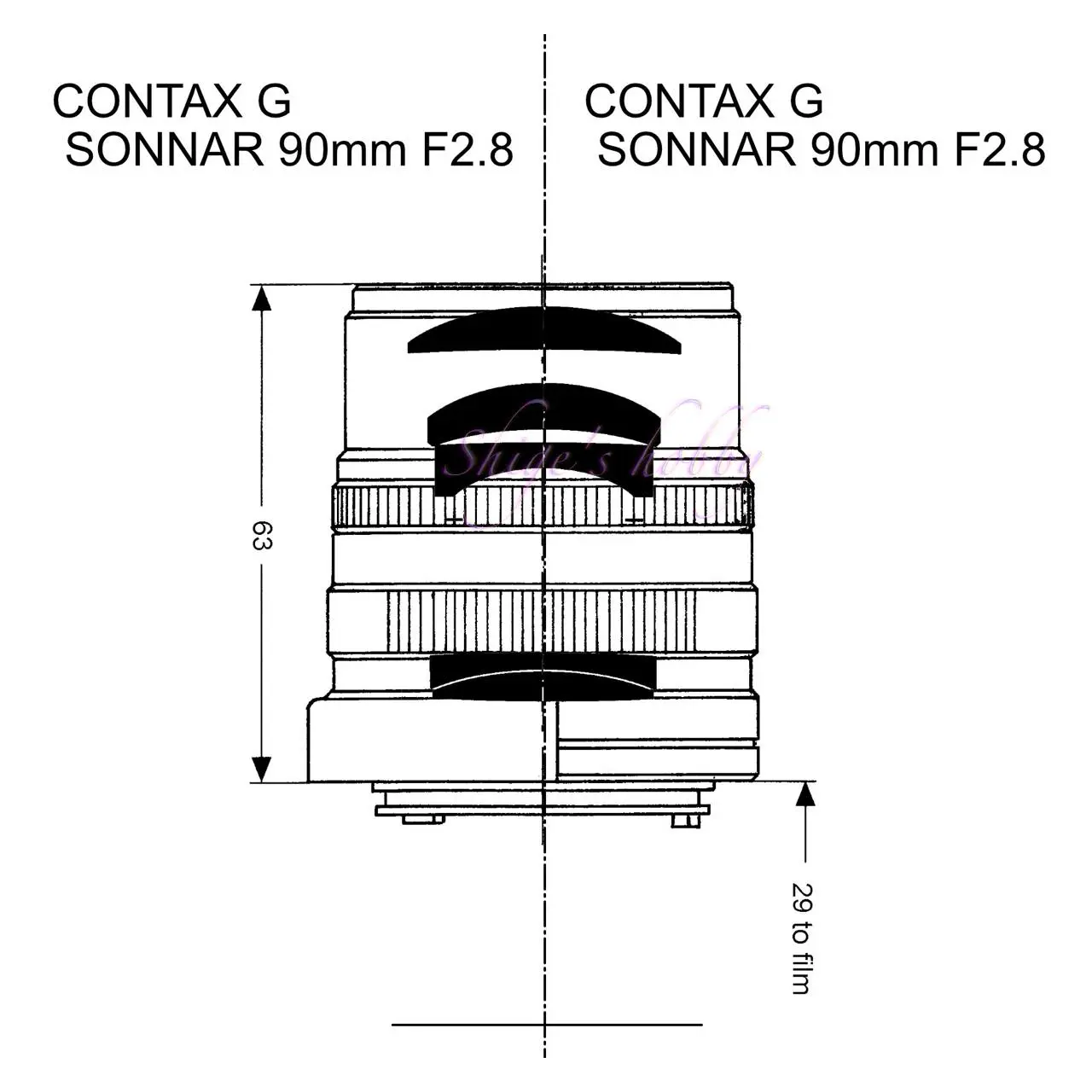
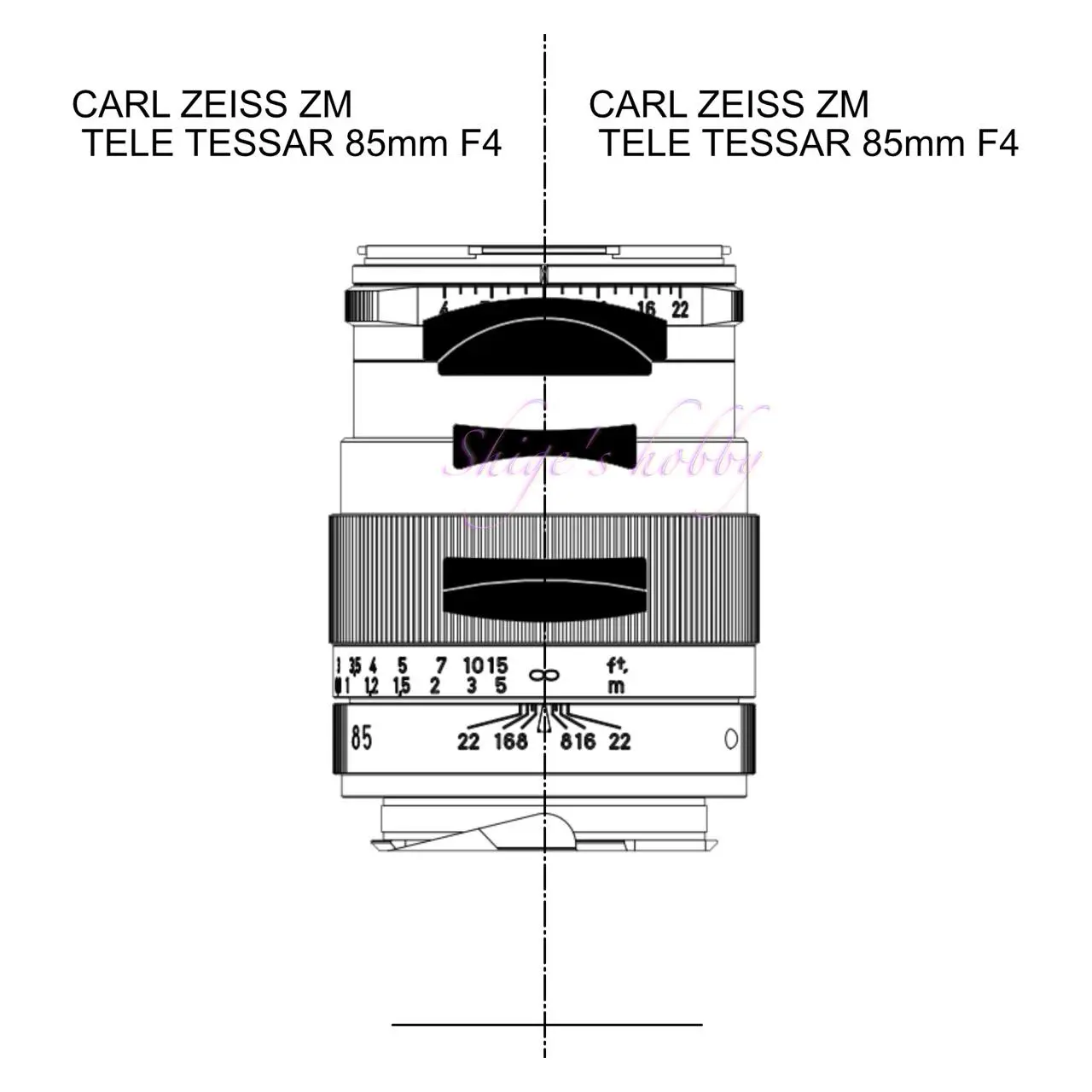
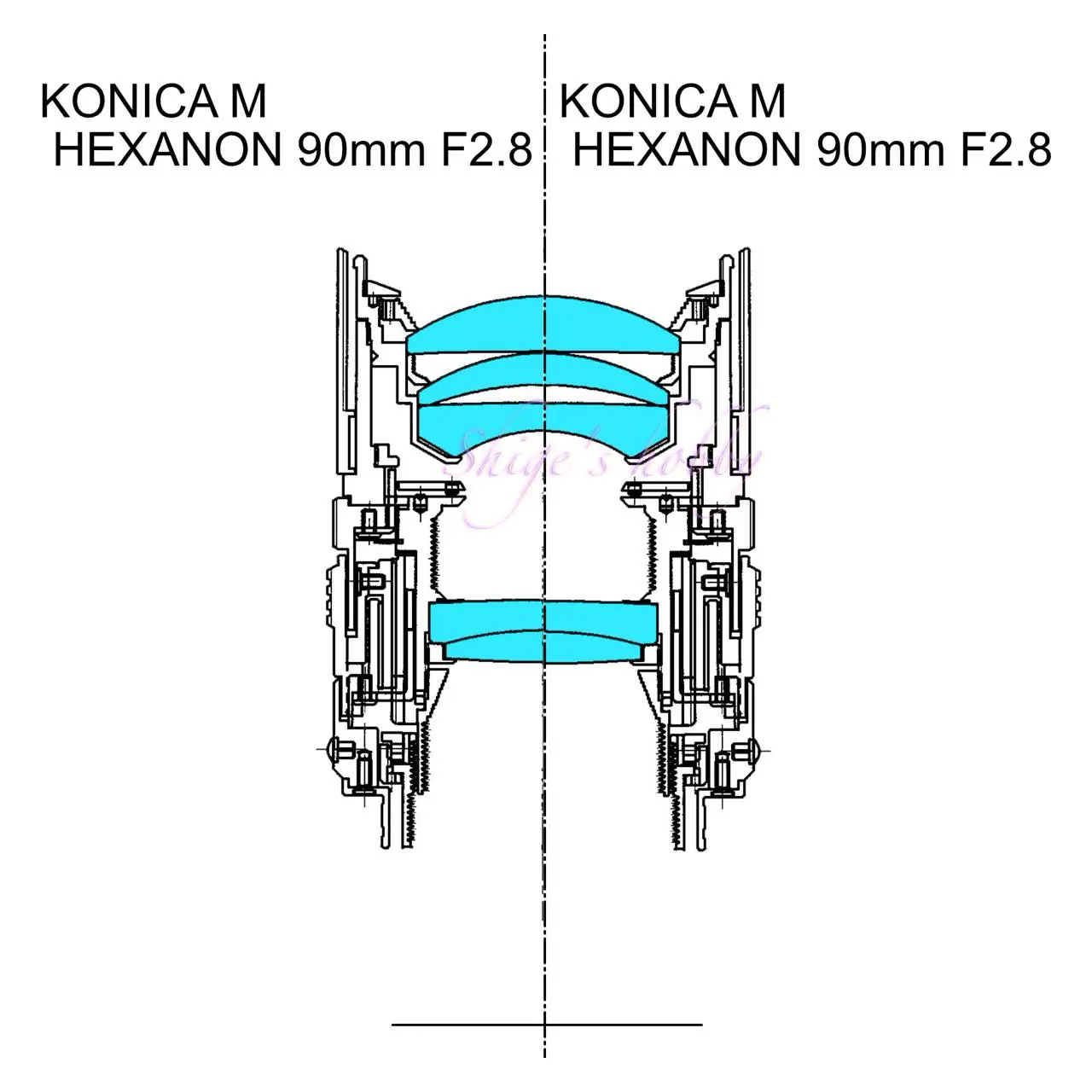
- The lens construction diagrams are taken from materials distributed by each company, and the sizes have been adjusted by us, so they are not exact.
| Item | SONNAR | TELE TESSOR | HEXANON |
| focal length(mm) | 90 | 85 | 90 |
| Maximum aperture | 2.8 | 4 | 2.8 |
| Minimum aperture | 22 | 22 | 22 |
| Leaf blade | 8 | 10 | 10 |
| Lens configuration | 5 elements in 4 groups | 5 elements in 3 groups | 5 elements in 4 groups |
| Minimum distance(m) | 1.0 | 0.9 | 1.0 |
| Lens length(mm) | 63.0 | 70 | 69 |
| Lens max diameter(mm) | 56 | 54 | 55 |
| Filter type | 46 | 43 | 46 |
| Weight(g) | 240 | 310 | 330 |
| Hood | GG-3 | Carl Zeiss Lens Shade for 85mm Tele-Tessar T* 4/85 ZM | Build in |
| Lens mount | CONTAX-G | ZM | M-mount Compatible |
| Release date | 1994 | 2010.2.11 | 1999 |
| Price | ¥47,000 | ¥90,000 | ¥75,000 |
Reference links
- Wikipedia’s explanation of the Contax G
- CONTAX G SONNAR 90mm Ms-optics modified lens・Shige’s hobby
- CONTAX G2・Shige’s hobby
- CONTAX G1・Shige’s hobby
- APORIS 135mm F2.4・Shige’s hobby
- KONICA M HEXANON 90mm・Shige’s hobby
- NIKON COOLSCAN V ED・Shige’s hobby
- MINOLTA DiMAGE SCAN Pro・Shige’s hobby
寄付のお願い・Request for donations
Affiliate links
- CONTAX G SONNAR T* 90mm・Ads by Amazon
- PLANAR 35・Ads by Amazon
- CONTAX PLANAR・Ads by Amazon
- TELE TESSOR 85mm F4・Ads by Rakuten
- KONICA M HEXANON 90mm・Ads by Rakuten

Update history
- 2026.3.9
Be First to Comment