
Last updated on 2026-06-01
This article is a review and sample photographs taken with the Konica Hexanon 50mm F2 lens, released in 1999, using the digital rangefinder cameras Leica M9 and Leica M8, and the film rangefinder camera Konica Hexar RF + Across B&W 100 film.
- Please see the disclaimer regarding advertising here.
- Italicized links in the text are advertisement links that take you to other sites.
- If you find any images used on this site problematic, please contact us via the comments or inquiry form, either as the rights holder or their representative. We will review the matter and take appropriate action.
Table of contents

Gallery
The sample photo were taken with :
- LEICA M9
- LEICA M8
- HEXAR-RF +FUJIFILM ACROSS 100 B&W
1.Overview
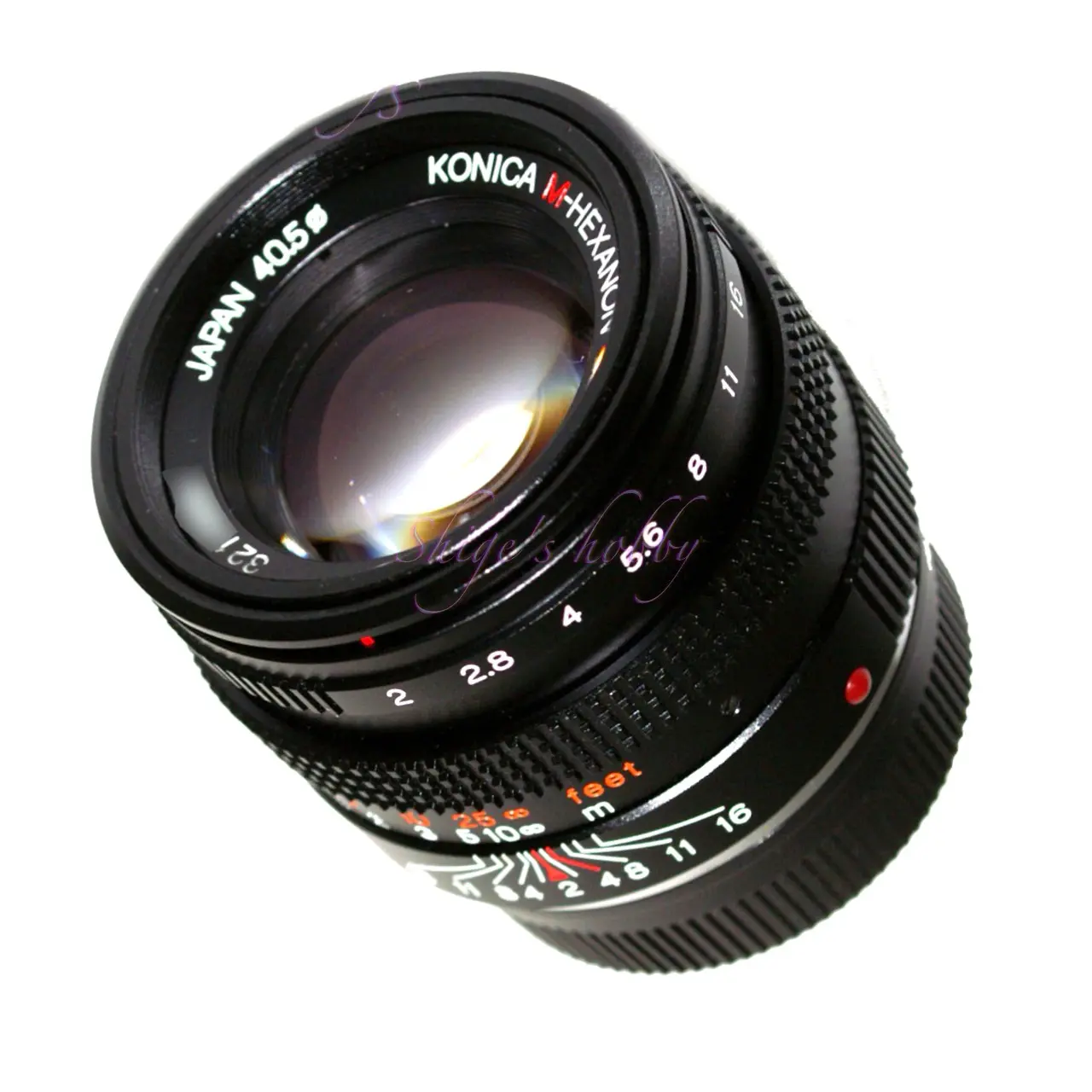
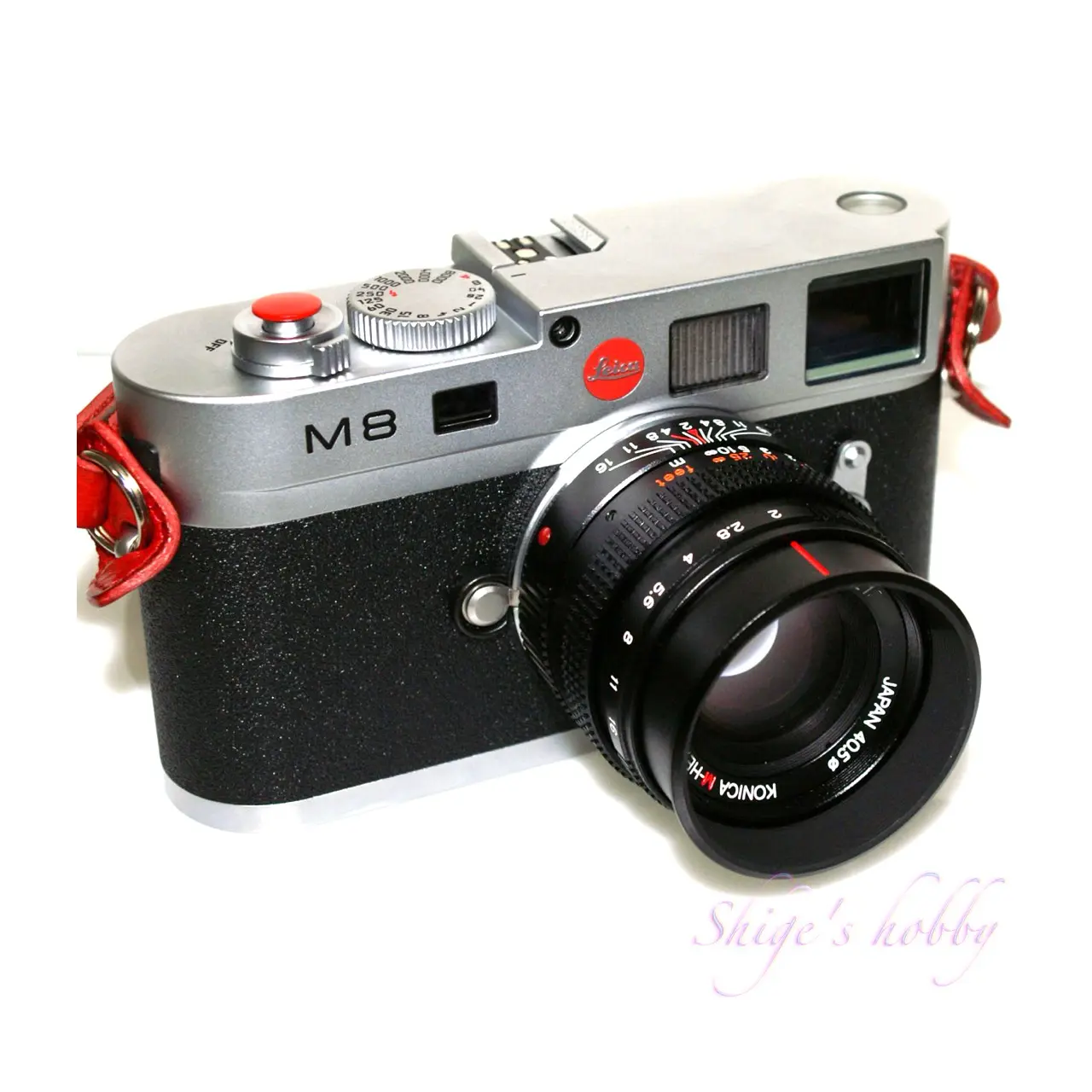
Its main features are a Gaussian lens configuration of 6 elements in 5 groups, a minimum focusing distance of 0.7m, aperture value of F2 to F16, 10 aperture blades, filter diameter of 40.5mm, and a hood built into the lens barrel.
2.Usability
The Konica M Hexanon 50mm f/2 lens has a metal construction and is heavier than you might expect for its size. The focusing helicoid rotates smoothly and the aperture clicks are firm at the front of the lens. Overall, there are no major issues; it’s a standard lens that fits well on M-type Leicas and M-type Leica-compatible cameras such as the Epson R-D1 and Bessa series.
The lens hood extends from the barrel and lacks a locking mechanism. While some lenses, such as the Summilux M 50mm ASPH., have a locking mechanism, whether or not a lock is present is a matter of preference. However, a locking mechanism indicates a more costly construction.
As can be seen from the samples, the lens produces good images even at a wide aperture, but its rendering tends to be flat and it is not a high-contrast lens. Due to its flat rendering, images are easy to process after shooting, whether digital or film.
Furthermore, it is versatile enough for both distant and close-up shots. The natural softness of the foreground and background bokeh, along with the texture that renders the subject beautifully, is very satisfying.
Let’s look at the image rendering when using each camera.
The LEICA M9 is a rangefinder camera with a sensor the same size as 35 mm film. The sample image was taken at the widest aperture, and the rendering of the in-focus area is delicate and impeccable, with smooth background bokeh. The slight overexposure in backlit scenes is due to conversion from JPG to WebP. The RAW image retains more tonal gradation.
The LEICA M8 is equipped with an APS-H-size sensor, which is smaller than 35 mm film. The shooting focal length is 67 mm (50 mm multiplied by a 35 mm equivalent factor of 1.33). When shooting, the experience of using a standard lens is diminished. It is closer to the experience of framing a shot through the viewfinder of a medium telephoto lens, such as a 75 mm lens.
Cropping the centre of a 35 mm film image eliminates the blurred edges, resulting in a sharper image. The reproduction of details such as cat fur and the metal parts of a bicycle is excellent.
The HEXAR-RF rangefinder camera was used with monochrome film. Its performance paired well with the graininess of monochrome film. Even when depicting trees, where double-line bokeh is common, there was no unpleasant blur, which demonstrates the inherent quality of the lens.
3.Summary
To sum up, the KONICA M HEXANON 50mm f/2 is a lens that delivers flawless, safe yet high-quality images. It also has a moderate design that feels natural when attached to any camera, and along with its safe images, it’s a lens that doesn’t assert too much individuality.
In a 50mm standard lens market crowded with strong competitors, it’s difficult for a lens to survive without some kind of individuality, but this lack of individuality that could easily be overshadowed can actually be seen as unique.
Specification and Competitor
Konica’s rangefinder cameras offer a wide selection of unique lenses in the standard focal length range. These include the L-HEXANON 50mm F2.4 with its retractable barrel, the M-HEXANON 50mm F1.2, a limited-edition, large-aperture lens with an improved double Gauss design, and the L-HEXANON 60mm F1.2 with a focal length of 60mm.
Of the standard HEXANON lenses, choosing the KONICA M HEXANON 50mm f/2 would be considered a true connoisseur’s choice.
This lens was once considered a low-priced M-HEXANON lens, alongside the M-HEXANON 28mm, but its price has risen slightly in the 2020s, suggesting that it may be time to reevaluate its appeal.
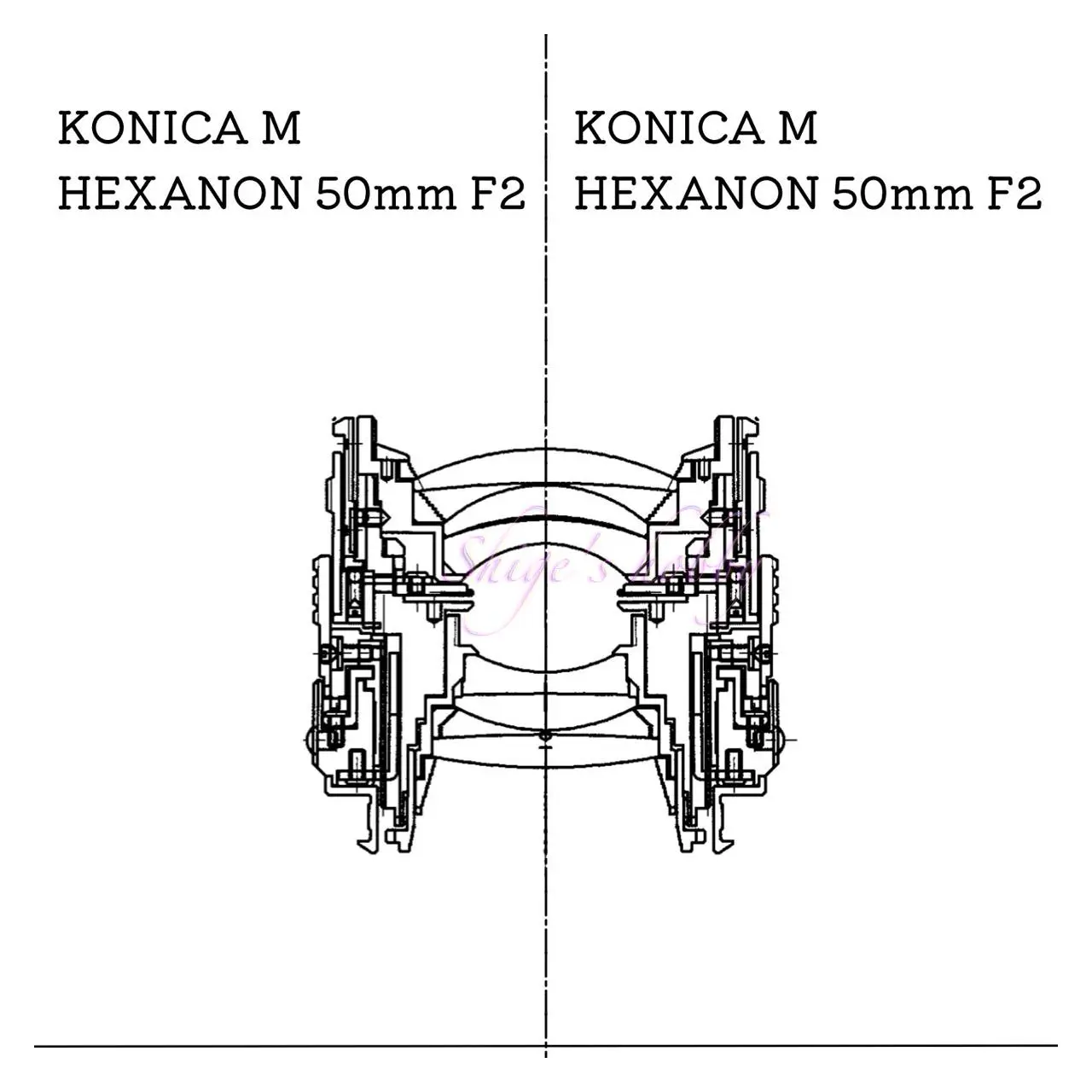
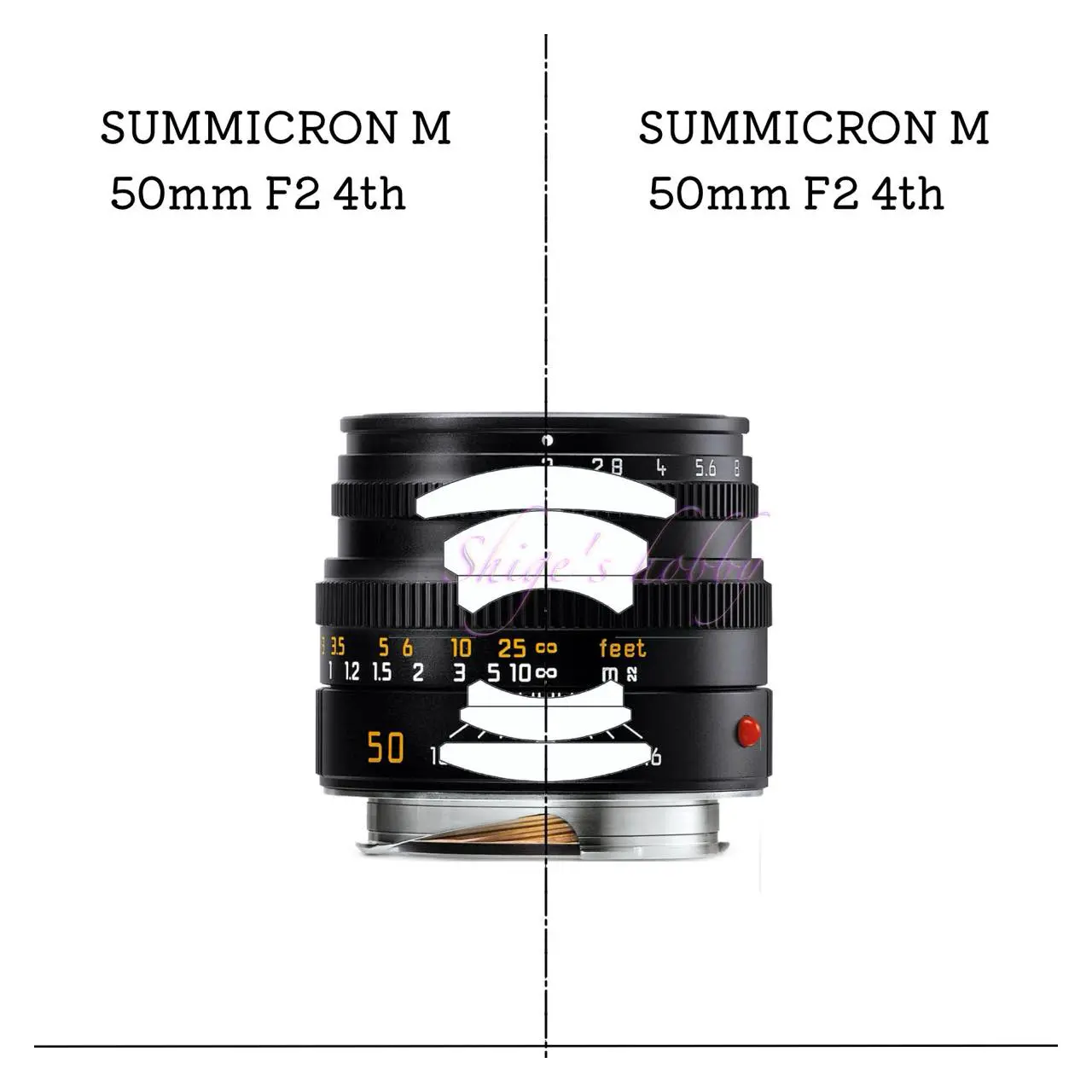
The design and lens construction of this lens, which has been described as lacking in individuality, are very similar to those of the fourth-generation LEICA SUMMICRON M 50mm F2. The lens designs have many things in common, such as external dimensions and built-in hoods, but the only difference is the filter diameter, which is 40.5mm for the Konica and 39mm for the Leica.
The lens structure uses almost the same six glass elements, and while the Hexanon has three independent front elements with air surfaces, the Summicron has two of the three front elements glued together, the second and third lens.
It is interesting to note that although there is a difference of about 20 years between the release of the two lenses, they are almost identical lenses when designed with the same lens specifications.
The reason why the Hexanon 50mm F2 looks like a copy of the well-established Summicron is that it was designed conservatively, with an eye on the bright 50mm F1.2 that was released later.
The figure below is a comparison between the Hexanon 50mm and the Summicron 50mm (4th generation).
- The lens construction diagrams are quoted from each company’s materials, and the sizes have been adjusted by us, so they are not exact.
| Item | M HEXAMON | SUMMICRON M 4th |
| focal length(mm) | 50 | 50 |
| Maximum aperture | 2 | 2 |
| Minimum aperture | 16 | 16 |
| Leaf blade | 10 | 8 |
| Lens configuration | 5groups 6elements | 4groups 6elements |
| Minimum distance(m) | 0.7 | ← |
| Lens length(mm) | 43.5 | ← |
| Lens max diameter(mm) | 54 | 53 |
| Filter diameter(mm) | 40.5 | 39 |
| Weight(g) | 255 | Black:240 Silver,Titan:335 |
| Release date | 1999 | 1978 |
| Focal length | Lens name | Release date | Technical Report |
| 28mm | M-HEXANON f28 / F2.8 | 1999年 | 28/50/90mm-PDF |
| 50mm | M-HEXANON f50 / F2 | 1999年 | 28/50/90mm-PDF |
| 90mm | M-HEXANON f90 / F2.8 | 1999年 | 28/50/90mm-PDF |
| 35mm | M-HEXANON f35 / F2 | 2000年 | 35mm-PDF |
| 50mm | M-HEXANON f50 / F1.2 | 2001年 | 50mm/F1.2-PDF |
| 21-35mm | M-HEXANON f21-35 / F3.4-4 | 2002年 | 21-35mm-PDF |
Reference links
- KONICA 28/50/90mm Technical Report-PDF(Japanese)
- LEICA M9・Shige’s hobby
- LEICA M9-P・Shige’s hobby
- LEICA M8.2・Shige’s hobby
- LEICA M8・Shige’s hobby
- KONICA HEXAR RF・Shige’s hobby
- KONICA HEXAR RF Limited・Shige’s hobby
- LEICA SUMMICRON M 50mm F2・Shige’s hobby
- Gauss type & Retractable KONICA L39 HEXANON 50mm F2.4・Shige’s hobby
- Limited edition large aperture standard lens KONICA M HEXANON 50mm F1.2・Shige’s hobby
- KONICA Hexanon L 50mm F1.9・Shige’s hobby
- Leica L39 mount large aperture semi-standard lens KONICA HEXANON L 60mm F1.2-2nd・Shige’s hobby
寄付のお願い・Request for donations
Affiliate links

- Leica lens・Ads by Amazon
- Konica lens・Ads by Amazon
- KONICA HEXANON 50mm lens・Ads by ebay
- LEICA SUMMICRON M 50mm F2・Ads by ebay
Update
- 2026.2.17
- 2025.3.6
- 2024.05.30:Update the article
- 2024.03.01:Update the article
- 2022.05.20:First draft
Be First to Comment