
Last updated on 2026-02-13
A review and sample photos of the LEICA SUMMICRON M 50mm F2 (with built-in hood) used with the LEICA M-P typ240, LEICA M9 and LEICA M8.
- Please see the disclaimer regarding advertising here.
- Italicized links in the text are advertisement links that take you to other sites.
- If you find any images used on this site problematic, please contact us via the comments or inquiry form, either as the rights holder or their representative. We will review the matter and take appropriate action.
Table of contents

Gallery
The following cameras were used to take the sample photos:
- LEICA M-P typ240
- LEICA M9
- LEICA M8
Review
1.Overview
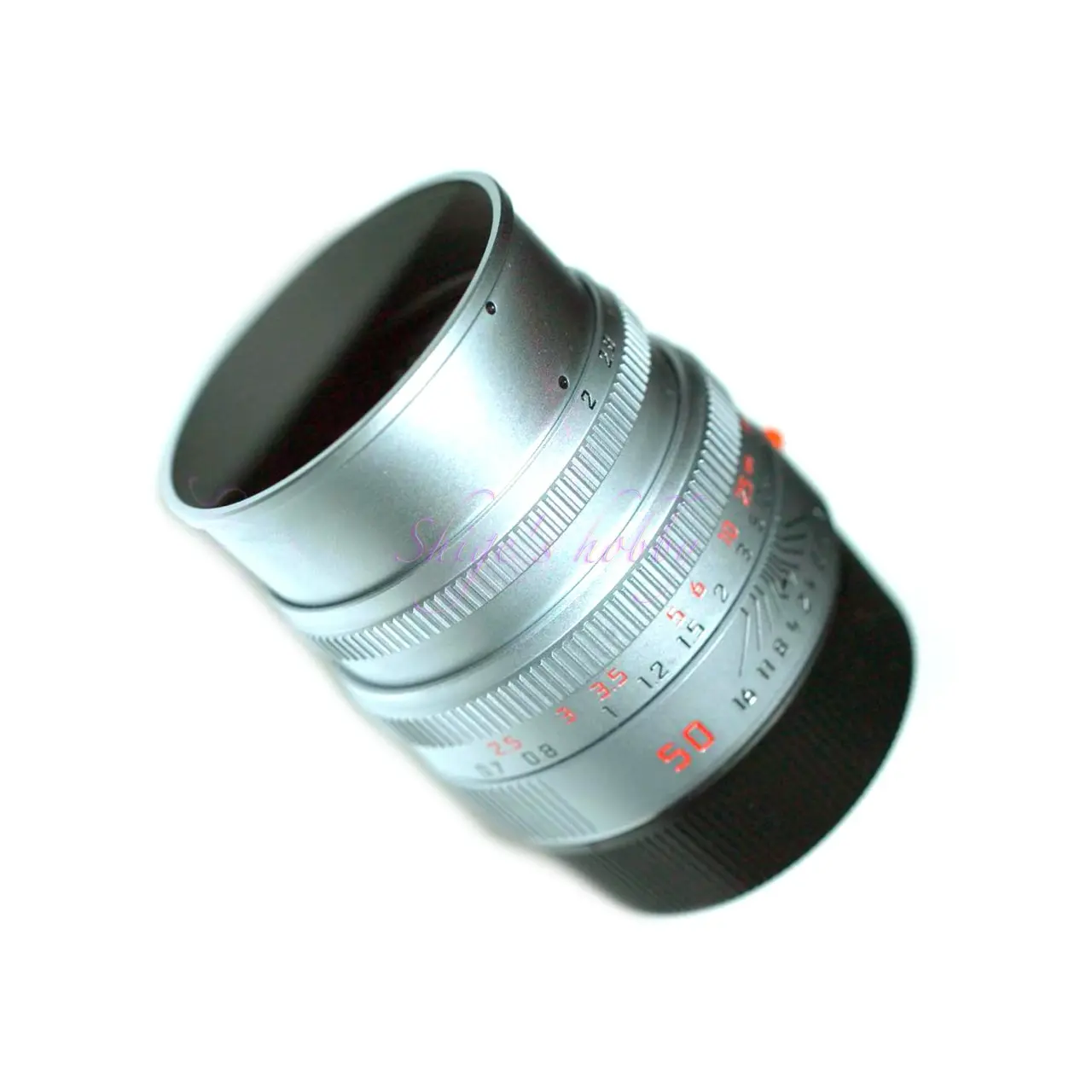
The LEICA Summicron-M 50mm f/2 (with built-in hood) was released in 1979 with an older lens barrel. The barrel shape was updated to its current form in 1994, and the lens configuration has remained the same since 1979. It’s a long-lived lens, with over 100,000 units produced, both with the old and new barrels.
The aperture blades are a standard octagonal shape, with a retractable hood and no locking mechanism. The filter diameter is 39mm, unchanged from the previous Summicron 50mm, and the thread diameter remains the same as the previous lens.
Like the Summicron-M 35mm ASPH., Summilux-M 50mm, and APO Summicron 90mm, it was available in three colors: black, silver, and titanium. The titanium and silver versions feature brass barrels, while the silver and titanium versions are heavier than the black version.
The Summicron 50mm with built-in hood is also available in an L39 screw-mount version with a silver barrel for the Barnack Leica, but this version has a minimum focusing distance of 1.0m, matching the standard minimum focusing distance of the Barnack Leica.
Of course, if you use an L/M conversion ring, it can be used with M-mount Leica cameras, but you need to be careful as the minimum focusing distance becomes longer at 1m, making it difficult to get close.
2.Usability
The lens design of the LEICA Summicron-M 50mm f/2 (with built-in hood) has remained unchanged since 1968, but the lens coating appears to have evolved over time.
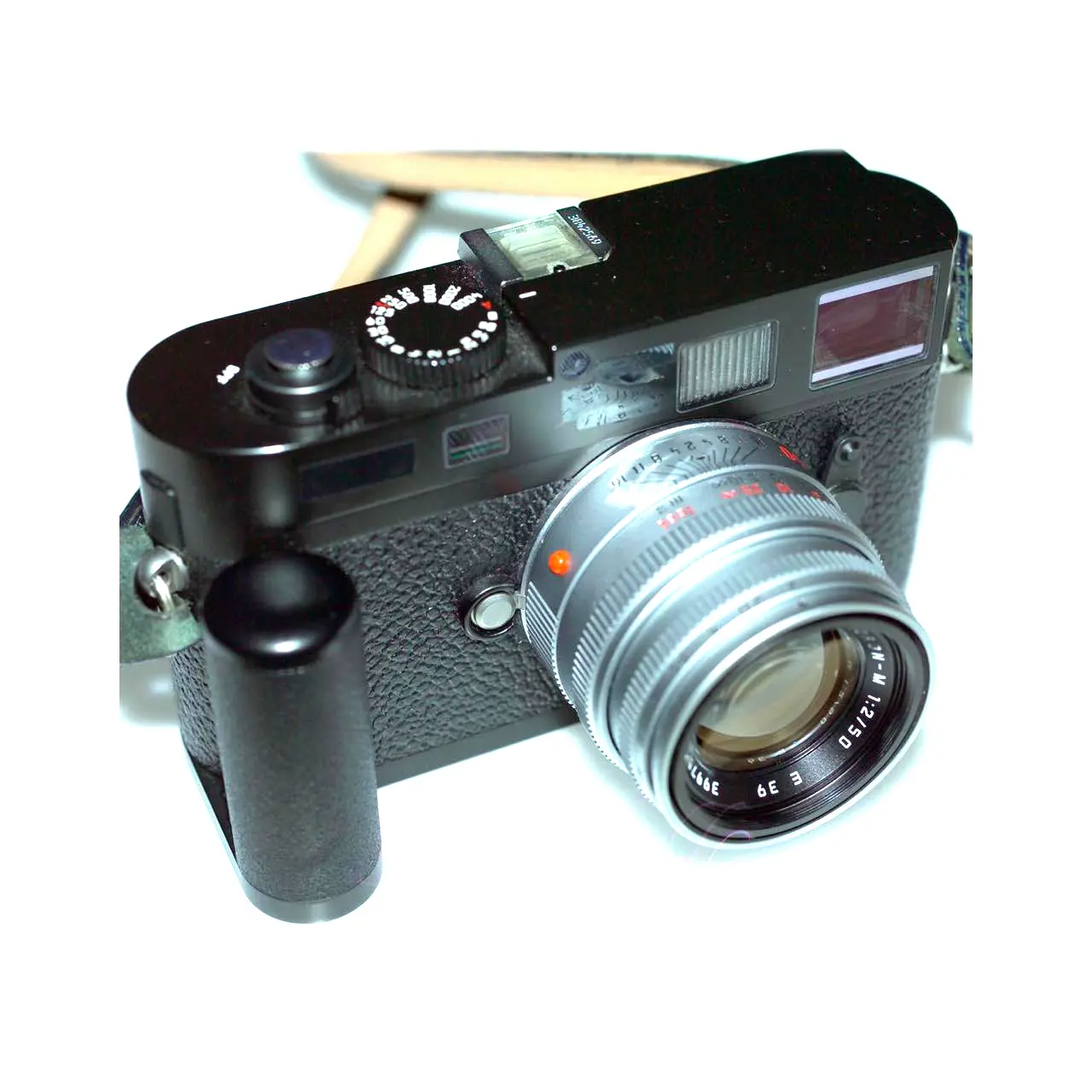
The three M-series digital Leica cameras used for the sample images are the LEICA M-P Typ240 and LEICA M9, both 20-megapixel class digital cameras equipped with 35mm full-frame sensors, and the LEICA M8, a 10-megapixel class digital camera equipped with an APS-H size sensor. The 35mm film equivalent focal length of an APS-H size sensor is 67mm, which provides a slightly telephoto angle of view compared to a standard lens.
The latest model of the Summicron-M f/2, the benchmark among M-series Leica lenses, offers a good balance of resolution and bokeh even at wide open apertures, making it an easy-to-use lens. I also personally like the relatively clear contrast between light and dark.
And because stopping down the aperture doesn’t significantly affect the image, when shooting with a digital Leica M-series lens that has an aperture-priority mode, the shutter speed automatically changes in line with the aperture, allowing the photographer to concentrate on composing the image while maintaining the required shutter speed without worrying about blur.
All example images were shot at maximum aperture, and the bright f/2 aperture makes it easy to determine the focus position with the Leica M-series lens’s rangefinder, providing good stability when taking quick shots.
In contrast, when using the same Leica Summilux 50mm ASPH., which is one stop faster, at maximum aperture, its razor-thin focus range requires a certain level of skill and care to achieve the desired position, increasing the likelihood of failure.
The aperture ring is located at the front of the lens and the focus ring is located in the middle, a feature that remains consistent with the Summicron, so photographers familiar with the lens will not be confused. However, the lens barrel no longer has the finger grip that was present on the second and third generations, which may be confusing for photographers who use a finger grip as a starting point.
The focus ring on the two Summicrons with integrated hoods that I have used felt light to turn, considering they were manual focus lenses. This was the case with two lenses that were not particularly worn, so I think the focus ring is designed to be light.
3.Summary
In conclusion, to sum up the Summicron-M 50mm built-in hood, it is a long-lived lens that has maintained the traditional lens configuration while changing the lens barrel and lens coating.
As a standard lens, it is a complete lens, and I have no complaints about using it, but it is a lens that lacks excitement.
Specifications, considerations, etc.
I’ve used the early retractable Summicrons, the Summicron with glasses, and this one with a built-in hood for the M-series. I’ve rarely been dissatisfied with the image quality of any of them, and compared to the 50mm lenses that came before the Summicron, I feel the Summicron series is a complete lens. For this reason, I haven’t managed to get hold of any of the lenses released between the original and this one.
The Summicron generation count can be classified by either changes in the lens barrel or changes in lens construction, and this lens is sometimes considered the 4th generation – 4th, and sometimes the 5th generation – 5th.
The Ken Rockwell website in the reference link classifies them by changes in the lens barrel, so it’s 5th generation – 5th – type 5, while the LEICA Wiki classifies them by changes in lens construction, so it’s classified as four.
I personally recognized this lens as a 4th generation – 4th – type 4, but since classifications vary and could be misleading, I’m calling it the built-in hood type. Classification of hobby equipment is a matter of personal preference and policy, so be careful when describing it.
Released in 2013 as the APO Summicron 50mm ASPH., it combines APO specifications, aspherical lens elements, and all the other specifications of modern Leica lenses. This lens is completely different from the regular Summicron in both performance and price.
Leica steadily improves its long-selling products, so there is a possibility that improvements such as a shorter minimum focusing distance and the use of aspherical lens elements will be made, as with the latest Summilux-M model to be released in 2023. If the lens construction remains the same, it will likely be difficult to come up with a name for it.
| Items | SUMMICRON(Retractable) | DR SUMMICRON | SUMMICRON |
| Focal length(mm) | 50 | 50 | 50 |
| Max aperture | 2 | 2 | 2 |
| Min aperture | 16 | 16 | 16 |
| Lens Construction | 7 elements in 6 groups | 7 elements in 6 groups | 6 elements in 4 groups |
| Aperture blades (Diaphragm) | 10 | 10 | 8 |
| Min distance(m) | ∞〜1.0 | ∞〜1.0 | ∞〜0.7 |
| With goggles(m) | – | 0.9〜0.48 | – |
| Lens length(mm) | – | 43 | |
| Max diameter(mm) | 47.8 | 53 | 53 |
| Filter Size(mm) | 39 | 39 | 39 |
| Hoods | SOOFM / ITDOO / IROOA | SOOFM / ITDOO / IROOA | Build in |
| Weight(g) | – | 339 | 240:Black 335:Silver,Titan |
| Goggles weight(g) | – | 52 | – |
| Release date | 1951 | 1956 | 1978 |
| Production numbers | 253,314 | ? | 1977-2005 94,573+ |
Reference links
- Leica Wiki explaination of the SUMMICRON 50mm with built-in hood
- Leica Wiki’s explanation of the SUMMICRON 50mm with separate hood
- Leica Wiki’s explanation of the SUMMICRON 50mm retractable
- Ken Rockwell Summicron 50mm comparison page
- 沈胴鏡筒レンズ SUMMICRON M 5cm F2・Shige’s hobby
- 2焦点レンズ DR SUMMICRON M 50mm F2・Shige’s hobby
寄付のお願い・Request for donations
Affiliate links
- SUMMICRON M 50mm・Ads by Amazon
- SUMMICRON M 50mm・Ads by Rakuten
- SUMMICRON M 50mm・Ads by Yahoo Shopping
- SUMMICRON M 50mm・Ads by ebay

Update history
- 2025.2.12
- 2024.11.11
- 2024.03.01:Update article
- 2022.07.02:First draft
Be First to Comment