
Last updated on 2026-05-01
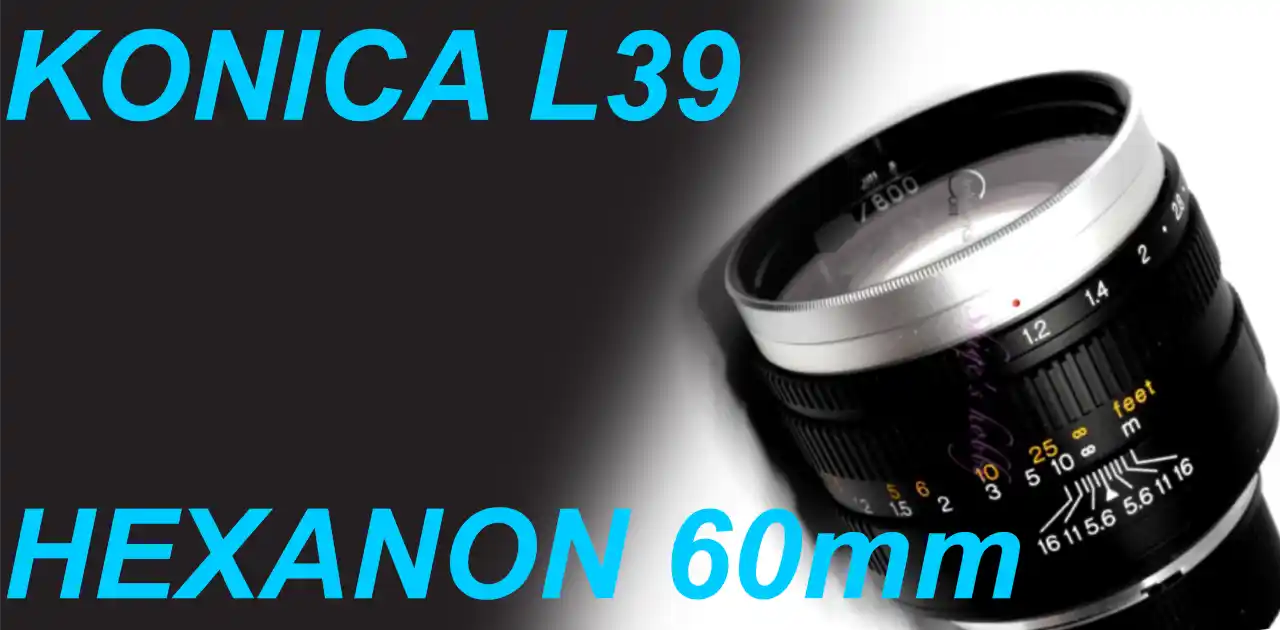
A review and sample photos of the KONICA L39 HEXANON 60mm F1.2 used with a LEICA M compatible film camera and a LEICA M digital rangefinder camera.
- Please see the disclaimer regarding advertising here.
- Italicized links in the text are advertisement links that take you to other sites.
- If you find any images used on this site problematic, please contact us via the comments or inquiry form, either as the rights holder or their representative. We will review the matter and take appropriate action.
Table of contents

Gallery
The following cameras were used to take the sample photos:
- KONICA HEXAR RF +VELVIA 50 +NIKON LS-50
- LEOTAX F +lomography Lady grey B&W400 +DiMAGE Scan Multi PRO
- LEICA M10
- LEICA M Typ240
- LEICA M9
- LEICA M8
- クリックで画像は拡大する
Review
1.Overview
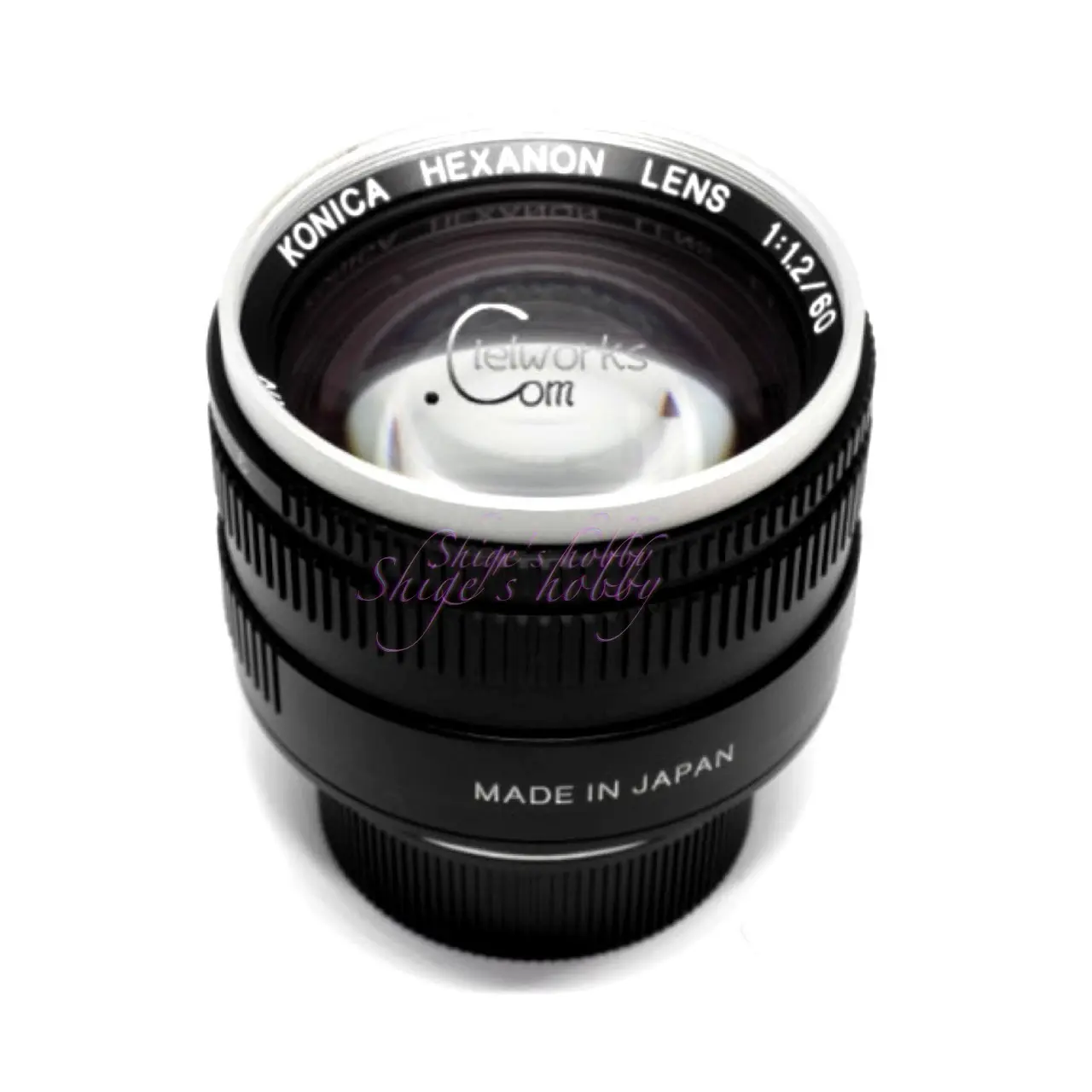
The Hexanon 60mm F1.2 is a Leica L39 screw mount lens planned by Fujisawa Shokai, a limited edition of 800 units of a 60mm F1.2 lens with the same specifications previously released by Konishiroku Photo Industry.
The lens is a Gaussian type with 7 elements in 6 groups, with a minimum shooting distance of 0.8m and an aperture of F1.2.
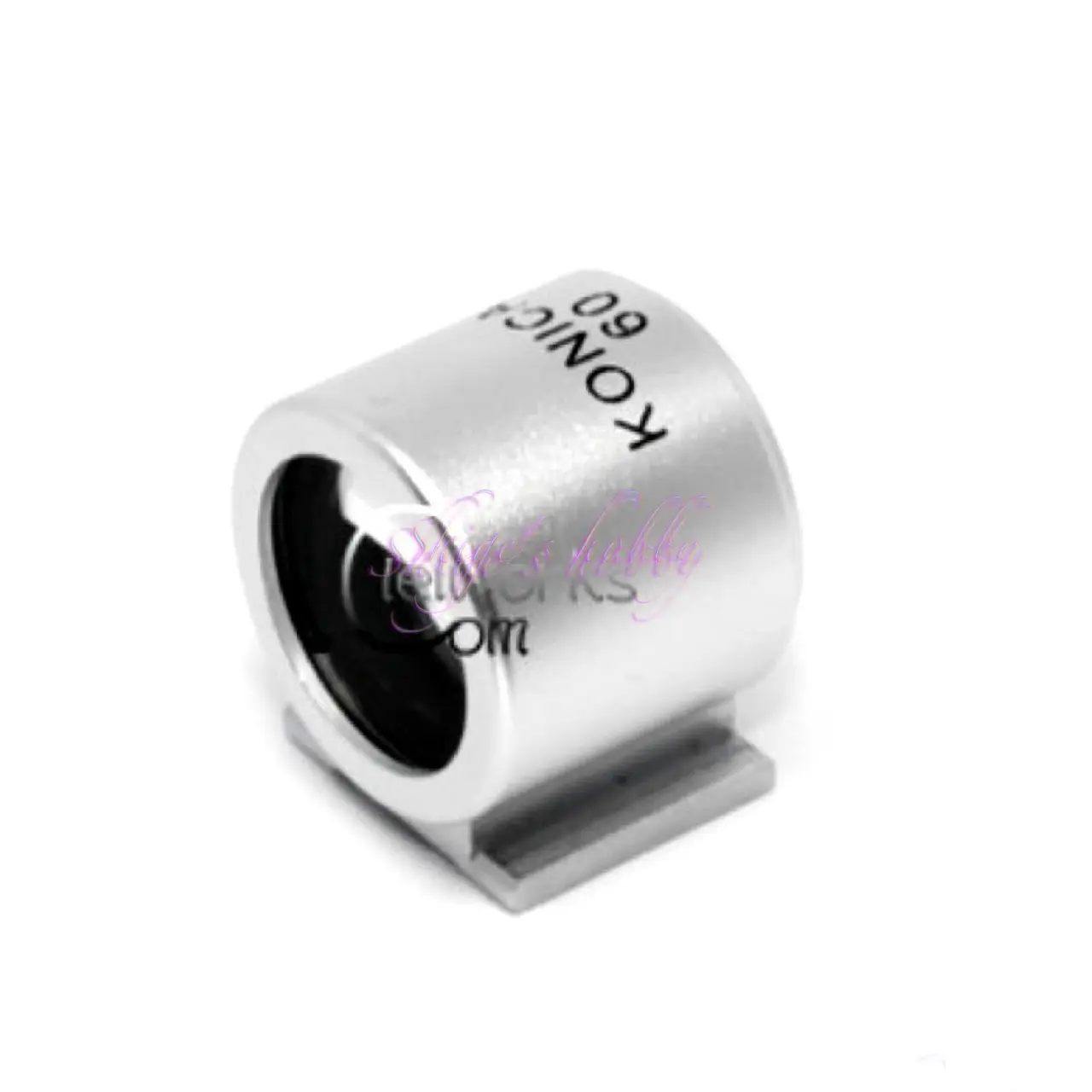
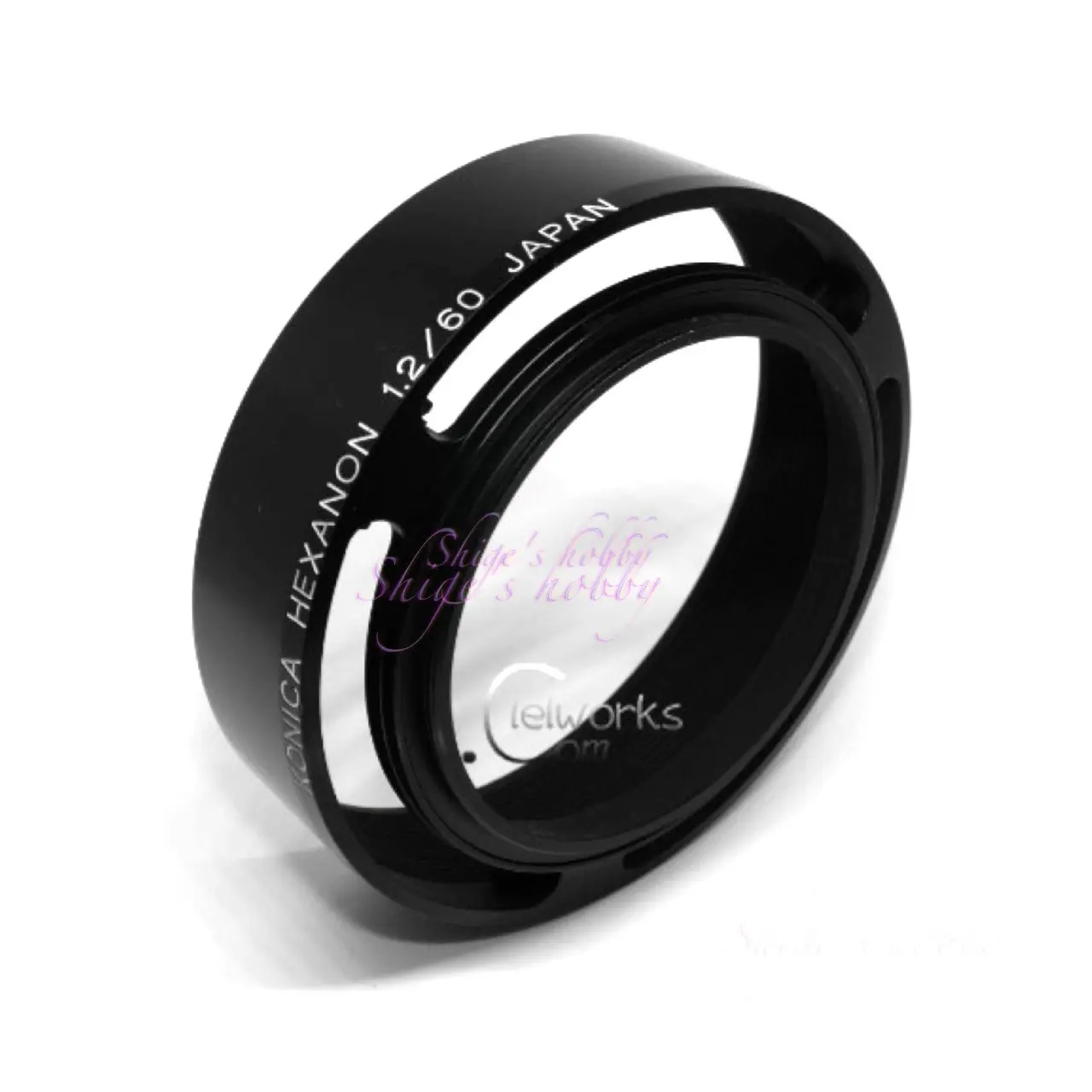
The lens hood is a cylindrical hood with a slit, and because the hood diameter is large, it covers the eyepiece of a rangefinder camera, making it difficult to see. A dedicated 60mm viewfinder and 58mm filter to match the lens are included.
2.Usability
I purchased the Hexanon 60mm F1.2 second-hand from a camera shop in Ueno in February 2008. Its two-digit serial number is one of 800 lenses produced.
I’ve kept this lens for a long time because I like it so much because I can get satisfying images even at wide open apertures. It’s also highly resistant to backlight, so I rarely use the huge lens hood that comes with it.
One of the features of this lens is that while older, larger-aperture lenses have a minimum focusing distance of 1m, this lens can get as close as 0.8m. That extra 0.2m is very reassuring. And with a focal length of 60mm, 10mm longer than the standard 50mm, it can capture a larger subject.
■Film Rangefinder Camera
This lens was used with the KONICA HEXAR-RF, a Leica M-compatible rangefinder camera.
An M-L mount adapter is required for use with M-type Leicas and compatible cameras. Since standard M-type cameras do not have a 60mm viewfinder frame, I used a 50/75mm M-L mount adapter to use the lens and shoot through the 50/75mm viewfinder frame.
Shooting with the image centered between the 50mm and 75mm frames resulted in results that were almost exactly what I envisioned.
The dedicated external 60mm viewfinder is only used to check the clear viewfinder frame, and the view through it was clear and unaffected.
However, parallax, a problem with rangefinder cameras, is noticeable at the minimum focusing distance of 0.8m with an external viewfinder. Therefore, using the built-in viewfinder, which compensates for the viewfinder frame, makes it easier to compose close-up shots.
Also, when using an external viewfinder, the focus position must be checked through the camera’s viewfinder, which can be a hassle as it requires you to move your eyes to check the composition.

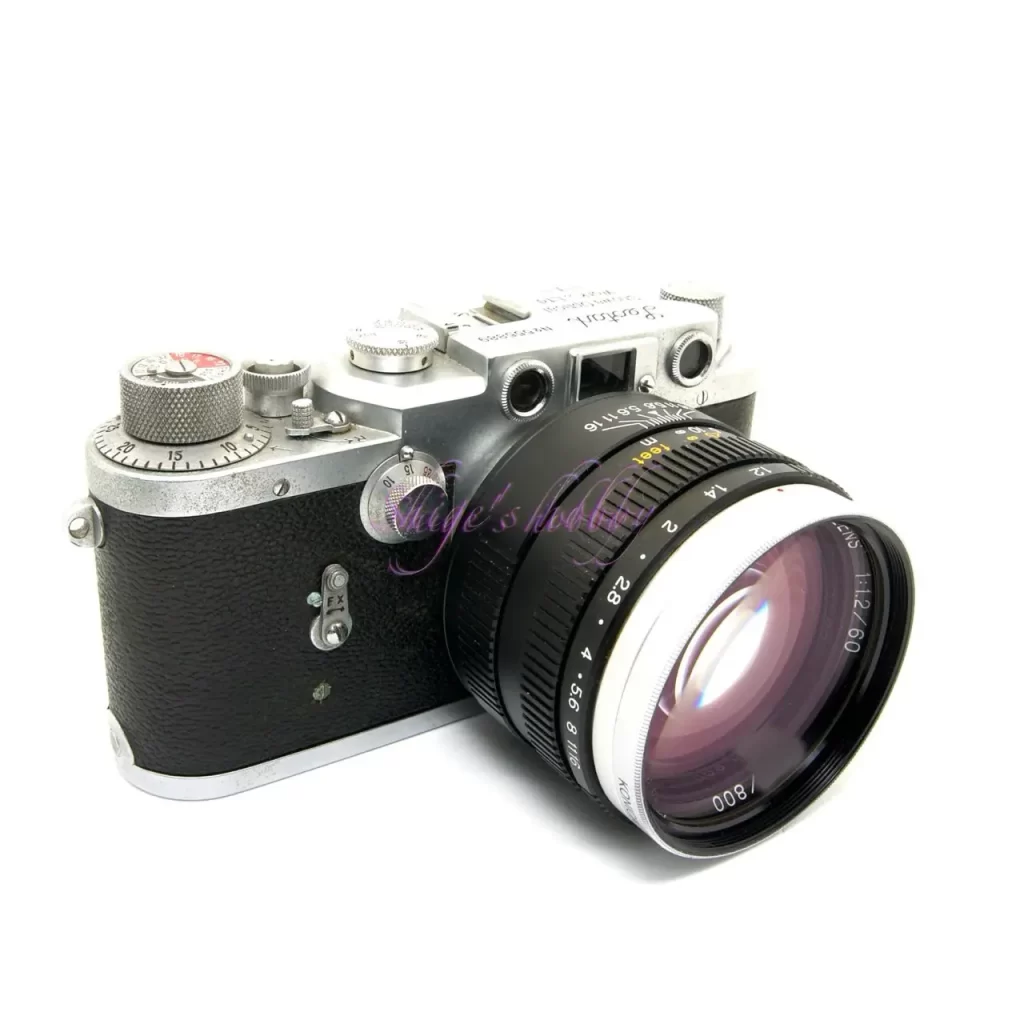
As this lens has an L39 screw mount, it can be attached to Barnack Leica and compatible cameras without the need for a mount adapter, and the fact that a lens released in 1999 can be attached to the LEOTAX F, a Barnack Leica copy released in 1946, is one of the interesting things about a common standard.
This was an issue with the LEOTAX F I owned, but the viewfinder had deteriorated and the double image was quite blurry, making it difficult to check the focus position, but I managed to get the focus right even at maximum aperture.
■Digital Rangefinder Camera
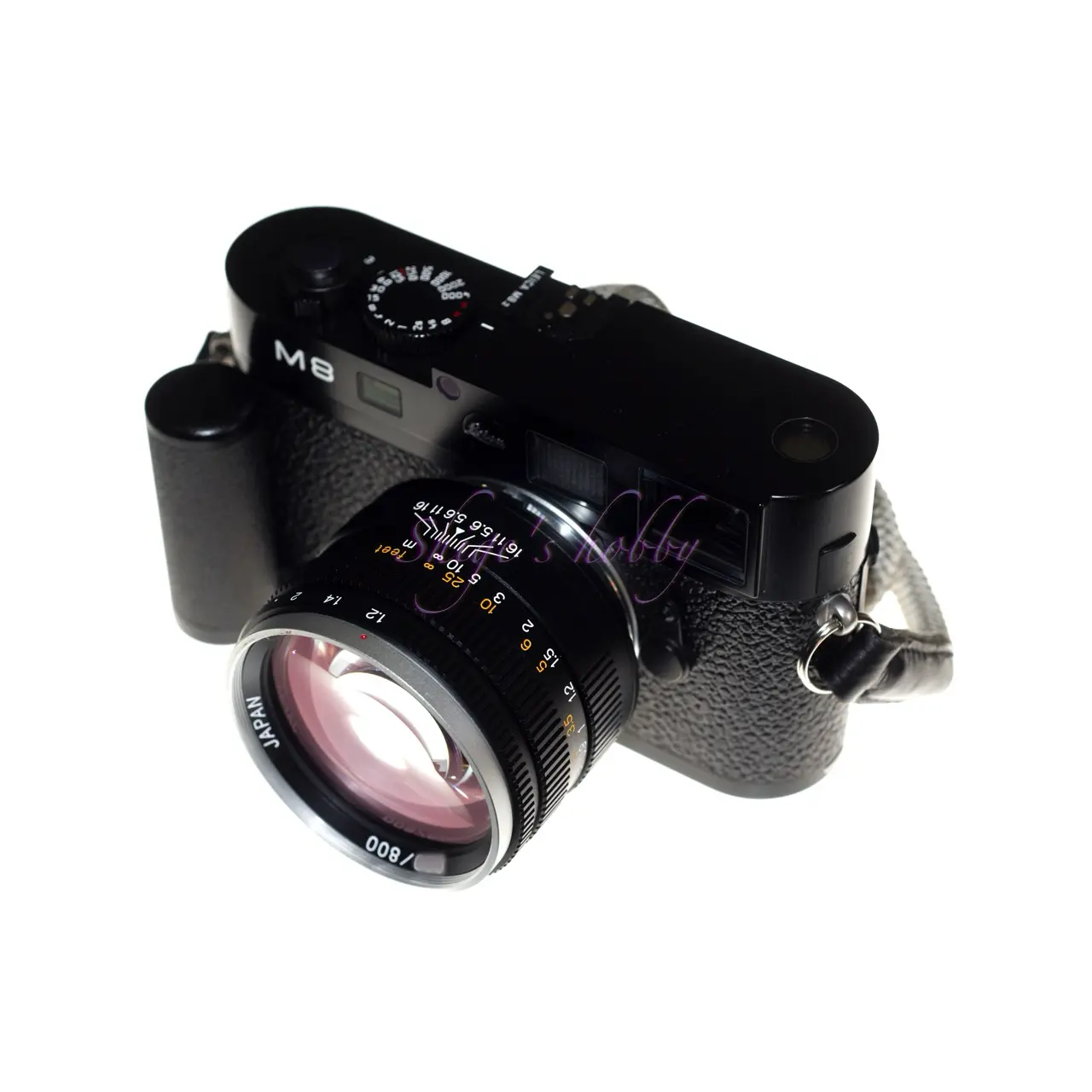
I acquired this lens while using the LEICA M8, and it’s been used across generations: the LEICA M8, LEICA M8.2, LEICA M9, LEICA M9-P, LEICA M typ240, and LEICA M10.
The first LEICA M8 I used was equipped with a 10-megapixel APS-H sensor, which is smaller than 35mm film. Therefore, the actual focal length is multiplied by the sensor size conversion factor, resulting in an 80mm equivalent focal length of 60mm x 1.33. Since the LEICA M8 and M8.2 do not have an 80mm viewfinder, I shot with a focal length slightly outside the 90mm mark on the 28/90mm viewfinder, or slightly inside the 75mm mark on the 50/75mm viewfinder. Because it’s a digital camera, I would check the results and retake the shot if they didn’t match my intended results.
Because the shooting range is smaller than that of 35mm film, the image is cut off at the periphery where the negative aspects of the lens tend to appear, so the individuality of the lens is somewhat lost, but the quality of the captured image is improved.

The LEICA M9, LEICA M typ240, and LEICA M10 are 35mm full-frame digital rangefinder cameras, with the M9 featuring an 18-megapixel sensor and the M typ240 and M10 featuring a 24-megapixel sensor.
They can be considered roughly equivalent to 20-megapixel digital cameras, and the HEXANON 60mm delivers more than enough image quality for this resolution.
As with the HEXAR RF, I used the 50/75 viewfinder frame when shooting. As with the M8, I took advantage of the convenience of a digital camera and opted not to attach an external viewfinder, leaving the shooting area roughly focused, focusing solely on the double image.
The M typ240 and M10 can be equipped with an external electronic viewfinder, but this slows down the shooting pace, so I used the camera’s built-in viewfinder. I never had any issues with focus accuracy at wide apertures.

■Mirrorless Camera with Medium-Format Digital Sensor
The HASSELBLAD X2D-100C is a mirrorless camera equipped with a medium-format digital sensor (sensor size: 44mm x 33mm). This sensor size is larger than that of 35mm film, and the focal length conversion factor for 35mm film is 0.8x. If the image circle covered a medium-format digital sensor, it would be a standard lens equivalent to 48mm.
This lens has ample image circle space for a 35mm full-frame sensor, and in terms of brightness, it covers approximately 95% of a medium-format digital sensor.
Its rendering quality is somewhat compatible with the 100-megapixel sensor resolution, and it is fully usable if you can compensate for the slight peripheral vignetting by composing the shot.
As for focusing accuracy, the X2D-100C’s high-definition electronic viewfinder (EVF) allows you to easily achieve the desired focus even at wide open aperture.
The X2D-100C does not have a shutter mechanism in the camera body, so it shoots with an electronic shutter, so you need to be careful of rolling distortion of the subject. Among mirrorless cameras with the same size medium format digital sensor, the Fujifilm GFX series has a mechanical shutter built into the body, so it should be easier to use Leica M mount lenses.
3.Summary
In conclusion, to sum up the Hexanon 60mm F1.2, it is a large-aperture standard lens that can get close, among older lenses.
The lens barrel design is simple, with a cylindrical silver rim decoration, and when attached to the camera it gives an understated appearance that does not stand out too much.
Because it is an L39 screw mount lens, it has the advantage of allowing relatively new large-aperture lenses to be used with a Barnack Leica.
- The article category is SONY because the technology has been passed down from KONICA to KONICA MINOLTA to SONY.
Specifications, considerations, etc.
When I was creating an introductory page for this lens on another website, I received an email from an overseas enthusiast asking me to sell him the lens. It seems there are lens enthusiasts all over the world. Perhaps due to the dramatic rise in price, this lens is now relatively easy to find on the used market. However, the listed price is quite high, so at this price, I feel like I would be better off buying a Noctilux.
Large-aperture standard lenses
Japanese camera manufacturers prefer to release large-aperture models for standard lenses, and there are many 50mm large-aperture lenses for the L39 mount, including the Zunow 50mm F1.1, Canon 50mm F1.2, Fujifilm 50mm F1.2, and Nikon 50mm F1.1. Lenses other than the Zunow were available at reasonable prices in the 2000s. However, as of 2024, more than 50 years after their manufacture, the prices of these large-aperture lenses have risen significantly due to a decrease in their numbers.
Since all of these lenses have old designs and the glass is likely to have deteriorated, they are not suitable for general photography, so they are likely to be more valuable as museums or enthusiast collections.
Today’s large-aperture standard lenses offer a wide range of options, including Leica’s Noctilux, Voigtländer’s 50mm f/1 and 50mm f/1.1, Ms-optics’ (Miyazaki Optical) Sonnetar 50mm f/1.1 and GA-ISM 50mm f/1, and numerous F1-class lenses from Chinese manufacturers.
We compared the old and new specifications of the Hexanon 60mm f/1.2. The old version had a three-element rear lens group cemented together, giving it a Sonnar-like lens configuration and an outdated design, while the new version has a more conventional double Gauss design, giving it a refined impression.
Now in the 2020s, a complete Hexanon 60mm f/1.2, released in 1955, is traded for about the same price as a moderately expensive car. A brief description of the old Hexanon is included in “Leica Lenses of the World Part 2” published by Photo Industry Publishing.
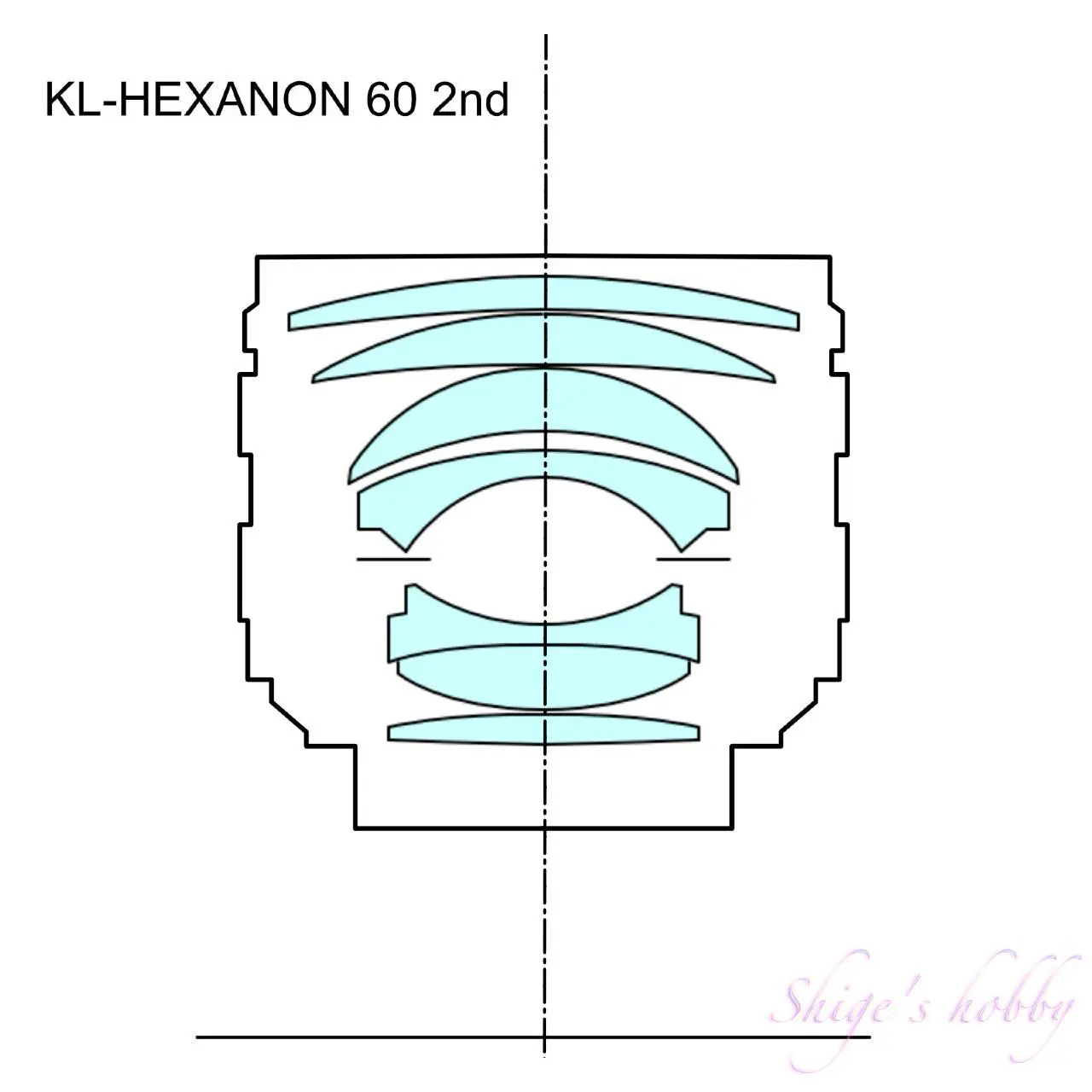
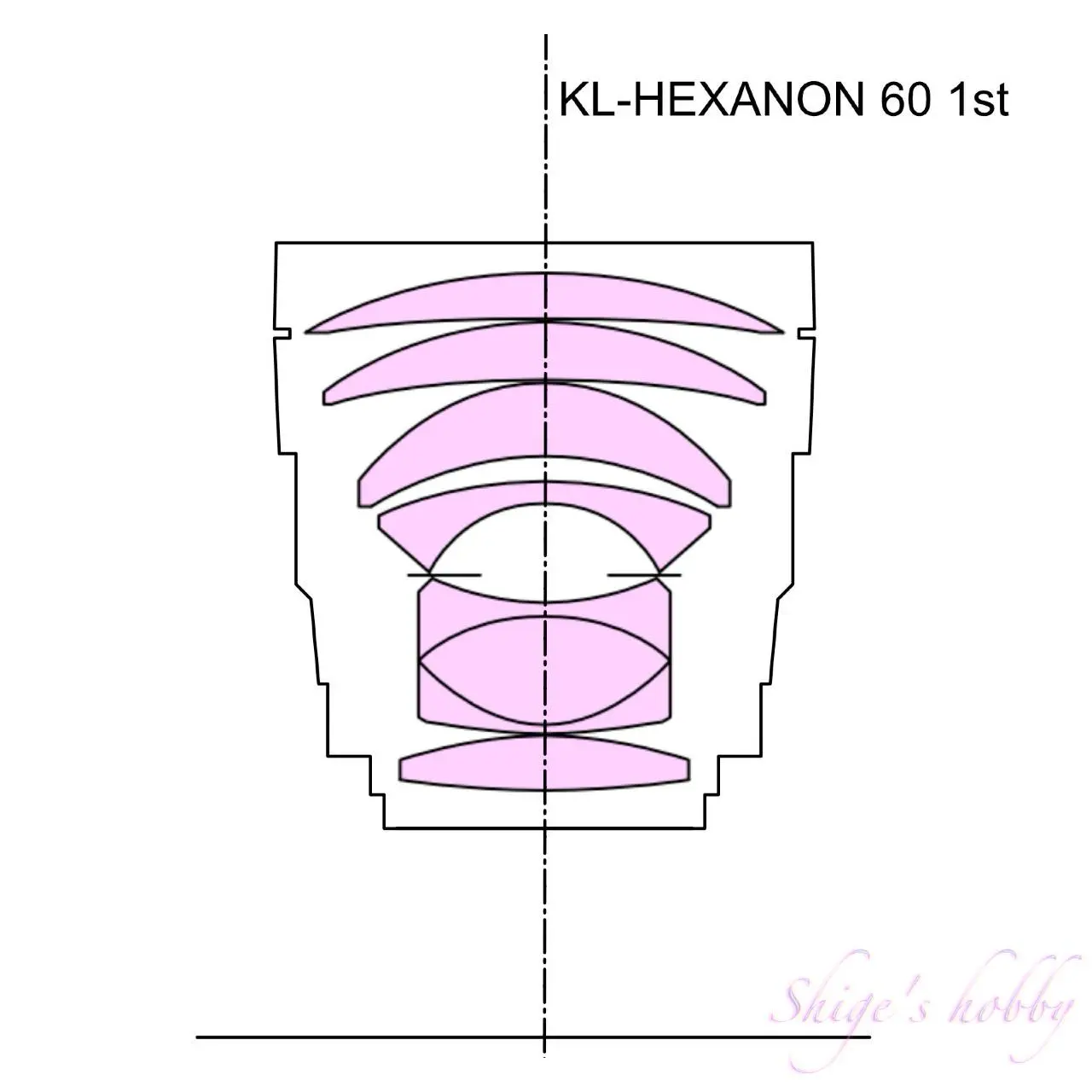
- The lens configuration diagrams are quoted from the handouts of each company, and the sizes have been adjusted here, so they are not exact.
| Item | HEXANON 60(New) | HEXANON 60(Old) |
| focal length(mm) | 60 | 60 |
| Maximum aperture | 1.2 | 1.2 |
| Minimum aperture | 16 | 16 |
| Leaf blade | 7 elements in 6 groups | 8 elements in 6 groups |
| Lens configuration | 10 | ? |
| Minimum distance(m) | 0.8 | 3.5feet(1m) |
| Lens length(mm) | 51.5(from L39) | 51.5(from L39) |
| Lens max diameter(mm) | 64 | 60 |
| Filter type | 58 Silver-colored special edition available | 58 |
| Weight(g) | 388 Lens + L/M adapter | 410 Lens only |
| Hood | Cylindrical slit type/screw-in | ? |
| Lens mount | L39 screw | L39 screw |
| Release date | 1999 | 1956 |
| Production numbers | 800 | ? |
| Price | ¥190,000 | ¥78,000 |
Reference links
- 60mm F1.2 in the Konishiroku era / Camera-Wiki.org(英語)
- Konica HEXANON 60mm F1.2 / Camera-Wiki.org(英語)
- LEICA M10・Shige’s hobby
- LEICA M-P typ240・Shige’s hobby
- LEICA M typ240・Shige’s hobby
- LEICA M9・Shige’s hobby
- LEICA M8・Shige’s hobby
- Ms-Optics Sonnetar 50mm F1.1・Shige’s hobby
- Voigtlander NOKTON 50mm F1.1・Shige’s hobby
- Ms-Optics GA-ISM 50mm F1・Shige’s hobby
寄付のお願い・Request for donations
Affiliate links
- Please see the disclaimer regarding advertising here.
- Italicized links in the text are advertisement links that take you to other sites.
- If you find any images used on this site problematic, please contact us via the comments or inquiry form, either as the rights holder or their representative. We will review the matter and take appropriate action.

Update history
- 2025.12.2
- 2025.4.23
- 2024.11.9
- 2024.02.07:Update the article
- 2022.02.01:First draft
Be First to Comment